Don't Buy Medical Equipment By Price Alone: A Procurement Manager's Costly Lesson
Stop Shopping for Sticker Prices – Your Budget Can't Afford It
I'm a procurement coordinator handling medical device orders for a regional healthcare network. Been doing this for 6 years. In my first year, I made every mistake you can imagine. One of the biggest: buying equipment based on the lowest quote. I now believe that chasing the cheapest upfront price is the fastest way to blow your annual budget. Let me show you why.
I used to think 'a deal is a deal.' Then September 2022 happened – an ICU monitor failure that cost us $8,700 in emergency replacement, lost OR time, and a vendor escalation fee. That's when I started calculating total cost of ownership (TCO) on every single purchase.
Three Hidden Costs That Eat Your Budget
1. Maintenance & Service Agreements
That budget-priced flexible endoscope we bought? Looked great on paper – $3,200 less than the icare model. But the manufacturer's service agreement didn't cover all parts. When the bending section tore after 14 months, the repair quote was $1,850. Plus we lost 3 weeks of patient procedures. The icare model came with a 2-year comprehensive warranty and a 48-hour turnaround on repairs. Our total expense over 24 months: the cheap endoscope cost us $5,050 vs. the icare at $3,800. That $3,200 saving became a $1,250 loss.
(I still kick myself for not reading the fine print on those service exclusions. Mental note: always ask about parts coverage before signing.)
2. Training & Staff Time
New ICU monitors arrived from a low-cost supplier. The interface was completely different from our existing fleet. Every nurse had to spend 2 hours on training – that's over $400 in staff time per unit. With 12 units, that's nearly $5,000. Plus the learning curve mistakes: one nurse inadvertently disabled an alarm during the first week – nothing critical happened, but we all felt the stress.
Compare that to the icare monitors we purchased later. The interface matched our existing workflow almost exactly. Training took 20 minutes per nurse. The hidden cost of unfamiliarity is real, and it's almost never included in the quote.
3. Consumables & Accessories
This one still frustrates me. We bought a 'cheaper' digital radiography plate reader. The price was 18% below icare's quote. What they didn't tell us: the replacement phosphor plates were proprietary, cost 40% more than the industry standard, and had to be ordered directly from them with a 2-week lead time. Within 2 years, we had spent an extra $6,200 on plates alone.
If you're wondering what is digital radiography from a procurement perspective: it's not just the initial sensor or plate. It's the lifetime cost of cassettes, software updates, and service. We learned that the hard way.
But Isn't 'Premium' Always More Expensive?
I get it – someone will say, 'Of course you're defending icare, you work with them.' Fair point. But my argument isn't about any single brand. It's about changing how you evaluate quotes. Here's what I do now with every vendor, including icare:
- Request a 5-year total cost breakdown: equipment + service + consumables + training + downtime risk
- Ask for references from similar-sized clinics – not just the happy ones
- Check if the vendor offers local support (icare support, for example, has a regional technician within 2 hours of our facilities)
- Calculate the cost per procedure, not per device
For instance, when evaluating an icare accredited dental clinic setting up a new CBCT system, their quote wasn't the cheapest. But after factoring in the included installation, mobile service van visits, and a 3-year warranty on the tube, the TCO was significantly lower than the 'bargain' alternative.
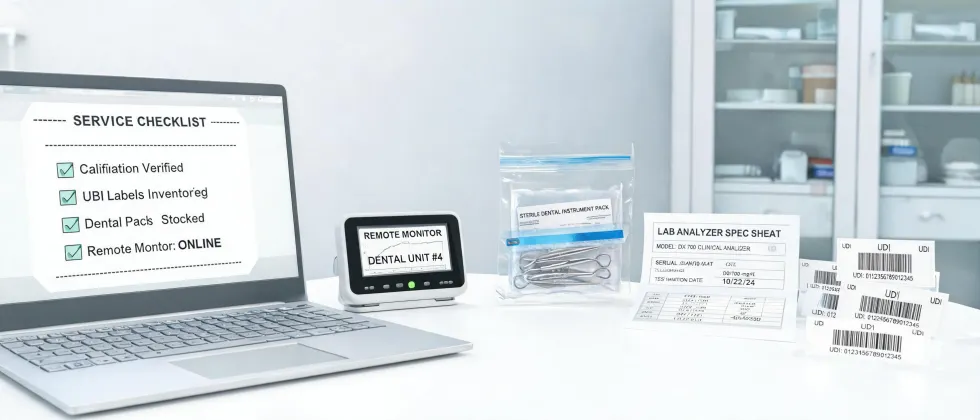
The most frustrating part of this industry: many vendors know exactly how to hide costs in the fine print. After the third time I got burned, I created a standard checklist that includes line items for shipping, setup, training, first-year consumables, and a 10% contingency for unplanned repairs. My team has used that checklist for 47 purchases in the past 18 months – and it caught potential $1,200+ hidden costs on 12 of them.
So no, I don't think icare is perfect for every situation. But I do believe the cheapest quote is almost never the best choice when you look at the full picture. Start calculating TCO before your next big purchase – your CFO will thank you.