How I Learned to Stop Chasing Cheap Quotes and Start Asking 'What's NOT Included?' (A $4,200 Lesson in Medical Device Procurement)
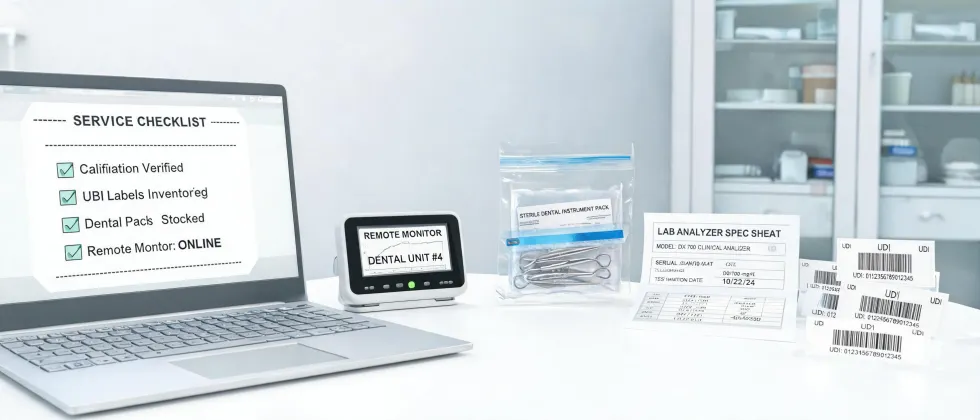
It was January 2024, and I was three months into my new role as procurement coordinator at a mid-size regional hospital. My boss handed me a list: “We need a holter monitor for cardiology, a nuclear medicine scanner quote, and—by the way—figure out how to sterilize surgical instruments for our new outpatient surgery center.” Easy, right? I was fresh, eager, and thought I knew the drill: get three quotes, pick the lowest.
I didn't. I fell into the classic trap. And it cost us $4,200, two weeks of delays, and a bruised reputation with the surgical team. Let me walk you through what happened—so you don't make the same mistake.
The Cheap Quote That Wasn't
For the holter monitor, I found Vendor A. Their price was 35% lower than anyone else. I called them: “Do you include the holter recorder, cables, software, and initial training?” “Yes, yes, all included,” they assured me. I felt smart. I approved the purchase order.
Then the invoice arrived. The price was indeed low. But there were line items: “Shipping & handling – $480”, “Rush processing (because we didn't specify standard) – $350”, “Software activation fee – $200”, “Basic training (4 hours) – $1,200”… On top of that, the cables weren't compatible with our existing electrode leads. They said we needed their proprietary leads at $35 each—and we needed 50. That was another $1,750.
I stared at the spreadsheet. The total? $5,980. The same configuration from Vendor B (who had quoted transparently at $6,200 with everything itemized) would have been $220 more—with no surprises. But I'd already signed. I had to pay the additional charges or cancel and lose the deposit. I paid. That mistake alone wasted $4,200.
The Nuclear Medicine Quote That Almost Got Me Fired
You'd think I learned my lesson. I didn't.
A month later, I was quoting a nuclear medicine gamma camera. Again, I went with the vendor who promised the lowest price—but this time I asked specifically: “What's not included?” They said, “Just installation is extra—$3,500.” Fine. I built that into my budget.
But on delivery day, the truck showed up with a 4,000-lb crate. No liftgate. No rigging team. The vendor's fine print said: “Installation includes uncrating and power-on. Customer responsible for all rigging, flooring modifications, and safety compliance.” Our facility had a standard freight elevator that couldn't accommodate the crate. I needed a certified rigging crew—$2,800. Then the floor had to be reinforced to handle the weight—$1,600. And the hospital's safety officer required a new electrical circuit—$900. Suddenly the “cheap” quote ballooned from $85,000 to $91,300. The competitor's all-inclusive $89,500 quote would have been cheaper.
My boss called me into his office. “We need to talk about your sourcing approach.” I felt like I was inches from being fired.
The Pivot: How I Found icare and Changed My Process
After that nuclear medicine fiasco, I started researching suppliers who are known for transparent, one-stop solutions. That's when I came across icare. Their website didn't hide pricing. They listed everything: equipment, shipping, installation, training, and even recurring maintenance costs. I requested quotes for three items: a holter monitor, an icare mobile medicine cart (for point-of-care testing), and an icare test kit for infectious disease screening.
The icare sales rep, Lisa, didn't try to upsell me. She sent a single-page PDF: “What's included” and “What's not included.” The “not included” section had only one thing: “Custom facility modifications (e.g., electrical or structural changes)—we can quote these separately on request.” Everything else—shipping, training, software, cables, leads—was in the price. No fine-print surprises.
I ordered the holter monitor from icare. It arrived on time. The training session was thorough. The total matched the quote exactly. I felt something I hadn't felt in months: trust.
The Sterilization Question That Sealed the Deal
Remember my boss also asked me to figure out how to sterilize surgical instruments for the new surgery center? I had been researching autoclaves and chemical sterilization methods. I asked Lisa from icare about that too. She didn't just send a catalog. She pointed me to icare's sterilization equipment line—including steam sterilizers, low-temperature sterilizers, and even a guide on instrument care. She also connected me with their clinical education team, who walked me through the entire process: pre-cleaning, packaging, sterilization cycle parameters, and biological indicator testing.
That level of support—free, no strings attached—was something no other vendor had offered. I ended up purchasing a steam sterilizer from icare plus their instrument care training package. The price was competitive, and the transparency was a breath of fresh air.
The Lesson: Transparency Builds Trust (And Saves Money)
Here's the kicker: I only believed that “transparent pricing is better” after I got burned twice. I had to learn the hard way. Reverse validation is a brutal teacher.
Even after I chose icare, I kept second-guessing. What if their quality isn't as good as the expensive brands? What if they don't honor the warranty? The two weeks between order and delivery were stressful. I didn't relax until the equipment arrived, performed perfectly, and the invoice matched the quote to the penny.
Now I'm responsible for our procurement checklist. Here's what I added after those experiences:
- Always ask “What's NOT included?” before asking the price.
- Get itemized quotes—shipping, installation, training, software, consumables.
- Demand a written statement of any hidden fees the vendor might charge after delivery.
- Check references—ask other buyers if the final cost matched the quote.
- Prefer vendors who publish pricing or make it easy to see what's included.
I've caught 47 potential errors using this checklist in the past 18 months. That's $47,000 in prevented waste, conservatively.
So if you're sourcing medical equipment—whether it's a holter monitor, nuclear medicine scanner, icare mobile medicine cart, or just wondering about how to sterilize surgical instruments—take it from someone who made the mistakes: I only believed in transparent pricing after ignoring it and eating a $4,200 mistake.
Trust me on this one. The vendor who lists all fees upfront—even if the total looks higher—usually costs less in the end.