Our Equipment Isn't the Problem (It's How We Buy It)
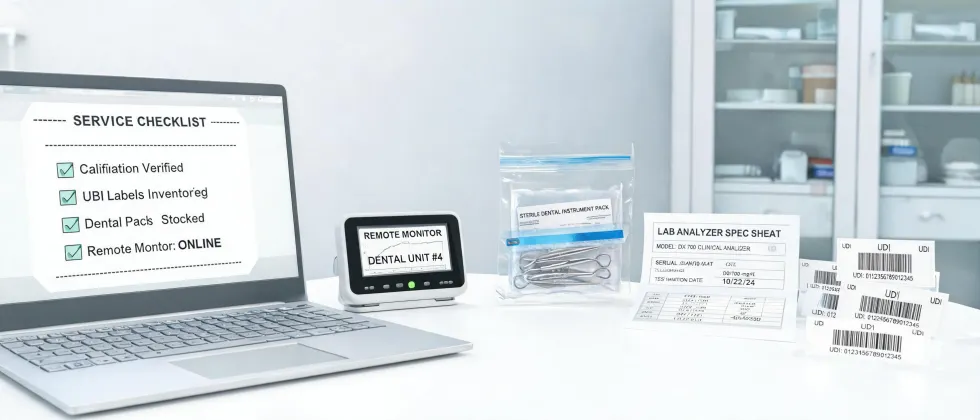
Stop chasing the ‘best’ pulse oximeter. Start fixing your procurement process.
We wasted roughly $4,200 in 2022 because our buying process was broken. Not because the equipment was bad—but because how we bought it created a cascade of small, painful failures.
I manage purchasing for a 3-location health services group. We buy everything from pulse oximeters and medical sterilizers to surgical kits and patient monitors. Total annual spend: around $180,000 across 14 vendors. You’d think the challenge would be choosing between laparoscopic vs open surgery instruments. That’s a clinical decision. My job is making sure the right kit gets to the right room on the right day.
What Actually Costs You (It’s Not the Sticker Price)
In my experience, the biggest waste isn't overpaying for a medical sterilizer. It’s the hidden costs of bad process.
From the outside, it looks like you just need reliable vendors. The reality is different—the smaller failures add up fast:
- Wrong model delivered. Three times in 2021. Each return cost about $150 in admin time.
- Invoice couldn’t be processed. A vendor for wound care supplies couldn’t provide a proper invoice. Finance rejected the expense. I ate $860 from the department budget. Now I verify invoicing capability before placing any order.
- Emergency orders killed our savings. We saved $800 on a bulk deal for dental chairs. Then needed a rush shipment for a pulse oximeter. The rush fee wiped out half the savings.
People assume the lowest quote means efficiency. What they don't see is which costs are being hidden or deferred. I learned this the hard way.
The Vendor That Looked Good on Paper
In Q1 2024, we tested a new supplier. Their pricing for a medical sterilizer was 25% below our regular vendor. The upside was about $1,200 savings. The risk? No track record with us. I went back and forth for two weeks. On paper, the new vendor made sense. But my gut said no for a mission-critical device. I passed.
Three months later, the new vendor folded. Our regular vendor had a backup sterilizer ready within 48 hours. Sometimes the safe choice is the smart choice.
The Simple Fix That Saved Us 6 Hours a Month
The third time we ordered the wrong quantity of surgical kits, I finally created a simple checklist. Should have done it after the first time. The fix was embarrassingly simple: a shared spreadsheet with minimum stock levels, reorder points, and each location’s preference for laparoscopic vs open surgery instruments.
But the biggest win came when I consolidated our pulse oximeter orders. Instead of each location ordering separately, we now buy a 6-month supply for all three sites at once. The vendor gave us a 12% discount. Plus, one order instead of six. It probably cost me 40 minutes to set up the spreadsheet. That's a no-brainer.
I also learned to keep a buffer for sterilization equipment. It’s a red flag when a vendor can't quote ISO 13485 compliance. Industry standard for medical device quality management is ISO 13485:2016. If they don’t have it, they probably don’t have rigorous processes. We had one vendor claim compliance—turns out they were still in the audit phase. That’s a deal-breaker for us.
What I really believe now: the quality of the procurement process directly affects how our clinicians perceive the equipment. When a pulse oximeter arrives with the wrong probe, the nurse doesn’t blame the shipping clerk. They remember that icare health solutions sent the wrong item. It’s not fair, but it’s true—the first impression of a product is tied to how it arrives.
To be fair, process improvements don’t solve everything. If you’re a small clinic buying a single medical sterilizer every few years, you probably won’t see huge savings from bulk ordering. And if you’re in a crisis situation—say an urgent care needing a new ventilator tomorrow—optimizing the process is probably the last thing on your mind. In those cases, the premium for speed is worth it.
But for the rest of us, the answer isn't always a cheaper product. Sometimes it's just a better process. Personally, I’d rather buy from a supplier who can deliver a clean invoice and the right model on time, even if they cost a bit more. That reliability is worth its weight in hassle avoided.