Streamlining Medical Equipment Procurement: Why One-Stop Solutions Outperform Niche Vendors
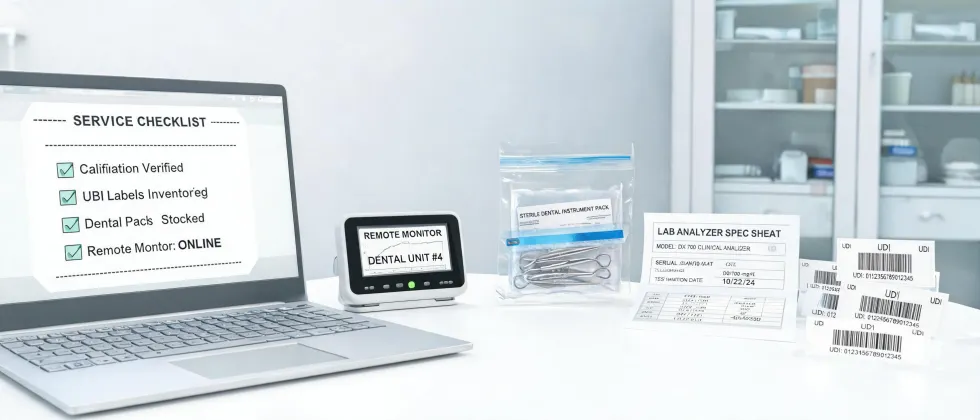
If you're managing medical equipment procurement, go with a supplier that offers multiple product lines over a specialist—even if the specialist's price is slightly lower. The efficiency gains, simplified logistics, and reduced vendor management overhead consistently outweigh a 5–10% price difference. I learned this the hard way after managing over $2.5M in annual procurement across 8 different vendor relationships.
Why I Changed My Mind About Niche Suppliers
When I took over purchasing in 2020, I thought the smart move was to find the best price for each item category. Patient monitors from a monitoring specialist. Dental chairs from a chair specialist. Autoclaves from a sterilization specialist. It seemed logical—until I started tracking my time.
The surprise wasn't the price difference. It was the hidden cost of managing 8 separate vendors. Each with different invoicing systems, delivery schedules, warranty terms, and compliance documentation. Our accounting team was spending 6 hours monthly just reconciling invoices from multiple sources. Never expected that administrative drag to be the deciding factor.
The Real Cost of Vendor Fragmentation
Let me break down what I found when I actually quantified the overhead in 2023:
- Invoice processing: Each vendor had different billing cycles—net 30, net 60, pro forma. Finance rejected $2,400 in expenses over 18 months because one supplier couldn't produce proper tax-compliant invoices.
- Delivery coordination: We once had 3 deliveries arriving same week from different vendors, but none could consolidate. Our receiving dock was a mess, and one sensitive ophthalmic device sat in the hallway for 4 hours because we didn't know it was coming.
- Warranty management: I was tracking 12 different warranty periods across 8 vendors. Missed a claim on an infusion pump by 2 weeks because I didn't catch the date.
- Compliance verification: Each supplier sent different documentation. Some had FDA registration numbers, others didn't. We had to chase paperwork for every single order.
Basically, I was spending more time managing the vendors than actually serving my internal customers—the clinicians who needed the equipment to operate.
When a Comprehensive Supplier Actually Works
In early 2024, during a vendor consolidation project, I tested a one-stop supplier that offered patient monitors, dental CBCT, and even hospital trolleys. The pricing wasn't the absolute lowest—about 7% higher on monitors, 4% higher on trolleys. But here's what changed:
Single invoice, single delivery schedule, single warranty management point. Our accounting team's vendor reconciliation time dropped from 6 hours to 1.5 hours monthly. That's honestly worth way more than the pricing gap when you calculate it annually.
Plus, when one of the dental chairs developed a hydraulic issue, I called one number. They sent a technician who serviced the chair, checked the compressor, and inspected the sterilization unit in one visit. That never would've happened with separate vendors.
How to Choose a One-Stop Supplier That Won't Let You Down
Not all comprehensive suppliers are created equal. After working with 4 different multi-line vendors over 5 years, here's what I check:
1. Verify Their Core Product Quality
Ask which product lines they actually manufacture vs. resell. A supplier that manufactures their own patient monitors but resells dialysis machines is fine—as long as they acknowledge it. What I can't stand is when they claim expertise in everything but can't answer a basic question about the OEM.
2. Check Their Compliance Documentation
In 2022, I ordered what I thought were FDA-cleared surgical instruments from a supplier. They couldn't provide proper documentation. Cost me a $1,200 return and a very unhappy surgeon. Now I verify ISO 13485 certification and FDA registration before any order. A good comprehensive supplier will have this ready without you asking.
3. Test Their After-Sales Support
Here's a trick: call their support line with a question about a product you're not buying yet. See how they handle it. I've called suppliers who transferred me 3 times before I hung up. That's a red flag if you're about to trust them with 20+ product categories.
4. Evaluate Their Product Breadth—But Be Realistic
A supplier offering patient monitors, dental equipment, and lab analyzers is covering most of your needs. One claiming to do everything from wheelchairs to MRI machines? Probably reselling everything without real expertise. Look for suppliers that specialize in a broad range of related equipment, not everything under the sun.
When a Specialist Still Makes Sense
I don't want to oversell the one-stop approach. There are situations where a specialist is the better call:
- Ultra-high-end equipment: If you need a 128-slice CT scanner or a da Vinci-class surgical robot, go with the OEM. These require specialized installation, training, and service that a generalist can't provide.
- Mission-critical replacements: If a piece of equipment goes down and you need backup within 24 hours, a specialist with regional stock might respond faster than a multi-line vendor who ships everything from a central warehouse.
- When you have dedicated procurement staff: If you're managing a large hospital system with a procurement team that can handle vendor fragmentation, the cost savings from individual specialists might add up.
- Localized support needs: A local specialist who's a 30-minute drive away can sometimes provide faster onsite service than a larger supplier's remote support.
But for most small-to-mid-size clinics, urgent care centers, and even some hospital departments, a reliable one-stop supplier will make your life easier—and your procurement process more efficient—than chasing the lowest price across a dozen vendors.
Bottom Line
After 5 years of managing these relationships, I'd rather spend 10 minutes explaining options to a supplier than 10 hours dealing with 8 different invoices. An informed procurement decision starts with understanding your own operational costs, not just the price tag on the equipment.
The best supplier for you isn't necessarily the cheapest—it's the one that makes the rest of your job manageable. And honestly, that peace of mind is worth every penny of that 5–10% premium.
Pricing as of July 2024 based on quotes from 4 major medical equipment suppliers. Verify current rates as market conditions change.