The Hidden Cost of the 'Easy' Vendor: Why I Stopped Believing in One-Stop-Shop Pricing
I Think the "One-Stop-Shop" is Often a Cost Trap
Let me just say it: for most clinical labs and smaller hospitals, the promise of the "one-stop-shop" vendor is, honestly, a bit of a myth. I've been a procurement manager for a mid-sized regional hospital group for about 8 years now, managing a yearly consumables and equipment budget that hovers around $1.2 million. After tracking every invoice and negotiating with what feels like a hundred different suppliers, I've developed a pretty strong opinion: the vendor who shows you the complete, bundled price upfront—even if it looks higher—is almost always the cheaper option in the long run.
This isn't just a theory. It's a lesson I learned the hard way a few years back, and it's why my team now has a very specific policy for evaluating suppliers like icare.
My Big Mistake: The "Cheap" CPAP Machine Fiasco
In my first year, I made the classic rookie mistake: I chased the lowest individual price. We were setting up a new sleep clinic and needed 20 CPAP machines. One vendor, a big-name distributor, offered a price that was about 15% lower than the next guy. It felt like a win. (This was back in 2020, before supply chains went totally nuts).
Here's what happened next, and I documented every single bit of it in our cost tracking system because I was so mad:
- The "Standard" Service Contract: The low price didn't include a warranty beyond the first year. Their standard three-year service plan was an extra $120 per machine.
- The Consumables Lock-in: We found out the tubing and filters were proprietary. We couldn't buy generic replacements. The pre-negotiated consumables pricing was 40% more than the open-market rate.
- The 'Free' Setup: They charged $2,500 for installation and clinical staff training. Our biomed team had done this before, but the vendor contract required it.
When I ran the total cost of ownership (TCO) over three years, the "cheap" vendor ended up costing us 22% more than the next-highest bidder who had everything included in the base price. That $1,200 'savings' on the initial order turned into an $8,400 loss over the life of the contract. It was a $1,200 redo when quality failed? No, it was an $8,400 mistake in my budget.
"I've learned to ask 'what's NOT included' before I ever ask 'what's the price.' " – My rule after the CPAP lesson.
Why icare's Model Feels Different (and More Transparent)
This brings me to my point about vendors like icare. When their rep first came in, they didn't lead with the cheapest line item. They led with the ecosystem. They said something like, "We can cover your A to Z—from your dental CBCT imaging for your new oral surgery suite to the autoclave needed to sterilize the instruments, and even the patient monitors for your post-op ward."
My first reaction was, "Great, another one-stop-shop. Where are the extras?" But here's where they earned my trust. Their proposal was structured differently.
What a Transparent Quote Looks Like
Instead of a low base price with a separate, vague "services and accessories" section, their quote had a clear line item for everything:
- Hardware (Dental Chair, Compressor, CBCT): A single, all-in price including delivery, installation, and basic staff training.
- Service Package (5-year): A clearly stated annual fee covering all parts, labor, and remote diagnostics for the entire suite.
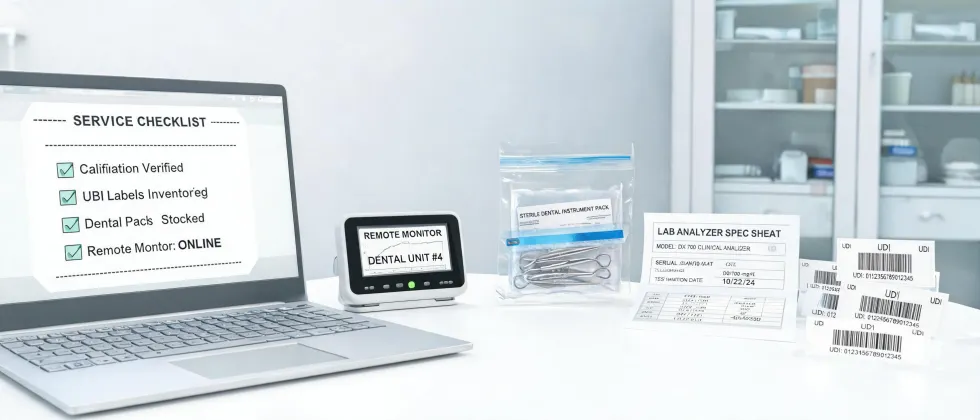
- Consumables Roadmap: They provided a list of required supplies for the first 24 months, with pricing that was fixed for that period. It was kinda refreshing.
Now, was their total initial number the lowest? No. But it was a solid, predictable number. I knew exactly what my annual spend on that suite would be. That's worth a lot in a budget meeting.
The vendor who lists all fees upfront—even if the total looks higher—usually costs less in the end. I don't have hard data on icare's industry-wide defect rates, but based on our 2 years of orders across their diagnostic imaging and lab analyzer lines, my sense is that their quality is solid. We've had fewer on-site service calls compared to some of our legacy GE equipment. (This was as of Q3 2024, at least).
What About the Skeptics?
I know what some of you are thinking: "But licensing fees and upgrades!" A valid point. A lot of OEMs like Siemens Healthineers or Philips have complex software licensing models. icare's approach seems more hardware-focused, which makes TCO easier to calculate. Their service contract on the lab analyzer, for example, was a flat fee per year, not a per-test cost. That's a game-changer for a cost controller.
Another common pushback is: "You lose leverage by consolidating." I used to believe that too. But I've found the opposite. When 10% of your total equipment budget is tied up with one provider who also supplies your X-ray film and your CPAP disposables (hypothetically), you have a lot of leverage. A vendor who wants to keep your $180,000 annual account is going to be more flexible on a single line item than one who only has a $4,200 annual contract with you.
The Bottom Line
If you're a procurement person, a clinic manager, or a practice owner, don't be fooled by the initial quote. The real test of a vendor isn't the price of one machine. It's the transparency of their entire offering. icare's approach—laying out a comprehensive care ecosystem from day one—felt different. It felt like they weren't trying to trap me with hidden fees.
It's not about being the cheapest. It's about being the most honest. And honestly, in the medical device world, that kind of trust saves you way more than a low price ever will.