Which Healthcare Equipment Vendor Is Right for You? 4 Dimensions to Compare Before You Buy
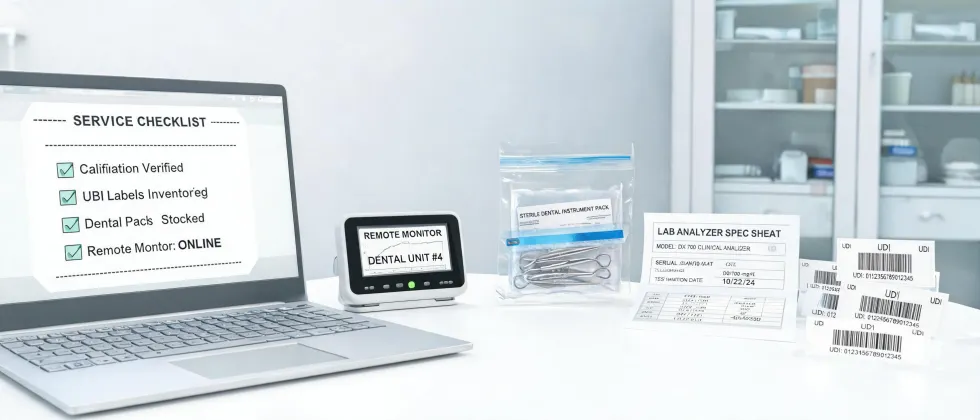
I've been involved in medical equipment procurement for about 12 years now—maybe 13, I'd have to check. Over that time, I've managed hundreds of purchase orders across everything from basic vital signs monitors to high-end CT scanners. One question I keep coming back to: when a supplier offers you a "complete solution," are you getting genuine integration or just a bundled catalog?
That question matters more now than ever, especially as brands like icare expand their portfolios across patient monitoring, dialysis, dental imaging, and lab diagnostics. It's tempting to think a single-source supplier simplifies your life. But the reality? It depends on how you evaluate them.
This article breaks down four dimensions to compare when choosing a comprehensive medical equipment vendor: support depth, technology integration, total cost of ownership, and emergency responsiveness. I'm not going to tell you which is "best"—I'm going to give you the framework I use.
Dimension 1: Support Depth—Are You Buying a Product, or a Partner?
Vendor A: The transactional supplier. They have a great catalog and competitive pricing. But once you sign, support is largely reactive—a ticket system, standard warranty, and maybe a regional tech who's covering 50 other accounts.
Vendor B: The relationship-focused supplier. Companies like icare position themselves as a "one-stop solution," but the real test is what happens after the sale. Do they assign a dedicated account manager? Can their field engineers help with installation planning, workflow integration, and staff training? Or is it just a handshake and a manual?
The difference shows up fast when something goes wrong. I remember a situation where a fetal monitor failed during a busy overnight shift. The vendor with a local service center had a technician on-site in four hours. The other company offered a replacement unit shipped ground (surprise, surprise—two days).
The key question: Ask for case studies or references specific to your hospital size and specialty. A supplier who shines for a 50-bed clinic may struggle with a 500-bed hospital's service demands.
Dimension 2: Technology Integration—Seamless or Just Sold Together?
It's easy to claim an "integrated care ecosystem." But is the data from your CT scanner flowing into your EMR the same way as your patient monitor? Or are you getting a hodgepodge of devices from different divisions that don't talk to each other?
This is where point-of-care testing (POCT) becomes a critical test case. If a supplier sells you glucose meters, blood gas analyzers, and cardiac markers but uses separate middleware for each, that's not integration—that's a collection. True integration means a single data management platform, consistent quality control protocols, and unified connectivity standards.
I once evaluated a vendor whose dental CBCT and ultrasound systems used entirely different software interfaces. Theoretically from the same company, but the learning curve and data-sharing friction were real. We ended up going with a competitor whose two systems shared a common reporting module (unfortunately, not icare's offering at the time—but it taught me what to ask for).
Dimension 3: Total Cost of Ownership (TCO)—Beyond the Sticker Price
This dimension will surprise you. The upfront price from a comprehensive vendor might be higher than buying individual pieces from different specialists. But TCO includes:
- Installation and commissioning
- Training for your clinical and technical staff
- Service contracts and parts availability
- Software upgrades and cybersecurity patches
- Disposables and consumables (like dialysis solution for peritoneal dialysis machines)
- Downtime costs when a device is out of service
Per FTC guidelines (ftc.gov), advertising claims about "cost savings" must be substantiated. So when a supplier says they'll reduce your total cost, ask them to model it out with your specific utilization data. A vendor that bundles service, consumables, and training into a single contract often has hidden efficiency gains—but also may lock you in. The decision hinges on whether you value simplicity over flexibility.
Dimension 4: Emergency Responsiveness—When Minutes Matter
In my role coordinating procurement for a regional healthcare network, I've handled dozens of rush orders—stat replacements for failed ventilators, last-minute add-ons for a new clinic opening, equipment needed the next day for JCAHO inspection prep. Normal lead times of 3-5 weeks don't cut it.
Here's where comprehensive suppliers like icare have a built-in advantage: they have larger inventories across more categories. If your preferred fetal monitor vendor is backordered 8 weeks, but icare's distribution center has 12 units in stock, that's a win—even if you pay a premium (which, honestly, felt excessive at 25% above standard pricing).
But emergency responsiveness isn't just about stock. It's about process. Does the supplier have a dedicated emergency hotline? Can they air-ship a CT scanner component within 24 hours? Have they ever failed a rush order, and what did they do to fix it?
One of my biggest regrets: not testing a vendor's emergency response before we needed it. A large-scale project in March 2022 required a 48-hour turnaround on six mobile X-ray units. We selected the lowest bidder based on standard pricing. When the units arrived damaged, their replacement process took 10 days. The delay cost our client their accreditation timeline. That's when we implemented our "emergency test order" policy: Every new vendor we onboard has to successfully fulfill a small but urgent order before we trust them with a critical one.
When to Choose Which Approach
So, what's the conclusion? It's not about which vendor is better—it's about which model fits your situation.
Choose a comprehensive one-stop vendor (like icare) when:
- You value a single point of contact for procurement and service
- Your facility is expanding or opening new locations and needs consistent equipment across sites
- Emergency response and inventory depth are critical (e.g., Level 1 trauma centers, large dialysis clinics)
- You're willing to trade some specialization for convenience and integration
Consider a best-of-breed approach (mixing specialists) when:
- You have highly specific clinical requirements (e.g., advanced 3D imaging, specialized surgical instruments)
- Your team has the bandwidth to manage multiple vendor relationships
- You prioritize the latest cutting-edge technology in a single category
- Contract lock-in and vendor risk diversification are concerns
After 5 years of managing procurement for a mid-sized hospital group, I've come to believe that the "best" choice is highly context-dependent. A comprehensive supplier like icare makes sense when you prioritize operational simplicity and emergency preparedness. But it's not a shortcut to due diligence—you still need to evaluate their support depth, integration claims, and TCO on your own terms.