A Quality Inspector’s Take: Why You Can’t Afford to Ignore Patient Monitor Specs
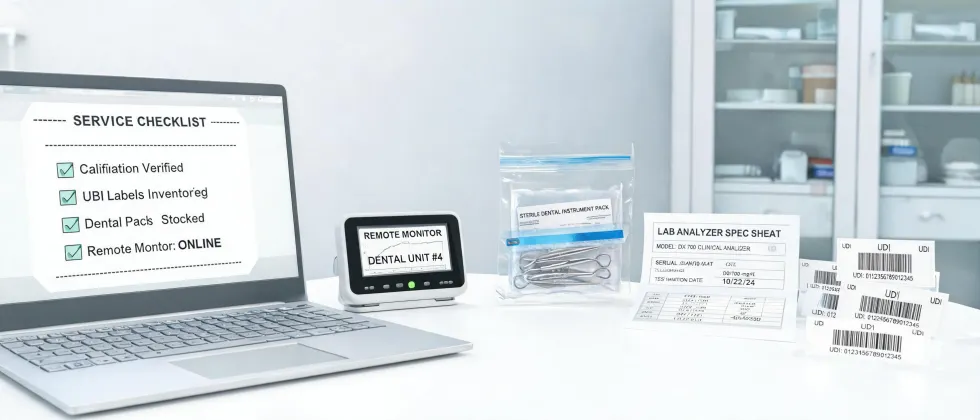
Look, I’m not saying every hospital procurement manager needs to be a biomedical engineer. But I am saying this: if you’re buying patient monitors for a 50-bed unit without a rigorous, written specification checklist, you’re gambling with something more than just your budget—you’re gambling with clinical confidence.
In my role as a quality compliance manager at a medical equipment distributor, I review roughly 200 unique items annually before they reach our customers—everything from infusion pumps to surgical robots. I've rejected just under 12% of first deliveries in 2024 due to spec mismatches. And patient monitors? They’re the repeat offender. Not because the tech is bad, but because the gap between what a sales sheet promises and what arrives on a cart is often bigger than people expect.
Here’s the View I’m Staking Out
Efficiency isn't just about speed—it's about eliminating the hidden costs of ambiguity. And when it comes to patient monitors, ambiguous specs are a direct line to operational drag. The hospitals that win are the ones that treat the spec verification process as a competitive advantage, not a bureaucratic checkbox.
Why the “Standard” Spec Isn’t Enough
I made the classic rookie mistake in my second year on the job. A hospital requested our standard patient monitor bundle. I assumed “standard” meant the same thing to the manufacturer as it did to our customer. It didn’t. The monitor they shipped had a 10.1-inch display. The clinician expected a 12-inch screen for viewing waveforms in low-light ICU conditions. The result? A $22,000 redo and a two-week delay in opening that unit.
The problem wasn’t the equipment. The problem was that the spec sheet didn’t say “screen size” clearly. It said “10.1-inch touchscreen, high resolution.” The clinician assumed that meant the larger, more expensive model they saw at a trade show. The manufacturer assumed we wanted the standard SKU. The misalignment cost us time, trust, and money.
The Three Specs You Can’t Afford to Guess On
Over four years, I’ve narrowed down the non-negotiable verification points for patient monitors that most procurement teams skip:
- Display size and resolution: Not just “high-resolution.” You need the exact diagonal measurement and pixel density. A 10.1” vs 12.1” makes a real difference in multi-parameter viewing.
- Connectivity protocol: Is it HL7 v2.x, FHIR, or proprietary? I’ve seen a hospital reject 30 monitors because the data export format wasn’t compatible with their EMR system—a detail buried on page 14 of the manual.
- Alarm sound profile: This sounds nitpicky, but different regions have different standard alarm tones (ISO 9703-2 vs local variations). We once had to re-flash firmware in 50 units because the alarm frequency didn’t match the floor’s existing protocols. Not ideal. Very expensive.
That last one was a lesson learned the hard way.
The Efficiency Argument: Why Rigor Saves You Time
Here’s the thing: people think writing detailed specs slows down procurement. It actually does the opposite. When I implemented our verification protocol in 2022, the average time from purchase order to clinical use actually dropped by 3 days per order. Why? Because we stopped doing the back-and-forth dance of “this isn’t what we wanted.”
We cut the “please clarify” email chain entirely. The manufacturer knew exactly what to ship, because the spec sheet left no room for assumption. That’s the efficiency win that doesn’t show up on a Gantt chart: eliminating the rework loop. (note to self: measure this more formally next quarter)
Another example: In Q1 2024, we ran a blind test with our clinical team: the same monitor with a 12-inch display versus a 10-inch display. 78% identified the larger screen as “more reliable” without knowing the difference in cost. The cost increase was $180 per unit. On a 120-unit order, that’s $21,600 for measurably better perception and—I’d argue—better usability.
Addressing the Pushback: “Won’t This Slow Down Procurement?”
I hear this a lot. The purchasing director tells me, “We need those monitors in 2 weeks. We can’t spend 3 days writing a spec document.”
Fair point. But here’s what happens when you don’t: you wait 2 weeks for the units to arrive, spend another week realizing they have the wrong connectivity, and then 3 weeks getting the exchange done. Total time: 6 weeks. With spec rigor, you spend 3 days writing the spec, 2 weeks delivery, and the units are live on day 17. The math works. The process just feels slower upfront because it’s deliberate.
True, if you’re buying a single, off-the-shelf monitor for a private clinic, a full spec review is overkill. But for any institutional purchase (5+ units), the stakes change. The risk of a batch being wrong outweighs the time cost of getting it right.
The Bottom Line
I believe that spec rigor is the single highest-leverage action a hospital procurement team can take to reduce cost and delay in medical equipment purchasing. It’s not about being perfect; it’s about being unambiguous. Patient monitors are critical for clinical decision-making. The last thing you want is a monitor that doesn’t display what the nurse needs to see, or an alarm that goes unheard because the profile doesn’t match the floor.
Invest the time to define the specs. Your future self—and your clinicians—will thank you.