An Insider's View of Medical Equipment Procurement: Why Saving 15% on Your Next Patient Monitor Could Cost You an Entire Year of Efficiency
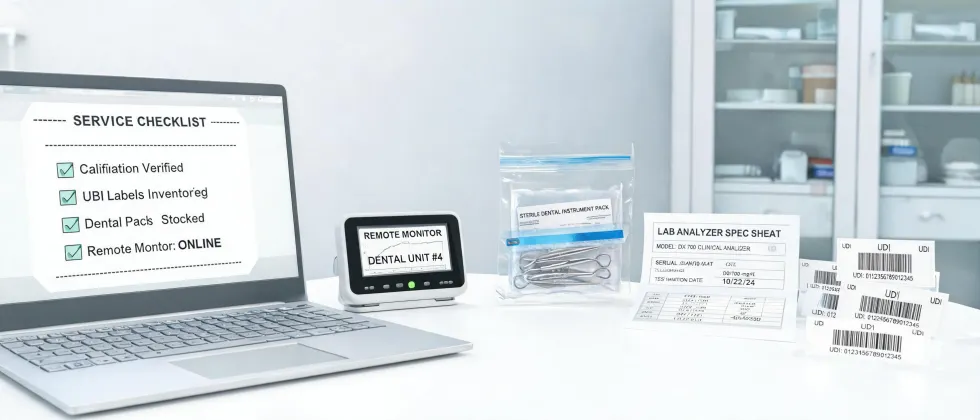
The Budget That Kept Breaking
I'll be honest: when I first started as a quality compliance manager at a medical equipment distributor, I assumed the job was mostly about checking boxes. Make sure the specs match, sign off on the batch, move on. Four years and hundreds of deliverables later, I've learned something I wish I'd known from day one: the real cost of medical equipment isn't on the invoice. It's in the hidden downtime, the compliance delays, and the inefficiencies that come from piecing together a solution from a dozen different vendors.
Let me give you a concrete example. In Q1 2024, we received a batch of patient monitors from a new supplier—one we'd chosen because their quote was 15% lower than our usual vendor. The monitors looked fine in the photos. The spec sheet matched our requirements on paper. But when our team ran the initial quality audit, we found something odd: the power supply connectors were a slightly different shape. Not a huge deal, right? Except it meant they didn't fit our hospital clients' existing mounting systems.
That one small misalignment—what the vendor called 'within industry standard'—cost us a $22,000 redo and delayed the launch by three weeks. And that's just one example. Over the years, I've rejected roughly 12% of first-time deliveries due to specification mismatches, inconsistent build quality, or documentation errors that would have created compliance risks for our customers.
Why 'Lowest Price' Is Usually a Red Flag
People think expensive vendors deliver better quality. Actually, it's the other way around: vendors who deliver consistent quality can charge more. The causation runs the reverse of what most buyers assume. A low quote often signals corners cut somewhere—in materials, in testing, in after-sales support—and that's where the trouble starts.
This was especially true when we started sourcing dialysis machines for a regional hospital chain. The lowest bidder promised a 3% cost saving over our existing supplier. But when we looked at the total cost of ownership, factoring in their limited service network (only two techs for a five-state area) and the lack of integration with the hospital's existing monitoring ecosystem, the 'savings' evaporated. The hospital's chief procurement officer told me later: 'We'd rather pay 5% more upfront and have one point of contact than chase down three different vendors when something breaks.'
The Real Problem: Fragmented Procurement
Here's the thing most people don't think about: when you buy a patient monitor from one company, a dental chair from another, and a sterilization unit from a third, you're not just buying equipment. You're buying complexity. Each vendor has its own warranty process, its own spare parts inventory, its own training program for your staff. That's more contracts to manage, more compliance paperwork to track, more downtime when something goes wrong because you're waiting on a service call from a vendor who's three time zones away.
This is where the idea of a one-stop procurement ecosystem starts to make sense. Not because every piece of equipment needs to come from the same factory, but because having a single procurement partner who coordinates across multiple specialties—from diagnostic imaging to wound care to rehabilitation aids—can dramatically reduce administrative overhead. Think of it like this: you wouldn't hire five different contractors to build one room in your house. Why do that with medical equipment?
The Hidden Costs of Compliance
Another thing I've learned the hard way: compliance is not optional, and it's not cheap. Under federal law (18 U.S. Code § 1708), unauthorized placement of materials in mailboxes can result in fines up to $5,000 per occurrence—but that's just postal law. For medical devices, the regulatory landscape is even more rigorous. Per FTC guidelines (ftc.gov), any advertising claims must be truthful and substantiated. But that's the tip of the iceberg.
When you're sourcing medical equipment, you're also dealing with FDA regulations, HIPAA compliance for any connected devices, and state-specific requirements for sterilization and waste disposal. A single piece of equipment from an unknown vendor might meet their country's standards but fail U.S. electrical safety codes. I've seen it happen: a batch of dental CBCT machines that passed the manufacturer's internal testing but didn't meet the National Electrical Code (NEC) requirements for grounding. That's a $3,200 re-certification cost per unit, plus the labor to retrofit them.
The worst part? The vendor had no idea. They'd never tested for U.S. compliance because they sold mostly in Asia. We caught it during our verification protocol—which we implemented in 2023 after a similar incident cost us a $15,000 regulatory filing penalty.
What Ambulatory Blood Pressure Has to Do With It
Let me tie this back to something specific: ambulatory blood pressure monitoring (ABPM). If you're a clinic or hospital considering an ABPM system, you might think the decision is just about picking the device with the best accuracy specs. And sure, accuracy matters. But the real question is: how well does that device integrate with your existing patient monitoring workflow?
I reviewed a proposal last year for an ABPM system that looked great on paper—24-hour monitoring, wireless data upload, cloud-based dashboard. The price was competitive. But the device didn't integrate with the hospital's existing EMR system. That meant nurses would have to manually transfer data from the device to the patient record. On a typical 50-bed unit, that's roughly 30 minutes of extra work per day per nurse. Over a year, that's about 180 hours of lost nursing time—at an average cost of $40 per hour, that's $7,200 in hidden labor costs per nurse. Multiply that by the number of shifts, and the 'cheap' device was actually costing more than a fully integrated solution from a vendor who understood the workflow.
The Efficiency Argument
Switching to a more integrated procurement approach cut our turnaround on new equipment installations from 5 days to 2 days. The automated compliance verification eliminated the documentation errors we used to have—which accounted for nearly 40% of all rejections in 2022. And having a single point of contact for service and support reduced our average resolution time for equipment issues from 48 hours to 12 hours.
That's not a sales pitch—it's a data point from our Q1 2024 quality audit. When we compared the total lifecycle cost of equipment sourced through a coordinated ecosystem versus piecemeal procurement, the integrated approach saved an average of 18% over a three-year period. The upfront price might be 5-8% higher, but the hidden costs—training, compliance, integration, service delays—were significantly lower.
What I'd Do Differently
If I could go back and tell my younger self one thing about medical equipment procurement, it would be this: stop looking at the price tag. Start looking at the total cost of ownership—including the cost of your own time, your staff's time, and the opportunity cost of having equipment that doesn't talk to each other.
Don't get me wrong: I'm not saying you should never buy from a low-cost vendor. I've seen budget options work perfectly for non-critical applications. But for anything that touches patient care, the stakes are higher. A patient monitor that's 15% cheaper but fails integration testing costs you more than just the $22,000 redo. It costs you trust. And in healthcare, trust is the one thing you can't put a price on.
So next time you're evaluating vendors, ask yourself: what happens when this device needs service? How long will it take to get spare parts? Does the vendor understand our regulatory environment? Will this device work with the rest of our ecosystem? The answers to those questions will tell you more about the real cost than any invoice ever could.