I Audit Medical Equipment Spending. The Real Waste Is Buying From Too Many Vendors.
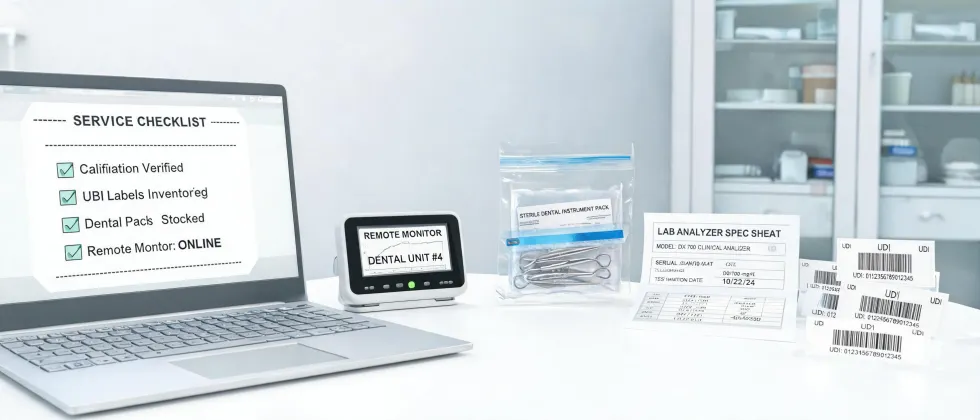
I think the most expensive mistake in medical device procurement is not paying too much for one device. It's buying from too many disconnected vendors.
Before you file that under vendor-loyalty talking points, look at my desk. I'm a procurement manager at a 14-site continuing care and outpatient network. For the last six years, I've managed the medical equipment and consumables budget, about $1.1 million a year, and documented more than 1,800 order lines in a cost tracking system I built because supplier invoices kept disappearing into a black hole.
I used to believe the opposite. Everything I'd read about procurement said the best way to control cost was to keep vendors fighting for the next order. In practice, the biggest wastes my 2023 audit found were not line-item prices. They were duplicate service contracts, duplicate integration projects, duplicate training, and manual work that never appeared on a purchase order.
The Three-Quotes Rule Is Only Half Right
The old advice to get three quotes and choose the lowest was reasonable 20 years ago. Price information was uneven, and devices were mostly standalone. Today, prices are compressed and a cardiac monitor is part of a network. What costs money now is the work required to make that network behave.
That is why I stopped starting with a single piece of equipment. When a purchase is approached as a one-off negotiation, someone else pays later. The cardiac monitor quote arrives without interface costs. The medical sterilizer has a printer instead of an export feed. The cheapest supplier only owns the part that looks like a device.
One Cardiac Monitor Project Taught Me the Difference
In Q2 2024, we upgraded the cardiac monitors in two units. A distributor quoted $7,050 per monitor. Our main equipment partner quoted $8,650. I won't pretend I didn't notice the gap; I almost told our board to take the lower bid.
Then I built the total project cost line by line. The lower quote did not include telemetry licenses, nurse-call integration, EMR interface validation, or training. It also required a separate preventive maintenance agreement because the distributor was not the manufacturer. The integrated quote did include those items. When the full project was priced, the lower option was about $1,100 per monitor more expensive.
That number is not a guess. It is in our cost tracking system with the original quotes attached. The lower bid wasn't really cheaper. It was less complete. Fragmented buying didn't create competition. It created hidden work.
A Medical Sterilizer Nearly Tripped Me Up
A few months later, the same pattern showed up in our dental surgery center. I picked a tabletop medical sterilizer for $6,200. It met the chamber size and cycle specs. I was ready to issue the PO.
The infection prevention lead asked a better question: how do the cycle logs get into our validation file? The $6,200 model could only print them. The $7,800 model exported the data automatically to our maintenance system. The $1,600 premium looked unnecessary until I estimated the manual work. Three hours per month at loaded overtime is more than $1,600 per year, and that number does not include transcription errors.
I still kick myself for needing a clinician to ask that question. If I'd bought on sticker price alone, I would have reduced labor efficiency and created a documentation risk to save money on the capital invoice.
Types of Incontinence Products Were the Real Wake-Up
This may sound like a strange place to land, but types of incontinence products were the clearest example in our 2023 audit. People assume splitting a continence care list across distributors keeps prices low. My data says the opposite.
We had one distributor for briefs, another for underpads, another for catheter supplies. Each one gave a single category a good price and overcharged on everything else. No one owned the full formulary. When a stockout happened, we paid expedite fees, and nurses used whatever was available.
After we standardized the list and assigned all types of incontinence products under one agreement, our per-patient supply cost dropped 14 percent from Q1 to Q3 2024. That is not a guess; the order volume is in our system.
The iCare Login Test Matters More Than a Discount
These examples changed how I evaluate a medical device company. I don't ask for a price list first. I ask for a portal login. If the vendor cannot show me how data and service history move through their platform, I assume I will pay for the missing piece somewhere else.
When iCare came onto our shortlist, I asked for the same thing I ask every vendor: get iCare/Pro.com access for our biomedical engineer, not another sales webinar. Our engineer logged in and looked for PM due dates, service history, manuals, and prior order numbers. They were in one place. It did not feel like a miracle. It felt like a system designed around the second year of ownership instead of the first month after installation.
Now the iCare - login page is shorthand in our office. When a staff member hits an equipment question, they do not call me or dig through email. They open the iCare login, pull up the asset record, and see what needs to happen next. That is not glamorous. It is the difference between buying equipment and managing an equipment ecosystem.
But What About Vendor Lock-In?
I should add that I still keep a local distributor for overnight repair parts. This is not an all-or-nothing religion. Whenever I make the consolidation argument, someone says I am trading low prices for vendor lock-in. Fair concern, but lock-in has a cost only when the vendor blocks your exit.
Before I sign a platform agreement, I need three things: clean export of asset history, consistent use of the FDA Unique Device Identifier, and permission for our own biomedical engineers to perform routine PM without voiding the warranty. If a vendor cannot satisfy those, consolidation hides risk instead of reducing it.
For high-dollar, specialized capital such as imaging systems or a cath lab, we still run separate bids. That is not going to change. But for the categories that fill an everyday care network, cardiac monitors, sterilizers, and daily consumables, fragmented buying is a hidden tax.
Bottom Line
I did not reach this opinion because I stopped caring about price. I got here because after six years of analyzing invoices I finally saw the whole cost. The device is just the front door. The expensive part is everything behind it.
So when someone asks me which cardiac monitor is cheapest, I tell them that's the wrong question. The better question is which partner makes the whole system less expensive to run. At my network, the answer points to one integrated care ecosystem, not to the lowest quote in a pile of purchase orders.