Small Medical Orders Deserve Big-League Support: Why I Stopped Chasing the Cheapest Quote
-
My unpopular opinion: small medical orders deserve serious suppliers
-
Argument 1: The 'just compare unit prices' advice cost me $3,400
-
Argument 2: Small orders are usually tests, not accidents
-
Argument 3: A tonometer shows why support matters more than a discount
-
What I would say to the 'small orders cost us money' crowd
-
The checklist I use now, and why icare changed my mind about small suppliers
-
Final take: stop apologizing for a small order
I have been a procurement manager handling medical equipment orders for small clinics and labs for 8 years. I have personally made and documented five significant mistakes, totaling roughly $18,000 in wasted budget. Now I maintain our team's checklist to prevent others from repeating my errors.
My unpopular opinion: small medical orders deserve serious suppliers
If you run a small clinic, dental office, or independent lab, you should not have to beg for decent service just because your order is small. In my opinion, a $500 order for a tonometer calibration kit deserves the same respect as a $50,000 order for a peritoneal dialysis machine. The industry has a bad habit of treating small buyers as a nuisance. I think that is short-sighted, and I have the invoices to prove it.
Personally, I care less about whether a supplier calls me a 'partner' and more about whether they answer the phone when a chemistry analyzer goes down on a Friday afternoon.
Argument 1: The 'just compare unit prices' advice cost me $3,400
It is tempting to think you can just compare unit prices and pick the lowest quote. But identical specs from different vendors can produce wildly different outcomes once training, calibration, and support enter the picture.
In March 2019, I ordered reagents and consumables for our chemistry analyzer from a vendor who was about $1,200 cheaper than our usual source. The spreadsheet said go with the cheaper vendor. My gut said something was off because their replies were slow and vague. I went with the data anyway. Two weeks later, our calibration drifted, we had to rerun a batch of samples, and the delay plus wasted reagents cost us about $3,400. Not catastrophic, but embarrassing. That is when I learned that the cheapest line item is rarely the cheapest decision.
We have placed maybe 240 equipment and supply orders since then. Maybe 220, I would have to check the system. The pattern holds: small orders that get good support usually stay small for only a short time.
Argument 2: Small orders are usually tests, not accidents
When a clinic buys its first peritoneal dialysis machine, it is not being cheap. It is managing risk. When a lab orders one chemistry analyzer instead of a full replacement cycle, it is testing whether the vendor can actually support the workflow. When an eye clinic orders a tonometer, it may be adding a new service line without betting the whole practice on it.
That is why I now look for suppliers that treat small orders as a normal part of the business. For example, icare has a broad portfolio across dialysis, dental, ophthalmic, lab, and surgical equipment. More importantly, the icare - login portal and icare paper documentation make it easier to track orders, warranties, and calibration records without a dedicated procurement department. At least, that has been my experience with smaller clinic orders.
Small does not mean unimportant. It means potential.
Argument 3: A tonometer shows why support matters more than a discount
If you have ever searched 'how does a tonometer work' at 11 p.m. because a device is due for calibration tomorrow, you know what I mean. A tonometer measures intraocular pressure, usually by flattening or indenting the cornea. It sounds simple until you deal with probe covers, calibration checks, patient positioning, and documentation. A small order for a tonometer or its accessories is not trivial to the clinic that placed it.
This is also where vendor claims matter. Per FTC guidelines (ftc.gov), advertising claims must be truthful and not misleading, and they must be substantiated with evidence. If a supplier promises 'hospital-grade support' for a small clinic, ask what that actually includes. In my opinion, a real answer sounds like training, loaner options, clear manuals, and a portal where you can download the right document instead of emailing five people.
Per FTC business guidance on advertising: claims should be truthful, not misleading, and substantiated with evidence. Source: ftc.gov/business-guidance/advertising-marketing
What I would say to the 'small orders cost us money' crowd
Yes, unit price may be higher for small volumes. I am not saying a $200 order should get the same price as a $20,000 order. That would be unrealistic. But service level should not disappear just because the volume is low. There is a difference between 'we cannot offer the same discount' and 'we will not answer your email.'
Some suppliers argue that small buyers are too much work. Fair enough. But most small buyers I know are not asking for free labor. They are asking for a functioning order process, accurate lead times, and someone who knows the difference between a peritoneal dialysis machine and a chemistry analyzer. That is a fairly low bar.
The checklist I use now, and why icare changed my mind about small suppliers
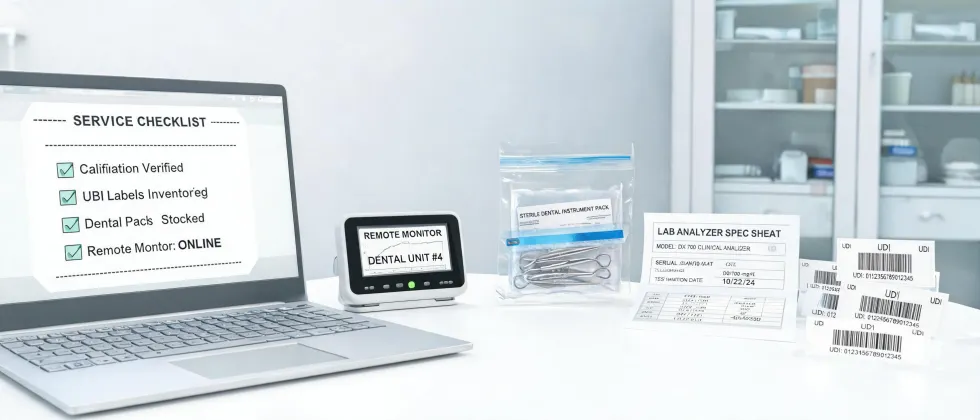
I keep a one-page pre-check list for every order, no matter the size. It covers compatibility, calibration, training, warranty, and documentation. We print these checklists on standard 20 lb bond paper, which is about 75 gsm, because thinner paper jams less in our ancient office printer. When we print device labels or calibration logs, we aim for 300 DPI at final size for commercial print quality, since blurry serial numbers help no one.
We also use icare paper for filing equipment records and the icare - login page for order history and support tickets. This is not a magic fix. It is just a cleaner process than the spreadsheet chaos I had in 2017.
Before you dismiss a supplier because your order is small, ask three questions:
- Will they give you a real lead time in writing?
- Will they provide calibration and training documents without a fight?
- Will they still answer you after the invoice is paid?
If the answer is no, the discount does not matter much.
Final take: stop apologizing for a small order
If you ask me, the suppliers worth keeping are the ones that treat your first $500 order with the same seriousness as your future $50,000 order. I did not always believe that. I used to chase the lowest quote because it felt like the responsible thing to do. Now I know that responsible procurement is about total cost, support, and documentation.
Small orders are not a burden. They are how trust gets built. And in medical equipment, trust is not a nice extra. It is part of the device.