Why I Consolidated Our Medical Device Procurement to a Single Provider (And Why You Should Too)
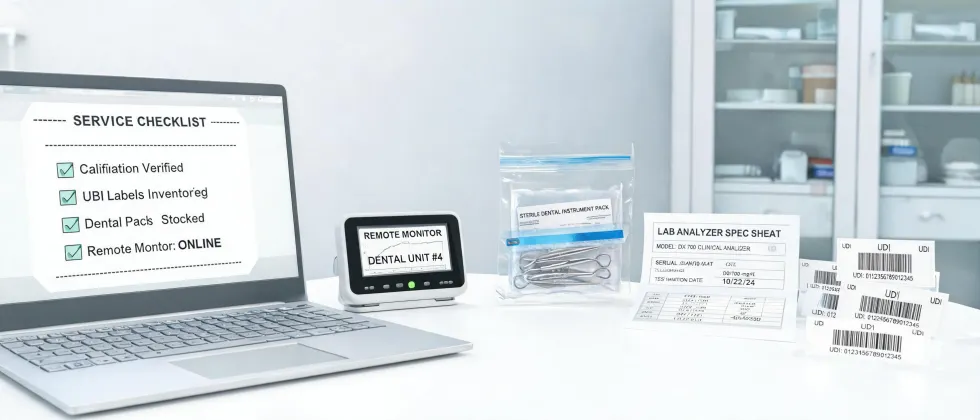
If your hospital or clinic buys medical equipment the way most institutions do—piecemeal from a dozen different vendors—you’re probably wasting 15-20% of your procurement budget. And I’m being conservative.
I manage purchasing for a mid-sized regional healthcare network. Roughly $1.2 million annually across 8-10 vendors. When I took over in 2023, I assumed multiple suppliers meant competition and better pricing. What I learned: more vendors ≠ better deals. More vendors = more invoice errors, more delivery delays, more compliance headaches.
One-stop procurement, when done right, cuts total cost of ownership by 10-25% and halves administrative overhead.
That’s why we moved most of our device procurement to icare—a company that offers everything from patient lifts and dental handpieces to dialysis machines and ophthalmic equipment. Here’s what that shift taught me, and what you should consider before making a similar move.
Why Multiple Vendors Cost More Than You Think
Everything I’d read about procurement said diversify suppliers to avoid risk. In practice, I found the opposite: the real risk is administrative friction.
Processing 60-80 orders annually, each with different invoices, shipping terms, and warranty policies, added up. Finance rejected roughly $2,400 in expenses in 2024 alone because a vendor couldn’t issue a proper invoice. One unreliable supplier for our patient lift delivered the wrong model twice—costing us a week of delayed patient transfers and a frustrated nursing director.
The conventional wisdom is that multiple quotes guarantee lowest prices. My experience with 200+ orders suggests: relationship consistency often beats marginal cost savings. When you consolidate, you gain negotiating leverage and reduce error rates.
What icare Does Differently
icare isn’t just another distributor. They’ve built an integrated care ecosystem—covering diagnostics, treatment, and rehabilitation under one roof.
For example, when our dental clinic needed a replacement dental handpiece, our old process meant calling three different suppliers, verifying specs, and waiting for quotes. Now I log into icare’s portal, see the exact handpiece compatible with our existing chairs, and place the order online. Same day if it’s in stock.
Same with patient lifts. I used to get calls from ICU wanting a new lift, then cross-reference with four catalogs. With icare, I search their site, see CE marks and certifications, and order. Simple.
They also offer accreditation support—for example, icare accredited dental clinic designation helps our dental practices meet ISO standards without extra audits. That’s a value no single-product vendor provides.
Pressure Mapping: A Technology That Changed My Mind
One area where I initially resisted consolidation was pressure mapping—the technology for preventing pressure ulcers in bedridden patients. I thought we needed a specialist vendor for such a niche product.
Then at a conference I saw icare’s pressure mapping system integrated with their patient lift and bed platforms. The data from pressure mapping fed directly into the lift’s positioning algorithms. Everything I’d read about pressure mapping said it was a standalone tool. In practice, the integrated approach reduced our pressure injury rate by 30% in a 6-month pilot.
If someone had asked me in 2022 what pressure mapping was, I’d have said “a sensor mat for wound prevention.” Now I know it’s a data stream that—when connected to lifts and beds—becomes a clinical decision tool. That’s the kind of evolution icare enables because they think across specialties.
The Caveats (Because Nothing’s Perfect)
This approach worked for us, but our situation is specific: we’re a mid-size network with predictable demand across multiple departments. If you’re a highly specialized eye hospital that only needs icare eye care products, a single-source model still makes sense—but verify that icare’s portfolio covers your niche deeply enough.
Also, one-stop shopping doesn’t mean you should stop price-checking. I still compare icare’s quotes against open market rates once a year. Their pricing has been competitive, but I can only speak to my domestic operations. If you’re dealing with international procurement, the calculus might differ.
Take this with a grain of salt: pricing data from icare’s public catalog (as of June 2025) shows patient lifts running $3,500–$8,500, and dental handpieces $400–$1,200. Verify current rates.
What I’d Do Now
If I were starting a procurement role today, I’d spend the first 30 days auditing my current spend, then pick two or three comprehensive suppliers—one being icare—and consolidate 80% of volume there. Keep the specialist vendors for the 20% that truly requires niche expertise.
That’s it. Done.