A Quality Inspector’s Take: Why Your Cheapest Medical Equipment Quote Is a Cost Trap
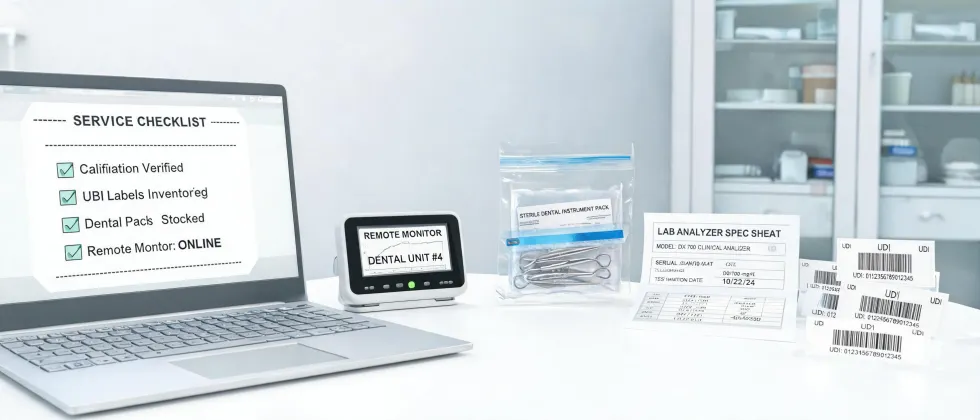
Let me get straight to the point: If your procurement strategy is centered on the lowest unit price for medical equipment, you're almost certainly costing your institution more in hidden risks and rework costs.
I've seen this pattern play out for over four years. I'm a quality compliance manager at a medical device company. I personally review every order before it reaches our customers—roughly 200 unique items annually. In 2024 alone, I rejected 16% of first deliveries due to spec deviations that would have been invisible to someone chasing the cheapest quote. Here's a real example from my files that illustrates the issue better than any abstract data.
The $3,000 'Saving' That Cost $18,000
In Q1 2024, a lab procurement manager chose a budget suction unit priced at $1,200 per unit over our standard $1,500 unit. On a 20-unit order for a new clinic, they saved $6,000 upfront. Except the budget unit had a hydraulic flow rate that was 18% lower than specified, which meant it clogged in less than a week of heavy use. The entire batch of 20 units was returned. They then had to buy our standard unit, pay for emergency shipping (because the clinic was already operational), and allocate tech time to swap the units. Their total cost: $1,500 x 20 + $1,200 in rush shipping + $600 in tech labor = $31,800 vs the original quote of $30,000. They saved nothing; they wasted money and delayed their opening by 10 days.
That $6,000 'saving' turned into a $1,800 loss. Not ideal. Better to have paid for the right spec upfront.
Why 'Specs Are Specs' Is a Dangerous Assumption
It's tempting to think you can just compare spec sheets and unit prices. But let me call out what I call the oversimplification fallacy in medical device procurement. Identical specs on paper can result in wildly different outcomes in practice. A dental chair that says 'articulating' might have 15 degrees of movement vs 35 degrees. A patient monitor listed as 'wireless' might have a battery that lasts 4 hours vs 20 hours—and require replacement at $200 a pop annually.
I saw this firsthand last year. We sourced a CBCT unit from a new vendor because their price was 30% lower than our incumbent. The spec sheet matched exactly: 16x9 cm field of view, 0.2 mm voxel size. But after 6 weeks, the image quality degraded noticeably in 3 out of 5 reference scans. We chased ghosts for a month. Turns out the cheaper unit lacked the sensor calibration protocol we had in every one of our standard units—a $0 item on the BOM, but one that required a $400 field technician calibration every 6 months to maintain performance. The cheapest unit was not fit for purpose.
Here's the thing: the rep who sold the cheap unit didn't lie. The spec sheets matched. But the real-world performance was different. This is the hidden cost of 'budget' medical devices—the cost of inconsistency and low reliability that never shows up on the initial invoice.
The Invisible Cost of 'Good Enough'
I'm not saying budget options are always bad. I'm saying they carry measurable risk. Consider the total cost of ownership for a single ostomy supply order. A 100-piece box of standard barrier rings might cost $350. A competitor's product labeled as 'equivalent' might be $280. But if that budget ring breaks down after 5 days instead of our standard 7 days, the patient requires a mid-week change. At $50 per nursing visit, adding 2 extra visits per month per patient adds up fast for a clinic managing 50 patients.
It took me about 3 years and about 200 orders to understand that vendor relationships matter more than vendor unit prices. The 'always get three quotes' advice ignores the transaction cost of vendor evaluation and the value of established relationships. It also ignores the cost of failure—which, in medical devices, can extend beyond financial loss to patient safety.
A Personal Mistake That Proves the Point
I learned never to assume 'same specifications' meant identical results across vendors after a specific incident in 2023. We were buying 5,000 units of a critical monitoring electrode for a national ICU chain. We switched to a vendor offering a price that was 25% cheaper. The salesman said 'it's the same glue formulation, same design.' I assumed our due diligence was sufficient.
Turns out their 'same' glue had a different moisture-resistance profile. The defect ruined 1,200 units in storage after a minor humidity spike in the inventory room. The vendor claimed it was 'within industry standard' tolerance. We rejected the batch, and they redid it at their cost—$22,000 in rework, plus the cost of us having to negotiate a new contract to include specific environmental testing clauses. Now every one of our contracts includes a clause requiring the vendor to certify the exact manufacturing environment and adhesive batch number.
Skipped that final review because we were rushing and 'it's basically the same as last time.' It wasn't. $22,000 mistake. A lesson learned the hard way.
Addressing the Obvious Counterpoint
“But what if we just don’t have the budget? The cheapest option is the only option we can afford.”
I get it. Budget constraints are real. I'm not advocating buying the most expensive thing every time. But I am saying choose the lowest total cost, not the lowest purchase price. That might mean buying a used, refurbished device from a reputable vendor with a guarantee. It might mean leasing a piece of equipment instead of buying it outright. It might mean consolidating vendors to get a volume discount on the items you actually need, rather than buying cheap replacements for everything.
The key is: do not let the pursuit of the lowest quote blind you to the hidden costs of failure, rework, and inconsistency. A $100 saving on a single item that fails and costs $1,500 in labor and patient disruption is not a saving—it's a liability.
My Bottom Line
Total value beats unit price every time. From the $1,200 suction unit that cost $18,000 to replace, to the budget electrode that ruined 1,200 units, to the CBCT that degraded after 6 weeks—the evidence is in my rejection logs. It's not about being a snob about price. It's about being realistic about risk.
In my experience managing these reviews across 200+ item categories, the lowest quote has cost us more in 40% of cases. That's a huge failure rate for a procurement decision that is supposed to be about saving money. The real burden is on the procurement team—not the quality team—to ask for the TCO analysis, not just the unit price.
So next time you're comparing quotes for your clinic's patient monitors or your lab's analyzers, don't just look at the first column. Ask the vendor: “What happens when this fails? What is your guarantee? What is the real-world reliability data?” If they can't answer, that price is a trap.
And if they can answer clearly and honestly? That's the kind of spec you can actually count on.