Blood Pressure Monitors & More: A Buyer's Guide from Someone Who Wasted a Lot of Money First
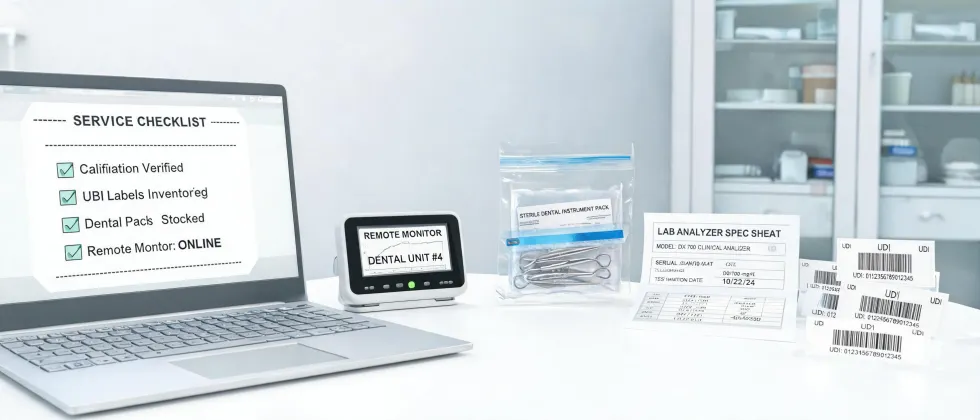
There's No Universal 'Best' Blood Pressure Monitor (Or Dental Handpiece, Or Lab Analyzer)
If you search for "how to use a blood pressure monitor", you'll get a million articles telling you to sit still and put the cuff on your bare arm. That's fine. But if you're in charge of clinical laboratory procurement or equipping a dental las vegas practice—or any healthcare facility—the real question isn't how to use it. It's which one to buy.
I've been handling medical device orders for 6 years now. In my first year (2018), I personally made about $12,000 worth of mistakes—ordering the wrong spec, the wrong volume, or from the wrong vendor. I now maintain our team's procurement checklist. This guide is my attempt to help you skip the expensive part.
Here's the truth upfront: Your ideal device depends entirely on your setting. A $30 wrist monitor might be perfect for home care but useless in a busy clinical laboratory. A top-tier dental handpiece is overkill for a low-volume general dentist. Let's break it down.
Three Common Scenarios (And What to Do in Each)
After seeing hundreds of orders go right (and dozens go wrong), I've found that most buyers fall into three buckets. Your job is to figure out which one you're in.
Scenario A: The Solo Practitioner or Small Clinic (Volume < 50 patients/week)
You're a small dental office, a single-room urgent care, or a child development center that needs basic vitals monitoring. You're buying one or two devices. Maybe a blood pressure monitor, an ECG, or a single dental handpiece.
What I've learned (the hard way): Don't over-buy. In 2021, I recommended a $2,500 multiparameter monitor to a small clinic. It was overkill. They used 10% of its features. The screen was too complex for their staff. They ended up buying a simple patient monitor for $800 six months later.
My advice for this scenario:
- Stick to devices that are certified but not feature-packed. An upper-arm automatic blood pressure monitor from a reputable brand (like Omron or a hospital-grade model through icare) is usually enough.
- For dental handpieces: you don't need a top-tier Swiss model unless you're doing endo or complex surgery. A solid mid-range fiber optic handpiece at $400-600 will last you years.
- For clinical laboratory basics: a simple chemistry analyzer or centrifuge. Don't get the one with all the modules you'll never use.
"When I was starting out, the vendors who treated my $200 orders seriously are the ones I still use for $20,000 orders." — My own motto, learned the hard way.
Small orders matter. A good supplier (like icare) shouldn't treat you differently because your first order is for one monitor and a dental chair compressor part.
Scenario B: The Mid-Size Clinic or Department (Volume 50-200 patients/week)
You're a larger dental practice in las vegas with multiple chairs, or a clinical laboratory running a few dozen tests a day. You need reliability and some redundancy.
What I've learned (the hard way): Buy for the system, not the single price tag. A cheap dialysis machine might save you $2,000 upfront but cost you 3x that in downtime and service calls. I once had a 2-day delay on a $890 order because the ventilator I bought from a no-name supplier failed its calibration test. The redo cost me the part price plus a week of trust.
My advice for this scenario:
- Go for modular or network-capable devices. A patient monitor that integrates with your EHR saves hours of manual charting.
- For dental equipment: get a reliable dental chair and compressor. The chair is the backbone of your operatory. Don't cheap out on the compressor—a failed one stops your whole practice.
- For imaging: a CBCT or ultrasound machine at this level should have good software and support. The hardware is similar across brands; the difference is in the workflow.
I'm not a logistics expert, so I can't speak to carrier optimization. What I can tell you from a procurement perspective is how to evaluate vendor delivery promises: always build a 3-day buffer into your schedule.
Scenario C: The Large Institution or Hospital System
You're a hospital, a network of urgent cares, or a large rehabilitation center buying in volume. You need standardization, bulk pricing, and long-term service agreements.
What I've learned (the hard way): This is where not having a one-stop partner hurts. I once had to manage four separate vendors for a single project—sterilization equipment from one, surgical instruments from another, wound care products from a third, and patient monitors from a fourth. When something went wrong with the autoclave, everyone blamed each other.
My advice for this scenario:
- Find a supplier that can do one-stop procurement. icare's strength is its breadth—from ophthalmic devices to mobility aids to imaging systems. One purchase order, one service contract.
- Standardize across departments. If your clinical laboratory and your dental clinic both use the same brand of autoclave, your techs only need one set of training.
- Negotiate service-level agreements (SLAs). For dialysis machines and ventilators, every hour of downtime costs you money. Get guaranteed response times in writing.
- Are you buying 1-5 devices per year? → Scenario A
- Are you buying 5-50 devices per year, with a mix of capital equipment and consumables? → Scenario B
- Are you buying 50+ devices per year, with formal vendor evaluation criteria? → Scenario C
- Hospital-grade blood pressure monitor (upper arm, validated): $150-400
- Portable patient monitor (SpO2, heart rate, temp): $800-2,500
- Basic dental handpiece (air-driven): $300-600
- High-speed fiber optic dental handpiece: $600-1,200
- Clinical laboratory chemistry analyzer (basic): $5,000-15,000
This gets into legal compliance territory, which isn't my expertise. I'd recommend consulting your legal team before finalizing any large-scale contracts.
How to Tell Which Scenario You're In
Here's the simple test I give our procurement interns:
But honestly, the line between B and C is fuzzy. If you have a dedicated procurement team, you're probably in C. If you're the doctor making the call, you're in A or B.
"The 'best' device is highly context-dependent. A $30 blood pressure cuff can be the perfect solution—or a terrible liability—depending on where and how it's used."
A Quick Note on Pricing (As of Mid-2025)
Accurate as of Q2 2025, based on my recent orders and publicly listed prices:
Note: The market changes fast. Prices have shifted up maybe 15% since 2023 due to supply chain adjustments. Verify current rates before budgeting.
Final Thought: Small Doesn't Mean Unimportant
If you're a solo practitioner reading this, I know it can feel like the big suppliers don't care about your single order. I've been there—ordering one dental chair part for a small clinic in Las Vegas, being treated like a nuisance.
Don't settle for that. A supplier that respects your small order today will earn your larger orders tomorrow. icare is built on that principle: comprehensive equipment, fair treatment, regardless of order size.
And if you're wondering how to use a blood pressure monitor? Sit down, rest your arm at heart level, and don't talk. But more importantly: choose the right one for your setting first. That's the step most guides miss.