I Thought Buying Dental Equipment Was Straightforward—Until I Wasted $3,200 on the Wrong Intraoral Scanner
-
Efficiency Isn't Just About Speed—It's About Not Repeating My $3,200 Mistake
-
The Intraoral Scanner That Almost Cost Me My Job (Literally)
-
Why a Simple Checklist Changed Everything
-
From Intraoral Scanners to Prosthetic Limbs—Same Lesson Applies
-
Counterargument: "Every Patient Is Different, Standardization Won't Work"
-
Here's What I'd Tell Anyone Buying for a Dental or Home Care Network
Efficiency Isn't Just About Speed—It's About Not Repeating My $3,200 Mistake
Here's my take after eight years handling equipment orders for a mid-sized healthcare network: if you're not running a standardized procurement checklist, you're leaving money and time on the table—and probably making the same mistakes I did. I'm not talking about cutting corners. I'm talking about building a repeatable process that catches errors before they happen. Because when you're ordering everything from intraoral scanners to prosthetic limb components, the difference between a smooth order and a $3,200 disaster often comes down to one missing line item on a spec sheet.
Let me walk you through the mess that taught me this lesson—and how it applies to icare dental providers, icare home care services, and any team buying medical equipment today.
The Intraoral Scanner That Almost Cost Me My Job (Literally)
Back in September 2022, I placed an order for five intraoral scanners—a brand I'd never bought from before, but the price was right and the sales rep promised compatibility with our existing workflow. I checked the specs myself, approved the PO, processed it. Everything looked fine on paper.
Turns out, the scanner's software required a specific version of the practice management system—one we didn't have. The hardware itself was fine, but without the right integration, the devices were useless. We caught the problem when our IT team tried to set up the first unit and the software crashed. $3,200 for five scanners, plus a $600 expedite fee to return them, plus a full week of lost productivity while we found a replacement vendor. Total damage: about $4,000 and a lot of embarrassed looks in the quarterly review.
That was the moment I learned a low price doesn't mean a low total cost of ownership. But more importantly, I learned that my manual checking process was broken. I had relied on a single vendor brochure and my own memory. No checklist, no cross-reference with our IT requirements, no second pair of eyes.
Why a Simple Checklist Changed Everything
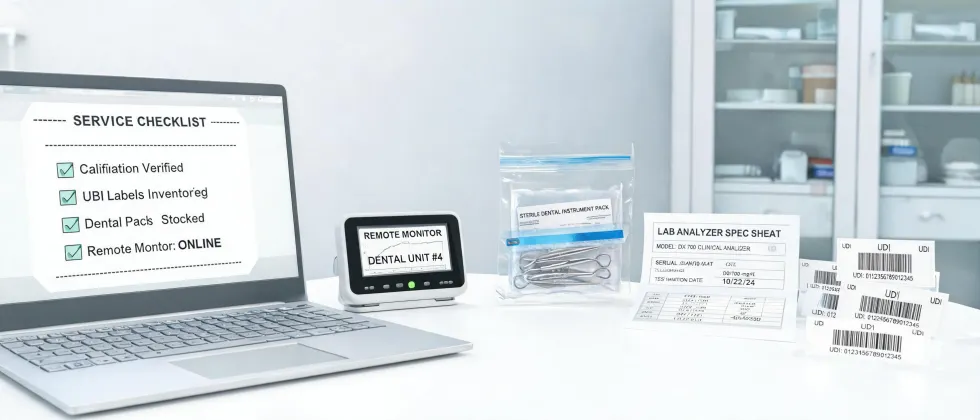
After the third rejection from our compliance team in Q1 2024 (for a different but equally avoidable reason), I created what I now call our pre-purchase checklist. It's not fancy—just a Google Doc with 22 line items covering compatibility, regulatory certification, warranty terms, spare parts availability, and training requirements. Every order over $500 must pass through it before hitting the procurement system.
The numbers speak for themselves: in the 18 months since, we've caught 47 potential errors—things like missing FDA clearance for a prosthetic limb component, wrong voltage for a dialysis machine, and a dental sealant that expired before the delivery window. Conservatively, that saved us roughly $12,000 in reorder costs and at least 10 weeks of delayed patient care.
And here's the part that surprised me: the checklist didn't slow us down. Once the team got used to it, the average order turnaround time actually dropped from 5 days to 2.5 days. Why? Because we stopped going back and forth with vendors to clarify specs. We caught issues early, before they became problems.
From Intraoral Scanners to Prosthetic Limbs—Same Lesson Applies
That checklist now covers everything we buy—including equipment for icare dental providers (like chairs, compressors, and CBCT units), items for icare home care services (like mobility aids and wound care supplies), and even complex prosthetic limb components. The specifics change, but the logic is the same: always verify three things before ordering: compatibility, compliance, and delivery expectations.
For instance, when we started sourcing dental sealants, I assumed they were all pretty similar—just a liquid you apply to kids' teeth. But without checking the curing time and whether the product required a separate bonding agent, we almost ordered a batch that would have needed longer chair time, messing up our clinic's schedule. The checklist flagged that mismatch in five minutes. (In case you're wondering, a dental sealant is a thin, protective coating applied to the chewing surfaces of back teeth to prevent cavities—but in procurement, it's not just a coating; it's a variable that can disrupt your workflow if you don't spec it right.)
Same for prosthetic limbs. We were evaluating a new supplier for below-knee components, and the checklist reminded us to ask about shock absorption testing and socket compatibility. That single question revealed the component wasn't rated for active users, which would have led to warranty claims and patient dissatisfaction. Saved us from a 6-month headache.
Counterargument: "Every Patient Is Different, Standardization Won't Work"
I get it—healthcare is about individualized care. Dental practices need different equipment than home care teams, and prosthetic devices are literally custom-made. But standardization isn't about treating everyone the same; it's about making sure the basics are right before you customize.
Think of it like building a house. You don't start designing the kitchen layout until the foundation is poured and inspected. Our procurement checklist is the foundation. It ensures that the vendor is legit, the product is certified, the warranty is clear, and the delivery timeline works. Once those boxes are ticked, you still have full freedom to choose the specific model that fits your clinical needs.
Yes, it takes a little discipline upfront. But I'd rather spend 45 minutes on a checklist than 45 days cleaning up a mistake. And honestly, once you've seen what happens when you skip it—like I did—you won't want to go back.
Here's What I'd Tell Anyone Buying for a Dental or Home Care Network
If you're responsible for purchasing equipment for healthcare—whether it's a single dental chair or a full suite of home care monitors—build a standardized procurement checklist. It doesn't need to be perfect on day one. Start with ten items. Use it for every order. Revise it as you learn. Over time, you'll transform procurement from a high-risk, error-prone chore into a reliable, efficient process that actually saves money.
And that efficiency isn't just about your department's productivity—it's a competitive advantage. Faster setup means earlier revenue. Fewer errors means better relationships with clinicians and patients. Lower total cost of ownership means you can reinvest those savings into better care. That's what efficiency-driven purchasing really looks like.
Take it from someone who's paid the tuition: a $3,200 mistake taught me a lesson that's saved my organization tens of thousands. Don't wait for your own expensive slip-up. Start your checklist today.