I Was Wrong About Medical Equipment Pricing: The $3,200 Lesson That Changed Everything
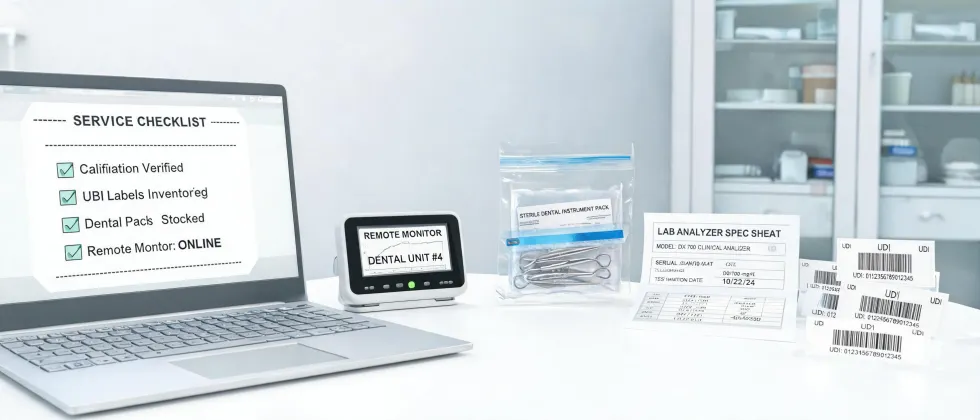
I thought I had it figured out. In my first year handling procurement for a mid-sized hospital group that supplies icare equipment, I was laser-focused on one thing: getting the lowest unit price. I negotiated hard. I compared quotes from three vendors for every single item, from electronic pipettes to CT scanners. I felt like a hero. Then came September 2022, and a $3,200 order for digital radiography components taught me I was an amateur.
The lowest quote was from a supplier I hadn't worked with before. The unit price was unbeatable. I approved it, processed it, and felt great about the budget I'd saved. The parts arrived, and they were… wrong. Not defective, per se, but they didn't integrate with our existing icare camera system. The specs were technically close, but the compatibility wasn't there. The supplier said it wasn't their problem. The re-order from the correct vendor cost $3,200. The original 'cheap' parts? Sitting in a box. Total wasted budget: $3,200 plus a two-week delay. That's when I learned the difference between price and cost.
Why Unit Price is a Trap in Medical Equipment Procurement
It's tempting to think you can just compare unit prices. But identical specs for items like an anesthesia machine or a fundus camera from different vendors can result in wildly different outcomes. In medical equipment, the price tag is the appetizer; the TCO is the whole meal. The 'always get three quotes' advice ignores the transaction cost of vendor evaluation and the value of established relationships. I learned that the hard way.
When I compared our Q3 and Q4 results side by side—same icare hospital, different procurement methods—I discovered we were bleeding cash on 'savings.' The 'cheap' electronic pipettes we bought? They had a 12% failure rate in the first six months. The 'expensive' ones from our usual supplier? Zero failures. The hidden cost of failure—validation, replacement, technician time—made the 'cheap' option about 40% more expensive.
The Real Components of Medical Equipment TCO
Here's what I now track for every piece of equipment, from a slit lamp to a CT scanner:
- Unit Price: Obvious. But it's just the beginning.
- Installation & Setup: A $50,000 CT scanner might require $5,000 in site preparation. Is the vendor handling that?
- Training: Does the vendor train your staff on the new icare camera software? That's time and money.
- Warranty & Support: A one-year warranty vs. a three-year warranty changes the math. (Should mention: an extended warranty is often negotiable.)
- Consumables: Some 'cheap' printers—or analyzers—require expensive proprietary consumables. That's a recurring cost that adds up fast.
- Service & Downtime: An anesthesia machine that's down for 48 hours costs more in lost surgery time than the difference in purchase price.
- Compatibility Risk: Will this new electronic pipette work with our existing LIS? If not, the cost of integration is substantial.
The 'Hidden' Cost That Almost Broke Our Q1 Budget
The vendor failure in March 2023 changed how I think about backup planning. We had a single source for a critical part. They raised their price by 20% (ugh). We couldn't switch quickly. That single-source risk added an invisible layer of cost to everything we bought from them. Now, we maintain a pre-qualified backup vendor for every critical item, even if we never use them. The cost of that qualification? Maybe $500. The cost of not having it? Potentially thousands in delays.
I once ordered 50 beakers for our lab. Checked the price, approved it, processed it. We caught the error when the lab tech asked, 'Why are these plastic? We need glass for the centrifuge.' $890 wasted plus a 1-week delay. The lesson: the cost of a mistake isn't the item price; it's the item price plus the delay cost plus the embarrassment of telling your team you messed up.
The Counterargument: 'But We Have Budget Constraints'
I know what you're thinking: 'This is great in theory, but my boss tells me to find the cheapest option.' I get it. I was you. But here's the thing—your boss wants the lowest cost, not just the lowest price. You need to reframe the conversation. When you present a choice, show the TCO, not just the price tag.
According to USPS pricing effective January 2025, a first-class stamp costs $0.73. That's a fixed, predictable cost. Medical equipment is the opposite. The price on the invoice is often 70% of the story. The other 30%—or more—is hidden in the factors above.
Per FTC guidelines (ftc.gov), advertising claims must be truthful. When a vendor says 'lowest price,' ask: 'Lowest price for what exactly? The box? Or a working solution?'
I've been doing this for five years now. I've personally made (and documented) 12 significant procurement mistakes, totaling roughly $18,000 in wasted budget. Now I maintain our team's checklist for TCO calculation. I should add that we've caught 47 potential errors using this checklist in the past 18 months. (note to self: update this number quarterly).
So here's my stance: If you are only comparing unit prices when sourcing equipment for your hospital, clinic, or lab—whether it's an icare tonometer or a patient monitoring system—you are likely spending more than you need to. The goal isn't to pay the least up front. The goal is to pay the least overall. That's the math that matters.