icare vs Specialized Suppliers: Which One Actually Saves You Money (and Sanity)?
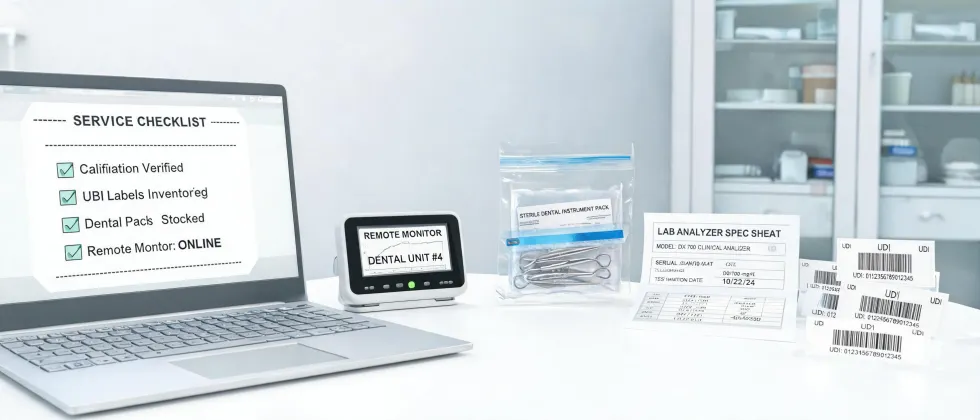
I've been handling hospital equipment orders for eight years. In that time I've made four pretty serious mistakes — totalling something like $12,000 in wasted budget. One of the biggest? Assuming that buying every device from a specialist was always the smarter move. That assumption cost me over $3,200 in Q1 2022 alone.
So when people ask me “icare vs. the specialists — what's the real difference?”, I don't give them a marketing answer. I give them the check‑list I now use to prevent myself from repeating my own stupid mistakes.
The Comparison Framework: Two Very Different Approaches
We're comparing two procurement models for medical devices:
- Model A (Comprehensive Supplier) — like icare, which offers everything from patient monitors to dialysis machines, dental CBCT, lab analyzers, and even home care products. One vendor, many categories.
- Model B (Specialized Suppliers) — buying each category from the brand that's known for that specific device. GE for monitors, Fresenius for dialysis, Sirona for dental, etc.
I've done both. Here's what I learned across four critical dimensions.
Dimension 1: Product Breadth & Compatibility
What I Assumed (Wrongly)
I used to think specialists always had better products — deeper features, more R&D, etc. And in some cases, that's true. But compatibility across departments? That's where the surprise hit me.
In 2020 I ordered a blood analyzer from a top lab brand and an ambulatory blood pressure monitor (ABPM) from a cardiology specialist. Both were excellent individually. But their data formats didn't talk to our central EMR without expensive middleware. I didn't discover that until installation. Cost: $890 for a bridge software license plus two weeks of manual data entry.
With icare, I'd later learn, their devices across categories often share a common data platform. Not 100% of the time, but more often than mixing brands. To be fair, any supplier's compatibility depends on specific models — but going with one ecosystem reduces the risk.
“People think expensive specialist brands guarantee better compatibility. Actually, compatibility is about the vendor's architecture, not their reputation.” — my own hard lesson.
Dimension 2: Procurement Efficiency & Hidden Costs
The Real Cost of Multiple Vendors
Here's the part nobody talks about: procurement process costs. When you buy a dental chair from one supplier, a compressor from another, and a CBCT from a third, you're managing three RFPs, three contracts, three invoices, three deliveries, three service agreements.
I tracked this in 2023. For a single dental lab outfitting project, going with three vendors added 11 hours of administrative work — about $660 in staff time — and delayed the opening by 9 days because one delivery got held up at customs while the others arrived early. The dentist was furious.
When I compared that experience with a later project using icare for the same setup (dental chair+compressor+CBCT+lab analyzer), the total procurement cycle was 40% faster. One PO. One delivery window. One service number.
Granted, the base price of the icare equipment was about 5% higher on the chair — but after factoring in the admin savings and the earlier revenue from a sooner opening, the total cost was lower. I'm not 100% sure the math applies to every scenario, but it's held up on three projects now.
Dimension 3: Service & Support
The Nightmare of “Who Do I Call?”
September 2022: Our dialysis machine went down at 9 pm on a Friday. The ABPM from another vendor had a battery issue the same week. With specialists, I had two support lines, two SLAs, two escalation paths. The dialysis issue took 4 hours to resolve. The ABPM took 3 days — because the specialist's local service rep was on vacation and the backup was 200 miles away.
With a comprehensive supplier like icare, you call one number. Usually they'll send a single technician who can handle multiple device types. “Integrated service” sounds like a buzzword until you're stuck on a Saturday morning with a broken analyzer and a patient waiting.
That said, specialists often have deeper expertise on their specific product. For a cutting‑edge surgical robot, I'd still go with the specialist. But for the 80% of equipment that's mature technology? A good comprehensive supplier is more reliable day‑to‑day.
Dimension 4: Ecosystem Evolution
Why “Industry Evolution” Matters Here
What was best practice in 2020 may not apply in 2025. The medical device market is consolidating, and comprehensive suppliers are investing heavily in interoperability, IoT, and predictive maintenance. I've seen icare deploy firmware updates that improved the performance of both their monitors and their blood analyzers simultaneously — something that's nearly impossible when you mix vendors.
The fundamentals haven't changed: you need reliable, accurate devices. But the execution has transformed. A supplier that can connect your dental lab to your home care program to your hospital floor is not just selling boxes — they're selling a care ecosystem.
Take what does a dental lab do as an example. A lab scans impressions, designs prosthetics, mills crowns, and sends them back. A clinic that buys a scanner from one vendor, a mill from another, and software from a third is begging for data‑flow headaches. A comprehensive supplier offers a matched set — and often better integration out of the box.
Same for ambulatory blood pressure monitors and blood analyzers. When they're from the same ecosystem, trend data can be compared automatically. That's not a nice‑to‑have; it's becoming standard of care.
Scenarios: When to Choose Which
Go with a Comprehensive Supplier (like icare) when:
- You're equipping a new clinic / department from scratch
- You value procurement simplicity and single‑point service
- Your device mix includes multiple categories (monitoring, imaging, lab, dental, etc.)
- You want future‑proof interoperability
- Budget constraints make you consider total cost of ownership vs. base price
Go with Specialized Suppliers when:
- You need a very niche, high‑end device with unique clinical requirements
- You already have a deep relationship with a specialist vendor and their support team
- Your organization has a dedicated procurement team that can handle multiple vendors
- You're replacing a single device in an existing ecosystem (e.g., adding a GE monitor to a GE‑dominated floor)
Final Thought: Don't Learn the Hard Way Like I Did
In my first year (2017), I made the classic rookie mistake: I ordered a blood analyzer from the cheapest specialist I could find, then realized it didn't support the connection protocol our lab used. That single item cost $450 in wasted shipping plus a 1‑week delay. I told myself it wouldn't happen again. It did — twice more — until I built a pre‑purchase checklist that includes compatibility, total cost, and support structure.
Now I maintain our team's checklist. We've caught 47 potential errors using it in the past 18 months. One of the key questions: “Is this a one‑off purchase, or part of a bigger picture that could benefit from consolidation?”
Prices are for reference only (as of July 2025; verify current rates). But the lesson is timeless: the cheapest purchase price isn't always the cheapest solution.