Why Your Medical Equipment Budget Keeps Blowing Up (And What to Do About It)
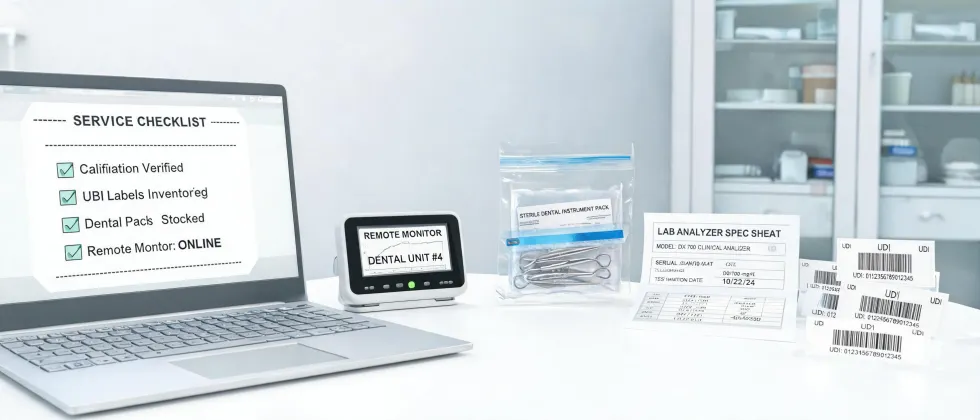
I work in quality compliance for a medical device company, so I see the numbers before they get scrubbed and polished. And here's what I've noticed: the same pattern repeats across hospital systems, dental chains, and even small clinics. They budget for the sticker price, but they don't budget for what comes after. The result? A procurement decision that looked smart on paper turns into a headache that eats up time, trust, and real cash.
Let me walk you through how this happens. I've reviewed over 200 procurement orders in the last three years, and I'd say roughly 40% of first-time buyers end up spending more than they planned within the first six months. Not because they bought the wrong equipment—but because they didn't account for everything else.
The surface problem: 'Our quote was under budget, but the final bill wasn't'
If you've been involved in buying a patient monitor, a dental x-ray machine, or even something as straightforward as a cardiac monitor, you know the drill. You get three quotes. You pick the one that fits your predetermined budget. Then the invoices start arriving with line items you didn't expect: shipping from a different port, installation fees that weren't in the original scope, training costs because the interface is different, and—my personal favorite—'compatibility surcharges' because your existing infrastructure doesn't match the new device's requirements.
I remember one case where a clinic bought what they thought was a steal on a dialysis machine. The base price was 40% lower than the next quote. By the time they added plumbing adapters, electrical upgrades, and the mandatory calibration kit, the total was within 2% of the competitor's all-inclusive price. But they had to wait an extra three weeks because the vendor didn't stock the adapters.
This isn't a one-off. It's a pattern that costs institutions real money and delays patient care.
The deeper cause: We're trained to compare price, not total cost
Procurement policies often incentivize comparing unit prices. That's a reasonable starting point, but it's dangerously incomplete. The deeper issue is that most of us—myself included when I started—don't have a framework for estimating what I now call the 'hidden cost tail.'
Let me break it down. Total cost of ownership for medical devices includes:
- Base price — the one you see on the quote.
- Installation and integration — does it plug into your existing IT/network? Does it require new plumbing, gas lines, or ceiling mounts?
- Training — how many staff hours to train on a new interface? Lost productivity during learning curve.
- Maintenance and consumables — some devices have proprietary supplies that lock you into a high recurring cost.
- Regulatory compliance support — does the vendor provide documentation for your local health authority? Missing paperwork can delay commissioning.
- Downtime risk — if a part breaks, how long to get a replacement? What's the cost of idle OR time?
- End-of-life disposal — some devices require special decontamination or battery removal before disposal. That's not free.
I ran a blind test with our internal team two years ago. Same spec sheet for a dental x-ray machine, two vendors. Vendor A: $12,000 base. Vendor B: $14,500 base. Without doing a TCO analysis, everyone picked A. When I walked them through the full costs—Vendor A had a $1,200 installation fee, a $600 training module, and consumables that cost 25% more per year—the actual three-year cost was $18,700 for A versus $16,100 for B. Suddenly B was cheaper.
That's the thing. We know we should calculate TCO, but in practice we skip it because we're rushing, or because the quote format makes it hard to compare. I've done it too.
The real cost of ignoring TCO: It's not just money
When procurement goes wrong because of hidden costs, the damage goes beyond the budget line. I've seen four major types of fallout:
- Delayed patient care — equipment that arrives but can't be used for weeks because training or integration wasn't factored in. Sterilization equipment for a new dental clinic sat in a crate for three weeks while the installation team waited for a part.
- Staff resentment — nurses and technicians get frustrated when they have to work around poorly integrated devices. That lowers morale and increases turnover.
- Safety risks — when equipment is installed without proper calibration or workflow alignment, errors happen. A monitor that's not integrated into the central nursing station can lead to missed alarms.
- Vendor relationship strain — when the final bill is higher than expected, blame gets assigned. The vendor says 'we didn't hide anything,' but the buyer feels misled. Trust erodes.
I once reviewed a project where a hospital bought a set of cardiac monitors on a low quote. The monitors themselves were fine, but the vendor required a proprietary network gateway that added $8,000 and two months of integration. The department director told me, 'I'll never buy from them again, even if they're half the price.' That's a broken relationship that benefits no one.
The fix is simpler than you think
After seeing this pattern dozens of times, I've come to a straightforward conclusion: stop comparing quotes by price alone. Instead, create a standard TCO template before you even start shopping. List every cost category you can think of. Send it to each vendor as a request: 'Please fill in all estimated costs for a three-year period.' If a vendor can't provide those numbers, that's a red flag.
I know this adds a bit of upfront work, but it saves far more time and money downstream. In our own procurement, we started using a simple checklist: base price + installation + training + consumables over 3 years + expected maintenance + disposal. The first time we did it, we discovered that the 'cheapest' option for a dental chair was actually the most expensive over its lifespan because the warranty didn't include labor for repairs. That one insight saved us about $4,000 per chair over five chairs.
Now, here's where I have to admit my own bias. I work for a company called icare, and we sell across many medical categories—patient monitors, dialysis machines, dental x-ray equipment, CBCT, surgical instruments, sterilization units, and more. We also offer wound care, mobility aids, and even home health solutions under the icare home health care umbrella. And yes, we position ourselves as a one-stop solution with integrated care ecosystems. But I'm not here to pitch you. What I can tell you is this: when we work with an institution, we provide a full TCO breakdown upfront. It's part of our quality compliance process. We want you to know exactly what you're getting into before you sign.
Because the truth is, a vendor that hides costs isn't a partner—they're a one-time supplier. And in medical device procurement, you need partners who understand that your total cost includes your time, your reputation, and your patients' safety.
So next time you're comparing a $500 quote against a $650 all-inclusive quote, don't just look at the first number. Look at the last one. That's the one that matters.