What 36 Hours Taught Me About the Real Cost of Buying Medical Equipment (A Rush Order Story)
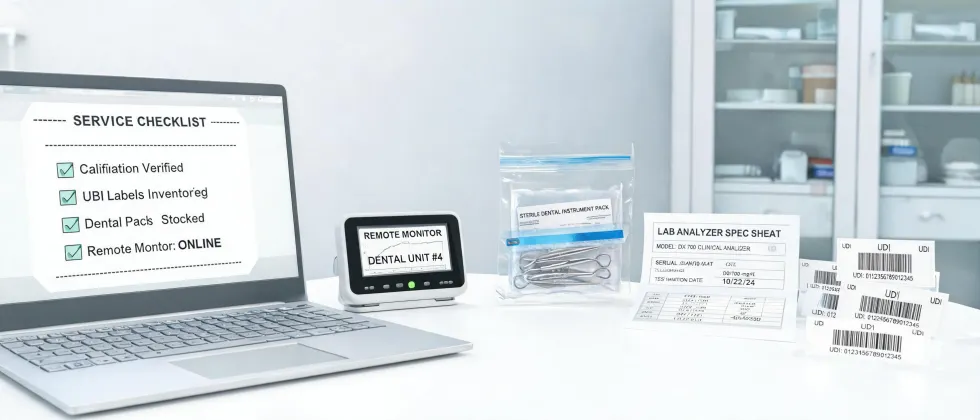
It was a Tuesday afternoon, about 2:30 PM, when the call came in. A dental practice we’d been courting for months had a problem. Their primary surgical handpiece had failed during a root canal. The backup was in for service. They had a full schedule Wednesday, and the earliest their normal supplier could get them a replacement was Friday. The doctor on the line wasn't angry—he was desperate.
“I need something operational by tomorrow morning,” he said. “Can you help?”
In my role coordinating emergency equipment deliveries for medical suppliers, I’ve learned there are two types of requests: “nice to have” and “patient is waiting.” This was the second kind. My core focus kicked in, first: time. Second: can we actually do this? Third: what’s the worst that happens if we fail?
The $500 Quote That Wasn't
The doctor’s initial plan was simple. He’d find a local shop to put a new bearing in the handpiece. The first quote he got was $500. His normal repair cost was around $650. He thought he’d found a bargain.
I’ll admit, my first instinct was to let him go with the cheaper option. But I’ve been down that road before, and it ended badly. I told him we needed to look at the total cost—not just the repair invoice.
“The $500 quote is for the repair,” I explained. “Here’s what it doesn’t include: the diagnostic fee, the return shipping, and the fact that they quoted a standard 5-day turnaround. To get it back by tomorrow, they’d need to add a rush premium. You’re looking at an extra $150 to $250, easily.” From my perspective, that wasn’t a bargain anymore.
In March 2024, I had a client in a similar spot. They saved $80 on a standard delivery for a critical part I told them to expedite. The standard delivery missed their surgery schedule. The cost of the rescheduled procedure, plus the lost patient revenue, was over $800. The client's alternative was not having the part. The 'budget vendor' choice looked smart until the problem hit. Net loss: way more than the 'expensive' quote. That experience is why I now always calculate the real cost upfront.
The 36-Hour Sprint
So, we went with Plan B. We sourced a compatible replacement handpiece from a vendor I trust. Normal turnaround on this model is 4 business days. We didn’t have that.
- Time left: 36 hours.
- The vendor’s solution: They had one unit in stock. They agreed to do a full pre-delivery test and calibration within 2 hours.
- The cost: The base price was $550. We paid a $180 express shipping fee and a $50 weekend expediting fee (yes, on a Tuesday). Total: $780.
- The outcome: The unit was tested by 4:30 PM, shipped via next-day air, and arrived at the practice by 9:00 AM Wednesday. The doctor performed his procedure on time.
“My experience is based on about 200 similar rush orders for surgical tools and imaging parts. If you're working with standard, low-volume office supplies, your experience might differ significantly.”
The Replay: Total Cost vs. Unit Price
Looking back, the choice wasn't between a $500 repair and a $780 replacement. It was between a high-probability total cost of $680-$750 (the repair + fees + risk) and a low-probability total cost of $780 (the replacement).
Here’s the breakdown of the real cost:
- Base Cost: The price tag on the item or service.
- Time Cost: How much is a day of a non-operational machine or a missed surgery worth? For this dentist, a single day of lost implant surgeries was roughly $4,000 in billables.
- Risk Cost: The probability of failure. The $500 repair had a higher probability of not meeting the deadline. The probability of the $780 replacement failing was near zero because the vendor guaranteed stock and tested it.
- Emotional Cost: The stress of uncertainty. I’ve never fully understood how to price this out, but my best guess is it’s the biggest hidden cost of all.
I now calculate TCO before comparing any vendor quotes. It’s a no-brainer for urgent needs. But honestly, I use it for almost every purchase now. The $500 quote turned into a $750 reality after shipping, setup, and revision fees. The $780 all-inclusive quote was actually cheaper.
(I should mention: we had a 10-year relationship with that vendor. The trust that we would get the exact part, tested and ready, was worth the premium. Trust me on this one—trust with a supplier is a factor in TCO that is often overlooked.)
The Real Lesson
My company lost a $12,000 annual contract in 2022 because we tried to save $200 on standard shipping for a service part. The delay caused the client to cancel their service agreement. That's when we implemented our 'No-Standard-On-Irreplaceables' policy.
If you’re in a position where equipment downtime means lost revenue or patient care, stop asking “What’s the cheapest?” Start asking “What’s the cost if it fails?” The answer will guide you to the right choice every time.