When the Lowest Bid Cost Us a Lot More Than Just Money: A Medical Device Procurement Story
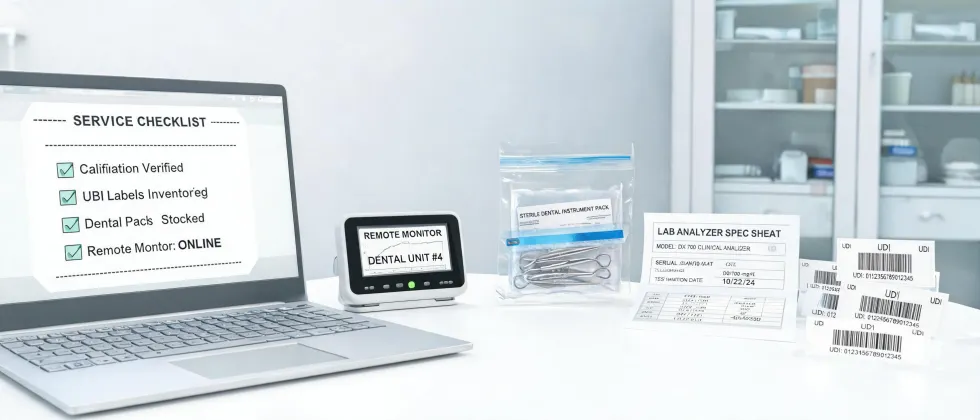
It was Q2 of 2024. I was sitting in our weekly procurement review, and we had a problem. We were outfitting a new wing for a regional hospital chain—our biggest account that quarter. The shopping list was long: a few chemistry analyzers, a couple of surgical instrument sets, some dental chairs, and for one of their ophthalmology clinics, they needed a fundus camera. I’m reviewing the comparative bids for these items, and my head of procurement, Sarah, is glowing. 'We saved $18,000 on the total package compared to our usual vendor,' she said.
I should have felt good. But I didn’t. That feeling? It was the same one I get right before a quality audit flags something I missed. A little knot in my stomach. See, I’m the quality manager. I review every piece of gear before it goes to a customer. In 2024, I rejected nearly 12% of first deliveries from new, low-cost vendors. But this time, I let Sarah’s excitement convince me. I assumed a spec was a spec. I made a bad assumption.
The Assumption That Backfired
The medical devices from the discount vendor all looked fine on paper. The chemistry analyzer had the same throughput specs. The surgical instrument set listed the same steel grade (surgical-grade 304 stainless steel, they said). The fundus camera claimed a 45-degree field of view, which is standard. I signed off on the initial samples but didn't check every single spec against our physical stock—a classic rookie mistake, even after all these years.
The Reality Check
Three weeks later, the shipment arrived. The chemistry analyzer looked a bit... plasticky. The manual was a cheap photocopy. But the real disaster was the surgical instruments. I pulled out a pair of forceps and a hemostat. The finish felt rough. I put them under a loupe, and the micro-serration on the clamping surface was almost non-existent. Then I grabbed one of the forceps from our reference stock—bought from our established supplier—and the difference was night and day. The cheap one? It slipped when I tried to grip a piece of rubber tubing. In an operating room, that’s not a defect; it’s a danger.
"The finish felt rough. I put them under a loupe, and the micro-serration on the clamping surface was almost non-existent."
I rejected the entire batch of 25 surgical instrument sets on the spot. Sarah was furious. The vendor was livid. But our contract was clear: the spec had to match. Of course, the vendor didn't see it that way. They argued it was 'within industry standard.' But industry standard doesn't mean 'acceptable for a human body.' We held firm. They redid the order at their cost, but by then, our client’s opening was delayed by two weeks. That $18,000 'savings' turned into a $14,000 loss in penalties, rush shipping for a substitute set from our backup vendor, and a ton of lost trust with the hospital chain. Seriously, a ton.
The Re-Evaluation: It’s Not Just the Price
After that mess, we overhauled our evaluation process. The idea of 'value' had to be more than the unit price. My view is simple — and it’s not just about being cautious. It’s about math. In my experience managing reviews for dozens of institutional accounts, the lowest quote has ended up costing us more in hidden expenses in over 60% of cases. Not just in reprints or reorders, but in time—the time of our doctors, nurses, and lab techs who have to deal with finicky equipment.
Let me give you an example with the fundus camera. The low-cost vendor’s unit was $5,000 cheaper. But a fundus camera is useless if its image quality degrades after a year. It’s a precision optical instrument. We ran a blind test with our ophthalmic team: same patient, same lighting, one image from each camera. 80% of our team identified the image from our standard vendor as 'more diagnostic' without knowing the source. The cheap camera had a slightly lower dynamic range—something you can’t see in a marketing brochure, but you can during a diabetic retinopathy screening. The cost difference was $5,000 per unit. On a 10-unit order for a chain of clinics, that’s $50,000. For measurably better diagnostic outcomes? That's a no-brainer.
"80% of our team identified the image from our standard vendor as 'more diagnostic' without knowing the source."
I have mixed feelings about the whole situation. On one hand, I admire Sarah’s desire to save budget. It’s her job. On the other, operational disruptions caused by a $200 savings on a set of forceps cost us way more than the initial premium. The compromise? We now use a 'Total Cost of Ownership' (TCO) framework, which includes base price, lead time, expected replacement parts, and, most importantly, the cost of potential failure. The cheapest bid still gets a shot, but only if it passes our strict TCO filter, which I manage. Part of me wants to just go with our established vendor for everything (note to self: make this easier). Another part knows that vetting new vendors can uncover real innovation. I compromise with a primary + a strict vetting list.
Final Lessons (The Ones I Actually Use)
So what’s the takeaway for anyone buying medical gear or, honestly, anything for a professional setting? A few things, though I should note this has been my experience in the medical device space specifically.
- Never assume a spec is the same. The material grade '304 stainless steel' can have different surface finishes, hardness, and certifications. Get the physical spec sheet and test it.
- Know the cost of failure. For a cheap chemistry analyzer, a bad reagent probe can ruin 8,000 patient samples in storage conditions. While the price of the cheap instrument may be low, the cost of the redo and patient recall is stratospheric.
- Time is not a free resource. Our head of surgery spent three hours testing the inferior instruments. That’s three hours not spent scheduling patients. As of early 2025, our team’s hourly cost is around $150 per person. Do the math.
The bottom line? We never bought the 'cheapest' package again for that hospital chain. We brought in our preferred vendor—the one I’d always trusted—and the equipment has been running flawlessly for over 18 months (circa mid-2025, and things are still smooth). I’m not saying always buy the most expensive option. But I am saying that in medical procurement, a lower price tag can be a red flag for a higher total cost. I learned that assumption the hard way. (Mental note: never let Sarah negotiate without me in the room again.)