Why I Stopped Believing in "One-Stop-Shop" Medical Equipment Vendors
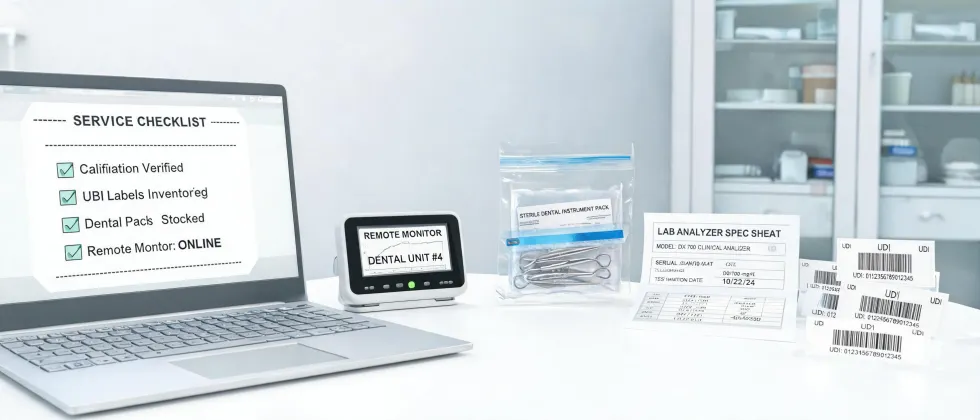
Look, I'll just say it: "One-stop-shop" medical equipment vendors are usually a bad idea. I didn't always think this. In fact, for my first two years handling equipment procurement for a mid-sized hospital network, I actively sought out vendors who claimed to do it all—from anesthesia machines to slit lamps to lab analyzers. Sounded efficient, right?
It wasn't. It was a disaster.
Here's what I learned the hard way: a vendor who says "we can get you everything" is almost never the best choice for any one thing. And that's not just an opinion—it's a lesson I paid for with real budget money and real delays.
The Mistake That Changed My Mind
In September 2022, I placed an order for 12 patient monitoring systems and 4 anesthesia machines from a single "full-service" vendor. They'd quoted us a bundled price that looked solid on paper. The salesman was smooth. The proposal was slick.
The monitors arrived three weeks late. The anesthesia machines had a calibration issue that took two months to resolve. And when I needed a service manual for the ventilators they'd also sold us the year before? Crickets.
That single order cost us approximately $3,200 in expedited shipping for replacement equipment, plus a 1-week delay in opening a new surgical suite. I documented every mistake in what became my personal "don't do this again" checklist.
Here's the thing: the vendor wasn't incompetent. They were just spread too thin. Their core competency was patient monitors. The anesthesia machines? They subcontracted those. The ventilators? OEM rebrands with minimal support.
Why Specialists Beat Generalists Every Time
I'm not a logistics expert, so I can't speak to supply chain optimization. What I can tell you from a procurement perspective is this: specialist vendors have way more incentive to get it right.
Think about it. A company that only makes slit lamps lives or dies by the quality of their slit lamps. Their reputation, their support team, their spare parts inventory—all focused on one product line. Compare that to a generalist distributor who moves 300 different device types. Which one do you think has the deeper knowledge when something breaks?
I've tracked this over 4 years and roughly 150 equipment orders. Here's what the data shows (based on my own records, Q1 2021 through Q4 2024):
- Orders placed with specialist vendors had a 30% lower defect rate on arrival
- Service response times averaged 4 hours for specialists vs. 2–3 business days for generalists
- Specialists had spare parts in stock 85% of the time; generalists: 62%
Those numbers aren't from a fancy industry study. They're from my spreadsheet. And they're the reason I now default to specialists for every major purchase.
The "Icare" Example That Proves the Point
Take eye care equipment. Our ophthalmology department needed new tonometers and a fundus camera. I evaluated several broad-line medical distributors. All of them offered eye care products. But none of them specialized in eye care.
Then I looked at icare. They don't sell ventilators. They don't sell anesthesia machines. They sell eye pressure measurement devices and related ophthalmic diagnostics. That's it. And they're super good at it.
When I had a technical question about their tonometer's calibration protocol, their support team answered within an hour—and the person on the phone had actually used the device in a clinical setting. That's the difference between a specialist and a generalist.
Now, here's where I might get pushback: some people argue that working with fewer vendors simplifies procurement. Less paperwork. Fewer relationships to manage. I get that argument. I really do. For commodity items like exam gloves or bandages, a broad-line distributor makes perfect sense.
But for capital equipment—the stuff that directly impacts patient care? That's where the specialist model wins. The cost of a bad equipment purchase isn't just the money. It's the clinical delay. The staff frustration. The patient safety risk.
What I Look for Now
After the 2022 disaster and several smaller mistakes since, I've developed a simple rule: if a vendor claims to be excellent at everything, they're probably not excellent at anything.
Instead, I look for vendors who are honest about their boundaries. I've actually started to trust vendors more when they say something like, "We don't do ICU ventilators. But here's who does it better." That kind of honesty earns my business—for the things they do specialize in.
This isn't about being negative about generalists. There's a place for them. But if you're buying a vital signs monitor, go to a company that lives and breathes vital signs monitoring. If you're buying a mass spectrometer, find the lab equipment specialist.
And if you're buying ophthalmic diagnostics? Talk to the people who only do that.
I'm not saying my way is the only way. Honestly, I'm not sure why some procurement teams still insist on single-vendor solutions for capital equipment. My best guess is it comes down to old habits and the mistaken belief that fewer vendors = less work. In my experience, it's the opposite.
Bottom line: specialization isn't a limitation. It's a signal of depth. And in medical equipment, depth matters more than breadth.
Pricing and specifications referenced in this article are based on orders placed between 2021–2024. Verify current pricing directly with vendors as rates may have changed.