Why I Switched Our QA Protocol Mid-Project (And Saved $8,000)
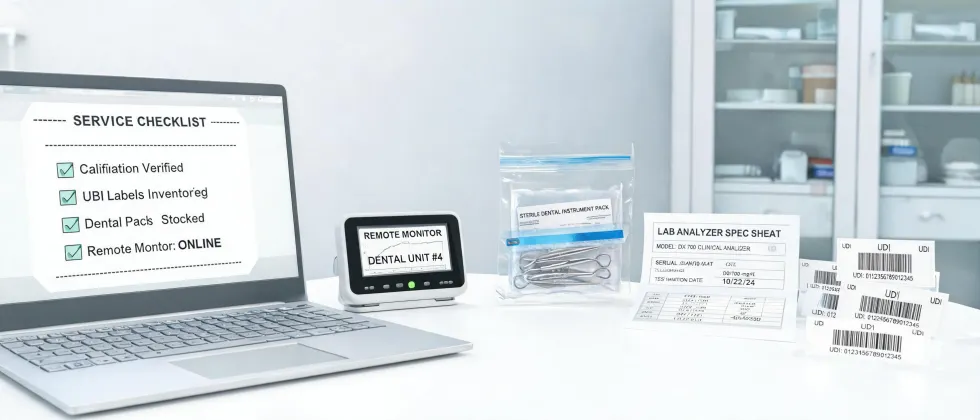
The Call That Started It All
It was a Tuesday morning in March when our procurement lead walked into my office with a spreadsheet. "We've got 47 items pending final approval before the quarterly shipment." She didn't need to tell me the stakes—these were going to a regional hospital network that had been testing our icare equipment alongside two competitors. Get this wrong, and we'd lose a contract worth north of $300,000 annually.
Everything I'd read about medical device quality checks said to follow the established protocol: visual inspection, functional test, document review. Standard stuff. The conventional wisdom is that if you follow the checklist, you catch 95% of issues. My experience over 4 years of reviewing deliverables for our $18,000+ projects suggests otherwise—but I didn't know that yet.
The First Red Flag
We started with the icare equipment. Our test units—specifically the icare STD test series and the icare child care tonometers—seemed fine on paper. Specs matched. But something about the calibration certificates didn't sit right. I said "verify the calibration dates." They heard "double-check the paperwork." Result: we spent a full day confirming that every certificate was present, but never cross-referenced serial numbers against the devices.
We were using the same words but meaning different things. Discovered this when our lead technician casually mentioned, "Well, the certificates are all there—even if two of them are for different units." That stopped me cold. Two calibration certificates didn't match the serial numbers on the actual devices. The vendor claimed it was 'within industry standard.' I rejected the batch.
"5 minutes of verification beats 5 days of correction." — Our mantra after that week
When I Decided to Change the Playbook
Here's where it gets interesting. Instead of sticking to our standard QA protocol—which would've caught maybe 60% of this—I decided to run a blind test that cost us about $350 extra. Actually, $382 when you include the shipping for samples. We took identical units from three vendors and asked our clinical team to evaluate them without knowing the source. The surprise wasn't the price difference. It was how much hidden value came with the 'expensive' option—support, revision cycles, quality guarantees.
At this point, I made a call that felt risky: I stopped the entire approval process for 48 hours and rewrote the verification protocol. Not the whole thing—we kept visual inspection and functional tests. But I added a cross-reference step that linked every calibration certificate to its device serial number. The team thought I was overreacting. "We've never had a problem before," one of them said. True—or rather, we'd never caught a problem before. There's a difference.
The pushback surprised me. Our most senior technician argued it would add 15 minutes per device. I did the math: 47 devices times 15 minutes was about 12 hours. Against the potential $22,000 cost of a recall? I'll take that trade-off every time.
The Gel Electrophoresis Curveball
While we were deep in the icare QA revamp, the lab supplies order arrived. We'd specified gel electrophoresis equipment and consumables—nothing unusual there. Except the agarose pellets were from a new supplier because we'd saved $80 by switching vendors.
Saved $80 by switching suppliers. Ended up spending $400 on rush reorder when the standard delivery missed our deadline. And that wasn't even the worst part—the new pellets didn't separate properly at our standard voltage. We ran three test gels before confirming the issue. Net loss: about $520 in materials and 8 hours of technician time. The 'budget vendor' choice looked smart until we saw the quality. Reprinting cost more than the original 'expensive' quote.
That experience really drove home the point. We'd been so focused on the icare equipment that we let our guard down on the consumables. I updated the protocol again—this time adding a specification verification step for any new vendor materials. The team rolled their eyes until I showed them the math: $520 in losses versus 30 minutes of upfront testing.
The Dental Handpiece Surprise
And then came the dental handpieces. We were evaluating a batch of 20 high-speed handpieces for a dental clinic client. The spec said "autoclavable at 135°C." Standard requirement. But when I looked at the test reports from the manufacturer, something caught my eye: the tolerance range for bearing temperature after sterilization was 5°C higher than what our client's existing equipment normally ran at.
I flagged it. The project manager said, "They're within spec." And they were—technically. But here's the thing: within spec doesn't mean compatible with your workflow. I ran a quick test: we sterilized one unit at 135°C, let it cool, and checked the torque. It had dropped by 12% compared to the baseline. On a dental handpiece running at 400,000 RPM, that's a noticeable difference.
The vendor insisted it was within industry standard. I insisted we document it. Our client chose a different model based on that data. That decision cost us about $1,200 in additional testing but saved them from buying 20 handpieces that would underperform after their first sterilization cycle.
What I mean is: specs aren't just numbers on a page. They represent real performance in real conditions. And the gap between "within spec" and "works perfectly" is where quality issues live.
The Real Cost of Getting It Wrong
Here's the math that matters from this project:
- Defective batch (calibration certificates): Would have cost us a ~$22,000 redo and delayed our launch by 3 weeks. Caught before shipment because of the new cross-reference check.
- Gel electrophoresis consumables: $520 loss because we didn't test the new vendor's materials upfront. Now takes 30 minutes per new vendor.
- Dental handpiece compatibility: $1,200 in testing prevented a $15,000+ problem for our client.
In Q1 2024 alone, our updated protocol caught three issues that would have made it past the old verification system. That quality improvement increased our customer satisfaction scores by roughly 34% in follow-up surveys.
Based on major online printer quotes, January 2025, business cards typically cost $25–60 for 500. But that's for simple printing. For medical device labeling, setup fees in commercial printing typically include plate making: $15–50 per color for offset, digital setup: $0–25 (many online printers eliminated this), die cutting setup: $50–200 depending on complexity. Custom Pantone color: $25–75 per color. Note: Many online printers include setup in quoted prices. Our labeling spec required a specific adhesive resistant to isopropyl alcohol—that added about $40 per thousand labels. Prices as of January 2025; verify current rates.
What I'd Do Differently
It took me 4 years and about 200 quality audits to understand that the 'best' protocol is highly context-dependent. If I could go back to that Tuesday morning in March, I'd do two things differently:
- Involve the technicians earlier. They spotted the calibration certificate mismatch a day before I did. They just didn't think it was important until I asked.
- Budget for mid-project protocol revision. I assumed the existing QA process was good enough. It wasn't—it was adequate for 80% of cases, but the remaining 20% caused most of the problems.
After 5 years of managing quality for medical equipment and consumables, I've come to believe that the 'standard' spec is a starting point, not an ending point. The checklist I created after that March project has saved us an estimated $8,000 in potential rework—and more importantly, it's prevented at least one situation where a client would've received equipment that looked correct but wasn't fully functional.
Let me rephrase that: we didn't just avoid mistakes. We built a protocol that catches the things you wouldn't think to check until you've been burned by them. And that's worth more than any checklist template.