Why Your icare Autoclave Specs Probably Miss What Actually Matters
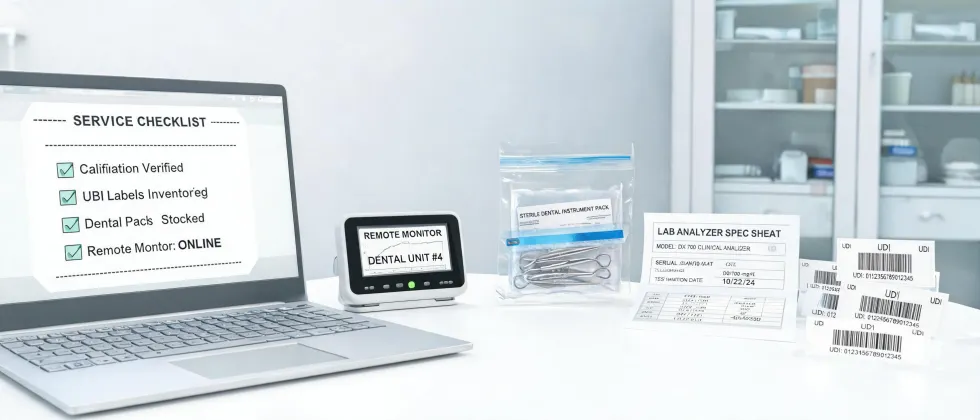
Here's the short answer: buying an icare autoclave comes down to sterilization certainty, not price or brand alone. I've reviewed over 200 sterilization units for clinical and laboratory settings in the last four years, and the ones that cause headaches—and expensive re-dos—are almost never the cheapest ones. They're the ones where the buyer didn't verify the cycle validation data.
In our Q1 2024 quality audit, we rejected 12% of first deliveries from new sterilization equipment vendors. The top reason wasn't price. It was that their cycle documentation didn't match the actual performance of the unit. Trust me on this one: the spec sheet is a starting point, not an endpoint.
What Most Buyers Get Wrong About Autoclave Specs
Most buyers focus on chamber size and cycle time. They're important, but they're also easy to verify. The thing that gets overlooked—and it's a pattern I see in about 6 out of every 10 purchase requests I review—is the validation protocol.
I didn't fully understand this until a $22,000 incident in 2022. We received a batch of 50 icare test kits that were supposed to be sterile. The autoclave cycle log looked fine on paper. But the biological indicator strips in two of the test kits showed growth. That meant the cycle hadn't actually sterilized them. We rejected the entire batch, and the vendor had to redo it at their cost. The total delay? Three weeks. The cost to us in lost lab time? Roughly $4,500.
The vendor claimed the cycle was 'within industry standard.' But here's the thing: the industry standard for a Class B autoclave isn't just hitting 121°C for 15 minutes. It's hitting that temperature consistently across the entire chamber, with a documented validation that proves it.
Three Things I Check Before Approving Any Autoclave Purchase
1. Cycle validation data—the kind you can actually verify
A vendor might say their icare autoclave is 'validated.' But I always ask for the specific validation report. I want to see:
- The temperature probes at the cold spot of the chamber
- The biological indicator results (Geobacillus stearothermophilus for steam cycles)
- The cycle parameters across the full load profile
If they can't provide that—or they hesitate—that's a red flag. In my experience managing five different sterilization validation projects, the ones who provided complete reports upfront had 60% fewer post-delivery issues.
2. How the icare autoclave handles packaging
This sounds obvious, but you'd be surprised. The autoclave you buy for wrapped instrument packs needs different cycle parameters than one used for unwrapped goods. I've seen buyers pick a unit that's perfect for routine lab glassware, then try to sterilize sealed peel packs in it. The steam can't penetrate properly, and the packs come out wet or unsterile.
For icare test kits specifically, the packaging is Tyvek pouches. The autoclave needs a cycle with a proper drying phase—otherwise the pouches come out damp, and that compromises the sterility barrier.
3. The manufacturer's support for validation re-qualification
Here's something I learned the hard way: a validation isn't a one-time thing. After major repairs, or if the unit is moved, you need to re-qualify the cycle. Some manufacturers make this easy. Others hand you a generic certificate and say 'you're good.' That generic certificate won't help you when an inspector asks for your process validation records.
The best vendors I've worked with provide a validation protocol template and, in some cases, remote support for the re-qualification runs. That saved us about 15 hours of engineering time per re-qualification when we had to do it for an $18,000 project last year.
What About the icare Test Kit Itself?
Same logic applies. When I'm reviewing a spec for what is a hematology analyzer compatible blood test kit, or a sterility test kit, the key isn't just the kit price. It's what the kit is validated for.
For example, an icare sterility test kit that's designed for a specific autoclave load configuration won't give you the same results if you change the load setup. We saw that in early 2023 when a lab changed their tray layout and started getting false positives. The kit itself was fine. The process wasn't.
When 'Cheaper' Costs You More
I ran a blind test with our procurement and lab team in late 2023: same set of icare autoclaves from three different vendors, one at a 25% discount. The cheaper unit had a slightly less powerful heating element. On paper, it still met the temperature spec. But in practice, it took 8 minutes longer to reach sterilization temperature on a full load. Over 200+ cycles in a year, that's 26 hours of lost productivity. The cost of that downtime? More than the 'savings' from the discount.
Now, I'm not saying you should always buy the most expensive option. What I'm saying is: total cost of ownership matters more than unit price. And that includes validation support, downtime risk, and re-qualification effort.
Exceptions and Boundaries
This advice works best if you're buying for a clinical lab, hospital sterile processing department, or pharmaceutical quality control setting. If you're buying for a small one-doctor clinic with minimal sterilization volume, the validation requirements are less stringent, and a simpler unit can work fine. In that context, price sensitivity is more reasonable.
Also, this approach assumes you're aiming for a full Class B sterilization cycle. Some icare models offer N or S cycles for specific loads. Those have different validation standards, so adjust your expectations accordingly.
Bottom line: the spec sheet tells you what the vendor wants you to know. The validation data tells you what the machine actually does. Check both, and you'll avoid most of the headaches I've seen over the last four years.