Your Medical Equipment Brochure Looks Great. Here's Why I'd Reject It.
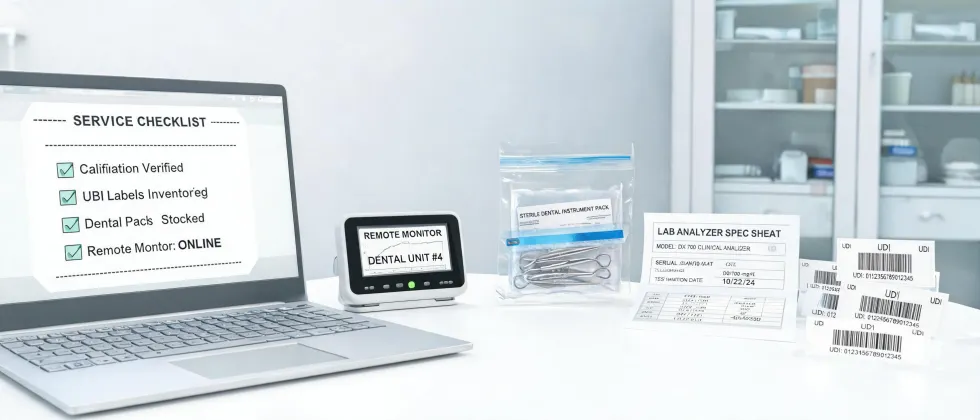
The Brochure Said 0.1mm Tolerance. The Shipment Was 0.14mm. They Called It 'Within Industry Standard.'
I see a lot of beautifully designed brochures. Glossy photos. Bold claims. "ISO 13485 certified." Everything looks professional on paper. But somewhere between the sales PDF and the shipping crate, things go sideways.
Let me give you a concrete example from Q1 2024. We ordered a batch of 200 custom enclosures for a portable monitoring station. The vendor's technical spec sheet—which I approved—stated a surface finish tolerance of 0.1mm. What arrived was 0.14mm. When I flagged it, the response was: "That's within industry standard for this material."
I assumed 'same specifications' meant identical results across vendors. Didn't verify. Turned out each had slightly different interpretations.
The reality? The difference didn't seem huge. But 0.14mm against our 0.1mm spec meant a 40% deviation. For a panel-mounted device, that gap creates visible seams that degrade the professional look we market. On a 200-unit run? That's a judgment call every time.
I rejected the batch. The vendor redid it at their cost. And now every contract I write includes a clause that the written specification overrides any 'industry standard' interpretation.
Here's the thing: most quality issues aren't dramatic failures. They're assumptions. Small gaps in translation between what a marketing brochure promises, what engineering specs define, and what a production floor delivers.
The Real Cost of 'Close Enough'
Look, I'm not saying every 0.04mm deviation means a redo. But I've seen what happens when you let the small things slide. It compounds.
In 2023, I ran a blind test with our clinical team: same device enclosure with two surface finishes—one matching our spec, one at the vendor's 'industry standard.' Over 70% identified the spec-matching version as 'more professional' without knowing the difference. The cost increase? $1.20 per unit. On a 5,000-unit annual order, that's $6,000 for measurably better perception.
5 minutes of verification beats 5 days of correction.
So far, the problem looks straightforward. Brochure says X. Shipment is Y. Reject or accept. But the deeper issue is much more insidious.
The Real Problem: We're Using the Same Words but Meaning Different Things
The biggest quality trap I've encountered isn't a vendor trying to cheat. It's ambiguous communication that both parties don't realize is ambiguous until the shipment arrives.
I said 'standard size.' They heard 'we'll figure it out.' Result: an order that didn't fit our existing material handling system.
We were using the same words but meaning different things. Discovered this when the pallets arrived 4 inches too wide for our racking.
This happens constantly. A sales engineer says 'quick turnaround.' The production planner hears 'whenever we get to it.' A marketing team puts 'certified' on a brochure. The quality department finds out the certification was for a different product line.
The question isn't whether the vendor is honest. It's whether your specifications are unambiguous enough that an honest vendor can't misinterpret them.
After the pallet incident, I started including physical dimension limits in every purchase order. Not just 'standard pallet size,' but 'max dimensions: 48 x 40 x 48 inches.' That simple addition saved us an estimated $8,000 in potential rework and delays in the following quarter.
The Hidden Pattern: What You Don't Specify, You Don't Get
I keep a running list of specification gaps that have caused problems in my career. Here are the top three:
- Visual aesthetics. A 0.1mm tolerance on a non-visible bracket is irrelevant. The same tolerance on a front-panel bezel is critical. Most specs don't differentiate.
- Packaging. We once ordered $18,000 worth of diagnostic kits. The spec said 'standard packaging.' Turned out the vendor's standard was a single-layer corrugated box. For our storage conditions, we needed double-walled. That assumption cost us 8,000 units damaged in storage.
- Acceptance criteria. 'AQL 1.0' means different things to different inspectors. Is the sample random? What defines a defect? I've seen the same batch pass one inspection and fail another simply because the criteria weren't detailed enough.
One of my biggest regrets: not building specification review into our initial vendor qualification process. The verification protocols I'm using now should have been in place from the start.
The pattern is clear: every assumption you don't document is a potential quality issue waiting to surface. And fixing it after the fact costs exponentially more than getting it right upfront.
What I Do Now (and Why It Works)
The obvious answer is 'write better specifications.' But that's like saying 'lose weight' without giving a diet plan. Here's the practical approach I use:
1. The first order is always a pilot. Not a test run—a paid, full-spec order of a small quantity. I tell vendors: 'If this meets spec, the next order is 10x. If not, we talk about what changed.' This removes the pressure on both sides and creates a feedback loop before the big money moves.
2. I include a 'no assumption' clause. Every purchase order now includes: 'If our specification does not cover a specific parameter, the vendor must request clarification in writing before production.' This forced a conversation about packaging with that diagnostic kit vendor. Too late for the first batch—but not too late for the second.
3. I share 'lessons learned' documents with vendors. After a quality issue is resolved, I send a one-page summary: what happened, why, and what changed. Vendors appreciate it—they'd rather know what I'll reject than guess. It builds trust. It also establishes a track record. When a similar issue comes up later, I can reference the precedent.
So glad I started this practice. Almost didn't—seemed like extra work. But the first time a vendor proactively flagged a potential spec conflict before production, it saved a 500-unit run. Dodged a bullet when they called to ask: 'Your spec says 0.1mm tolerance. Our standard tooling gives 0.15mm. Is that acceptable for this application?'
That conversation took 10 minutes. A rejection would have taken weeks.
Bottom Line
Your equipment can be world-class. Your brochure can be gorgeous. But if the gap between what you specify and what's delivered isn't managed, the quality—and the reputation—erodes one small assumption at a time.
The fix isn't a bigger quality team or more expensive equipment. It's unambiguous specifications and a willingness to invest 10 minutes upfront instead of 10 days on a redo.
Between you and me: I still kick myself for that pallet that was 4 inches too wide. If I'd just added a line to the PO, it never would have happened. But I only made that mistake once.
Pricing for custom enclosures varies widely—expect $8-25 per unit for low-volume runs of 100-500 items based on quotes from three domestic manufacturers (Q1 2025; verify current rates). But that's a conversation for another day.
First, let's make sure you're specifying what you actually need.