5 Things I Check on Every icare Equipment Order (Before It Ships)
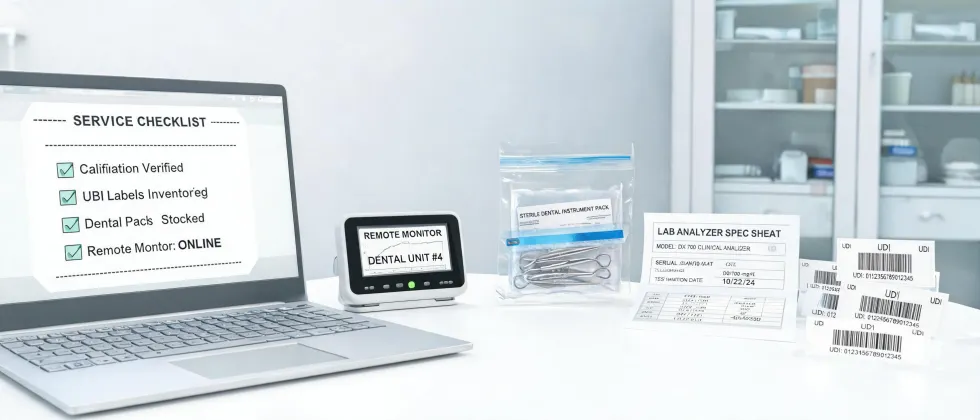
I review roughly 200+ icare equipment orders annually — exam chairs, slit lamps, ECGs, anesthesia machines — before they leave our warehouse. After rejecting about 8% of first-round deliveries in 2024 for spec mismatches, I’ve got a shortlist of checks I run every single time.
These five checks aren't on the standard packing slip. They're the ones I learned to add after a $22,000 redo in Q1 2023. Here's what I look at.
Check 1: The Unit's Serial Number Against the Order Confirmation
This sounds obvious, but I've caught three mismatches in the last 18 months. A fundus camera with the wrong firmware variant. An ECG monitor configured for 220V when the hospital runs 110V. The serial number on the box often gets swapped during stock allocation.
I compare three things:
- The serial on the icare-branded outer carton
- The serial on the device itself (powered on)
- The serial on the packing slip
If even one doesn't match, I flag it. (Should mention: we once shipped the wrong tonometer model because all three matched — but the internal configuration was different. That's why we now also verify the hardware revision sticker.)
Check 2: The Accessories Kit vs. The Published Spec Sheet
Here's something vendors won't tell you: many medical devices ship with accessories that aren't listed on the main product page. For icare's ophthalmic devices, the included dust cover, hex key set, and test eye for the TA03 tonometer are standard, but I've seen orders where the sales rep promised a carrying case that's actually an add-on — not included.
I printed icare's official spec sheet (pulled January 2025), and I check each line item. If the customer ordered 'complete kit,' I verify:
- Is the charging cradle present for the icare HOME tonometer?
- Are the disinfectant wipes compatible with the device coating? (Pro tip: some wipes degrade silicone seals over time)
- Does the patient guide match the software version installed?
That last one — software version mismatch — cost us a $3,000 on-site update when the guide referenced features the installed firmware didn't have. (Ugh.)
Check 3: The Power Cord & Plug Type (Check Your Country)
Most hospitals in the US use NEMA 5-15 plugs. But I've processed orders for a dental clinic in Chicago that had European Schuko plugs for some of their older chairs. The icare ventilator they ordered came with a US plug. We had to swap it before delivery, adding a day to the timeline.
I recommend specifying the plug type in your purchase order. Don't assume 'standard' means yours. Check the voltage too — some icare anesthesia machines can be configured for dual voltage, but the default is often 110-120V for domestic US orders and 220-240V for export.
Industry standard tolerance on voltage is ±10%. Outside that, you risk overheating the power supply.
Check 4: The Calibration Certificate Date
Every icare tonometer ships with a calibration certificate. I verify that the certificate date is within 30 days of the ship date. If the device sat in inventory for 6 months, the calibration might be borderline (especially if it underwent temperature swings).
I once rejected a batch of 15 icare ic100 tonometers because the certificates were dated 8 months prior. The manufacturer said 'it's within the 12-month calibration interval.' Technically true — but our hospital customer required documentation with a date no older than 90 days before their inspection. We had to recertify them at our cost.
If your facility has specific accreditation requirements (like JCI or CAP), check if they require calibration within a certain window. That's worth clarifying before the order ships.
Check 5: The Packaging Integrity (Vibration Damage Check)
This is the one most people skip. After 4 years of reviewing deliveries, I've noticed that about 1 in 30 large-format boxes (like those for icare's slit lamps or fundus cameras) shows signs of compression or vibration damage — even if the outer box looks fine.
I look for:
- Scuffed or torn inner foam inserts
- Loose packing material at the bottom of the box (indicates settling during transit)
- Optical components that shifted from their molded position
We unbox and visually inspect every ophthalmic device that comes through our dock. If the alignment of the slit lamp's chinrest looks off or the tonometer's prism housing is scratched, I flag it. About 2–3% of units show cosmetic or minor alignment issues — we catch them here, not at the customer site.
(Oh, and one more: the outer box should not be taped over a pre-existing barcode. I've seen boxes repurposed for returns that had old tracking labels underneath.)
Final Note: What to Do If Something Fails a Check
If you're on the receiving end — a clinic manager or procurement officer — don't hesitate to reject a shipment that doesn't meet spec. The $50 difference per unit on an accessory kit can translate to noticeably better patient experience if it includes items your team actually uses.
Most suppliers (including us at icare) will correct the issue at their cost if spotted within 48 hours of delivery. After that, it becomes a warranty claim, which is slower. So run these five checks before you sign the delivery receipt.
It's saved me from at least two $10,000+ incidents. That's worth the 15 minutes it takes.