Crash Carts, Dental Chairs, and Loupes: A Quality Inspector from icare on Buying Medical Equipment Fast
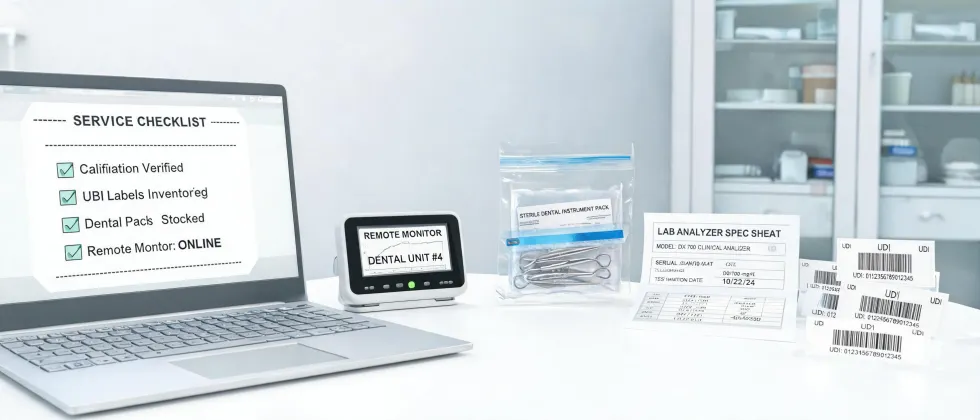
There's no single right answer when you're buying medical equipment. I say that as the quality/brand compliance manager at icare—a medical device company. I review roughly 200+ unique items each year before they reach customers, from surgical instruments to patient monitors. In our Q1 2024 quality audit, I rejected 11% of first deliveries. Not because we're nitpicky, but because in this industry, “approximately” doesn't cut it.
Different care settings have different pressures. A dental practice in Las Vegas is not shopping the same way as an urgent care center that needs a crash cart before Friday. And a hospital is a completely different animal.
So let me do what I do every day: walk you through the scenarios I see most often, and what I've learned about each one.
The three scenarios I see in procurement
Before you dive into product reviews, figure out which category you're in:
- Scenario A: Dental practice. You need chairs, loupes, compressors, or imaging. Comfort, fit, and local service matter as much as specs.
- Scenario B: Urgent care center. You need crash carts, monitors, sterilizers—and usually you need them yesterday. Reliability and speed are non-negotiable.
- Scenario C: Hospital / multi-specialty facility. You're buying across many departments. Consistency, integration, and single-point accountability are your big concerns.
Scenario A — Dental chairs and loupes: what to check first
If you searched something like “icare dental las vegas” or “dental chair,” stop for a second. The biggest mistake I see in dental procurement is choosing equipment from photos instead of checking the specifications that actually affect your workflow.
A dental chair is something your team will use eight to ten hours a day. What actually matters?
- Range of motion—especially height, backrest articulation, and headrest adjustability.
- Weight capacity and patient comfort for the population you serve.
- Ease of cleaning. Seams and sharp corners trap bacteria, and that becomes an infection control issue.
- Local service availability. If the chair breaks, how fast can a technician get to your office? A “standard” warranty is only as useful as the person who shows up.
And since people ask me this all the time: what are dental loupes? They're magnifying lenses worn like eyeglasses by dentists and hygienists. Loupes give you a zoomed-in view of the working area, which reduces guesswork and improves precision. The magnification you pick should match how you work. A 3.0x or 3.5x loupe is popular in general dentistry, but 2.5x gives you a wider field of view and is easier on the neck for long procedures.
Everything I'd read about loupes said “buy the highest magnification you can afford.” In practice, I've watched clinicians prefer a 2.5x pair that fits properly over a 3.5x pair that pinches and sits crooked. The right fit beats raw magnification.
Last year, we rejected a batch of loupes because the pupillary distance was marked on the frame but not verified per unit. They looked fine in the box, but we couldn't guarantee alignment. That redo cost us a $22,000 delay. Now every contract includes serialized verification.
Scenario B — Crash carts and delivery certainty
Urgent care is a different heartbeat. If you manage an icare center urgent care, an independent urgent care, or a clinic with an observation room, you know the drill. Someone can walk in with chest pain at any moment. A crash cart is not a “nice to have.”
A hospital crash cart typically includes a defibrillator, a patient monitor, airway management tools, and organized drawers for meds and supplies. You need to know exactly what's in it, and your staff needs to have drilled with it. The best cart is the one your team can actually run in a crisis.
Here's the thing: when an urgent care center calls us on a Tuesday and says they need a cart by Thursday, I don't talk about options. I check our verified inventory and give them a delivery window. If they want that window guaranteed, there's an expedite fee. In March 2024, one center paid $400 extra for rush delivery. The alternative was missing their state certification inspection—a loss that would have cost far more than $400.
According to USPS pricing effective January 2025, a First-Class Mail letter (1 oz) costs $0.73. Priority Mail Express costs more. You're not paying for distance—you're paying for a guaranteed delivery window. That's exactly what a rush fee on a crash cart buys you.
Something vendors won't put on the brochure: “standard turnaround” almost always includes buffer time for production queue management. That means your order can sit for two days before the actual work starts. Rush delivery doesn't make assembly faster; it moves you to the front of the line and assigns verified inventory. The certainty is the premium.
Dodged a bullet a few months ago when I double-checked a crash cart configuration before shipping. One click away from sending the adult cart to a pediatric center. The drawer layouts and defibrillator pads were different. That would have been bad.
Scenario C — Hospital and multi-specialty: consistency across product lines
Hospitals are the third scenario, and in many ways the easiest to overcomplicate. You're dealing with imaging, monitoring, dialysis, surgical, sterilization, dental—maybe all at the same time. I've watched procurement teams drown in quotes from a dozen different vendors.
This is where a comprehensive product portfolio matters. If a supplier like icare can cover patient monitors, dialysis machines, dental chairs, surgical instruments, and sterilizers under one contract—what we call an integrated care ecosystem—you stop chasing people and start verifying quality. A one-stop solution is only valuable if the quality holds up across every product line. That's why we treat portfolio consistency as a quality metric, not a marketing line.
From my side, consistency means factory audits, serialized quality records, and measurable tolerances. Per FTC guidelines (ftc.gov), marketing claims for medical devices must be truthful and substantiated. At the manufacturing level, that translates into showing data before anything leaves the building. If a vendor says “it's within industry standard” but can't produce the measurement, treat that as a red flag.
We think about tolerance the way print professionals think about Delta E. The Pantone system uses Delta E < 2 for brand-critical colors. For a patient monitor, we apply the same concept: if the numeric display is outside the verified sensor tolerance, we reject it. I do not mean to sound dramatic. Consistency is the whole job.
The most frustrating part of equipment buying is the same issues recurring despite clear communication. You'd think written specs would prevent misunderstandings, but interpretation varies wildly. A serialized data sheet closes that gap.
How to tell which scenario you're in
If you're still not sure, ask these three questions:
- What's your deadline? If it's days, not months, you're in urgent care territory. Pay for delivery certainty.
- How many departments are buying? If it's one specialty like dentistry, focus on ergonomics and local support. If it's multiple, focus on integration and a single point of accountability.
- What's the real cost of being wrong? A loupe with the wrong magnification is inconvenient. A missing crash cart during a critical moment is a safety issue. Let your risk level dictate your choice.
And if you're still tempted to choose the lowest quote, remember: I've processed over 200 purchase orders a year. In that data, the cheapest option is not the cheapest if the delivery slips, the calibration is off, or the installer never shows.
There's no universal answer. But there is a reliable approach: know your scenario, choose a vendor that understands the stakes, and pay for certainty when the deadline actually matters. The dental chair that arrives with a trained technician is different from the one left in the driveway. The crash cart that was checked before shipping is different from one that “should be fine.”
Not ideal, but workable? Sometimes. In medical equipment, “workable” isn't the standard I'd bet a patient on.