iCare Healthcare: Choosing Fetal Monitors, Hospital Beds, and ECG/EKG Devices
-
There's no single right answer
- Three buying scenarios, three different standards
-
ECG vs EKG: stop treating it as a correct/incorrect question
-
What 'iCare STD test' searches should actually lead to
-
What to check before you approve any spec sheet
-
A five-minute test to decide which scenario you're in
-
One more thing about quality
There's no single right answer
Hospital procurement is rarely about finding the 'best' device. It's about finding the right device for a specific building, staff, and patient group. That's especially true with three things hospitals ask about all the time: fetal monitors, hospital beds, and ECG/EKG machines.
I'm a quality and brand compliance manager at iCare Healthcare. In a normal year, I review products across dozens of categories—roughly 200+ different items. I've rejected first deliveries over documentation mismatches. I've also had to own when I was too quick to flag something. Both types of mistakes teach you the same lesson: check the context before judging the equipment.
Three buying scenarios, three different standards
If you ask me whether a particular fetal monitor is a good model, my answer is: 'For whom?' The same unit can be perfect in one clinic and risky in a busy delivery suite. Here are the three scenarios I see most often.
1. Private clinics and small outpatient teams
Start with the workflow. In a small clinic, one nurse might have to do the check-in, run the fetal monitor, and update the file. That nurse doesn't have time for a device with a complicated menu.
For a fetal monitor, choose a portable unit with a clear screen, a reliable ultrasound probe, and a tocograph. Battery life matters if your exam rooms are not always near a spare outlet. Central monitoring is probably overkill. What you do need is standard probes you can replace without shipping the device back to the manufacturer.
For a hospital bed, a semi-electric model is usually enough. The important safety features are the same regardless of the room size: side rails, a CPR release, and sturdy castors. I've seen a $2,000 bed with a broken brake ruin a clinic's day more often than a bed that lacked an optional massage function.
For ECG/EKG, don't start with a single-lead device just because it's compact. If you're doing diagnostic work, get a 12-lead resting ECG. It's easier to train staff on one standard machine than to explain why your five-lead screen and your 12-lead report don't always match.
And here's the thing about small orders: they're not a burden. I'm always suspicious of suppliers who treat a one-bed order like a nuisance. Some of the most detailed questions I've ever answered came from a four-person clinic that was buying its first fetal monitor.
2. Hospital wards and labor and delivery units
When the workload goes up, the equipment has to become more connected. In a hospital setting, a standalone device can become a documentation headache if it doesn't export data to the EMR.
For a fetal monitor in L&D, compatibility matters more than any single feature. Can it connect to your central monitoring station? Does it support twins? Does it keep a trace that nursing staff can review later? If you're running six monitors in one unit, the top-of-the-line portable unit with a huge screen may be less useful than a model that shares data cleanly.
For hospital beds, the conversation changes from 'what does it include' to 'what safety net does it provide.' Bed exit alarms, low-height settings, and pressure-injury prevention surfaces should be on the list. A bed that looks comfortable but can't lower near the floor is a fall risk you'll have to manage later.
For ECG/EKG, the diagnostic standard is still 12 leads. Yes, portable monitors can show a rhythm. But for a clear answer about ischemia or infarction, you need a proper 12-lead recording. Make sure the device stores the waveforms and exports them in a format your EMR accepts.
3. Rehab centers, long-term care, and home care
This feels like a regular hospital purchase, but it's not. The user may be a caregiver with no biomedical training. The 'patient' may be someone who wants to feel independent in their own room.
Hospital beds in this setting need to get low enough for safe transfers. Hand-held controls, a bed exit alarm, and wheels that move smoothly over thresholds are more important than integrated high-tech scales. If space is tight, you'll want a bed that goes through a standard doorway without much fuss.
ECG/EKG in long-term care is often a screening test. If that's your situation, choose a device that a floor nurse can use after a 30-minute training session. But be honest with yourself about the limitation: a spot-check single-lead EKG is not the same as a 12-lead diagnostic ECG.
A fetal monitor rarely belongs in this list. If you run a mobile prenatal service or a telehealth-focused clinic, battery life and ease of use are the real essentials.
ECG vs EKG: stop treating it as a correct/incorrect question
Short answer: ECG and EKG are the same test. Both mean electrocardiogram.
ECG is the English abbreviation. EKG comes from the German Elektrokardiogramm. It was used for years, and it's still used so often that some hospitals have it in their signage, their order sets, and their training materials.
A few years ago, I flagged a catalog page that used 'EKG' instead of 'ECG'. I was convinced it was a typo. Our engineer had to gently point out that the device had originated in Germany, the documentation followed German medical terminology, and 'EKG' was not a mistake. I updated the catalog to use 'ECG' for consistency, but the clinical meaning never changed.
So when you're comparing equipment, don't reject a product because it says EKG. Check the number of leads, the signal sampling, the filter settings, and how the data moves into your record system. Those are the facts that matter.
What 'iCare STD test' searches should actually lead to
Look, I know a lot of procurement people search the exact phrase 'iCare STD test'. It's easy to think the product name is the whole story. But a test name doesn't tell you whether the assay is validated for the population you serve, whether the analyzer supports the sample type you collect, or whether your lab can handle the workload.
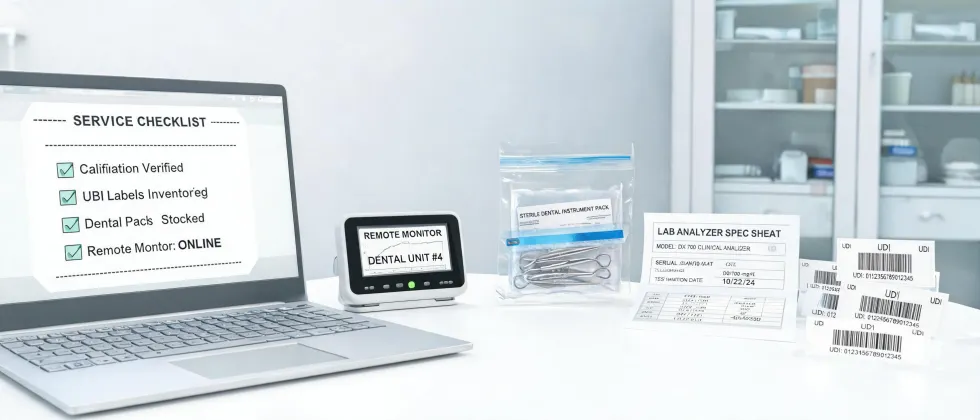
Every time I review a lab analyzer that runs STD panels, I ask the same four questions: What samples can it handle? How long does the result take? What maintenance does it need? And what proof exists for the claimed sensitivity and specificity? The same rules apply to every diagnostic product we put our name on.
What to check before you approve any spec sheet
Most categories look less intimidating once you know the key numbers. The advertising language can be ignored. Under FTC guidelines (ftc.gov), claims like 'highly accurate' should be substantiated—and in procurement, the substantiation should be something you can pull up on the spot.
- Fetal monitors: probe frequencies, transducer options, trace storage, alarm limits, and battery backup.
- Hospital beds: safe working load, height range, Trendelenburg angle, bed exit alarm, siderail lock, castors, and cleaning compatibility.
- ECG/EKG devices: lead count, sample rate, frequency response, interpretation settings, storage capacity, and export format.
If a vendor can't answer those questions, it's not 'proprietary information'. It's a red flag.
A five-minute test to decide which scenario you're in
If you're not sure which buying path fits you, answer these questions before requesting a quote:
- How many patients use this equipment in a normal day? One? Ten? Forty?
- Who will operate it? A medical specialist, a general nurse, or a caregiver?
- Does it need to send data to a central monitor or electronic medical record?
- How much training time is realistic in your team?
- What happens when a part breaks? Is there a local service partner?
Your answers matter more than the name on the device.
One more thing about quality
Quality isn't only about the first delivery. It's about whether the device still works six months later, whether the supplier can answer a question without a sales script, and whether the equipment actually matches the workflow it was chosen for.
At iCare Healthcare, I don't expect every buyer to be a procurement expert. But I do expect us to be responsible for making the spec clear before the purchase order. And if you're a small clinic buying one fetal monitor, one hospital bed, or one 12-lead ECG/EKG machine, the review process should be the same as it is for a hospital with a lot more zeros on the order.
That's not a marketing line. It's the only way to build equipment decisions that survive contact with real patients.