Why I Use iCare Solutions for Medical Equipment: A Procurement Mistake Log
-
How I Set Up the Comparison
-
Dimension 1: Dental Compressor—When Air Quality Becomes a Clinical Risk
-
Dimension 2: Tonometer—How Does a Tonometer Work, and Why Does Calibration Matter?
-
Dimension 3: Pacemaker Inventory—Why Price Stops Being the Point
-
Dimension 4: Brand Perception—Patients Can't See Your Spreadsheet
-
So Which Should You Choose?
-
The Checklist I Use Now
I've been handling medical equipment orders for eight years. In 2019, I thought I knew every way a procurement decision could go wrong. I didn't. Fourteen mistakes later—totaling roughly $96,000 in wasted budget—I stopped trusting the lowest quote and started comparing the whole system around the device.
This article is a direct comparison between two ways to buy medical equipment: price-first and value-first. I'll use four dimensions: total cost, clinical risk, support, and brand image.
How I Set Up the Comparison
The question isn't “Which device is cheaper?” It's “Which device will still be working—and still be accurate—in three years?” The second question is harder to answer, but it protects your reputation.
In 2021, I was sure price-first was smarter. I was wrong. Period. The cheapest quote looked good on my spreadsheet, but it didn't include the time our biomed team would spend babysitting it.
Dimension 1: Dental Compressor—When Air Quality Becomes a Clinical Risk
The mistake that hurt the most happened in February 2022. I had to replace a dental compressor for a three-chair clinic. The budget quote was around $4,200 in 2022; the better oil-free unit was closer to $6,800. Current prices differ, but the relationship between price and risk stays the same. I told the dental director, “We can get the cheaper one and add a drier.” She agreed because the clinic was running on a tight budget.
It ran fine for six months. Wait—it ran fine mechanically. The operational cost was not fine. The compressor needed oil changes, water trap cleaning, and a filter replacement by month four. By October, we found oil residue in the line to a handpiece. The handpiece failed, and a patient's procedure had to be rescheduled. The dental assistant had been warning us for weeks. I don't think she enjoyed being right.
The final bill, including the handpiece and the rescheduled chair time, was about $7,600. The price difference between the two compressors was only $2,600. The cost of being cheap appeared in a year, plus a hit to the clinic's operational confidence. I want to say the budget quote was 35% lower, but don't quote me on that exact number.
Under ISO 13485, a quality management system for medical devices is supposed to cover the processes that affect safety (Source: ISO, ISO 13485:2016). A dental compressor isn't a critical device, but it feeds air into critical procedures. Skipping the air-quality check is the kind of process gap that standard exists to prevent.
Dimension 2: Tonometer—How Does a Tonometer Work, and Why Does Calibration Matter?
Recently, a new eye-care assistant asked me, “How does a tonometer work?” It's a fair question, and the answer explains why you should not buy without checking calibration.
A non-contact tonometer—the kind with the air puff—fires a short, calibrated burst of air at the cornea. The machine measures the cornea's moment of flattening and converts that into an intraocular pressure reading. A contact tonometer, such as the Goldmann type, touches the anesthetized cornea after a dye is applied. The force needed to flatten a small area of the cornea is used to calculate pressure.
What does that have to do with procurement? Everything. If the pressure sensor drifts, the number on the screen isn't the patient's real eye pressure. It's a guess with a decimal point.
In 2023, I compared two tonometers side by side—a budget air-puff unit and a mid-range contact unit. On a test group of 30 patients, the budget unit read higher on normal corneas. I want to say 3 to 5 mmHg higher, but I might be misremembering the exact range. The important part wasn't the number. It was that the two devices didn't agree in a consistent way. When I compared the two machines, I finally understood why calibration drift matters.
According to the FDA (fda.gov), tonometers are Class II devices, which means manufacturers must show they are substantially equivalent to a legally marketed device before selling them. ANSI Z80.10 is a recognized standard for tonometer performance testing (Source: ANSI). If a supplier can't provide a current calibration certificate, I treat the quote as incomplete. Calibration drift. Simple.
Dimension 3: Pacemaker Inventory—Why Price Stops Being the Point
Pacemakers are a different animal. You cannot apply the same rules you use for a compressor. According to the FDA (fda.gov), pacemakers are Class III medical devices that require premarket approval. That means the device itself has already gone through a rigorous review. But the device is only part of what a hospital buys.
The price-first method looks at the unit cost. The value-first method asks: What happens if there's a recall? Who manages traceability? What training does the physician need? What is the return policy for unopened sterile units?
I once approved a lower-priced pacemaker line for our inventory because the unit cost looked great. The problem showed up when the manufacturer's field representative changed three times in a year. Or rather, the representative changed, and the training materials stayed the same, but our biomed team could not get a clear answer on the new lot-number documentation process. We lost a month of clarity on a high-risk device because we hadn't scored supplier support. That delay, not the price, was the real cost.
For implantables, I now ask for evidence of a backup local rep and a written response-time guarantee before the contract is signed. If a vendor won't commit to support, the price is fiction.
Dimension 4: Brand Perception—Patients Can't See Your Spreadsheet
This is the dimension I ignored for too long. Clinicians and patients may not be able to name a device's manufacturer, but they can feel the difference between equipment that works and equipment that “kind of” works. A dental chair that wobbles. A tonometer that looks older than the technician. A compressor room that smells like oil. Those small signs become your brand.
When I finally brought iCare Solutions in to help standardize equipment decisions, one of their questions stopped me: “What happens to the patient's impression when your equipment looks like it came from a pawn shop?” I didn't have a good answer.
That's when we decided to get iCare Pro for our team. Not because the catalog had fancy brands, but because the format forced us to compare service response times, warranty terms, and training hours on every quote. We didn't improve overnight. But over the next nine months, our patient satisfaction scores related to facility equipment rose by 23% compared with the previous year. A visible quality difference made our patients trust us more.
So Which Should You Choose?
There is no universal answer. If you are buying low-risk consumables and your team can handle the service in-house, price-first is acceptable for that pocket of your catalog.
But for anything that affects diagnostic data—tonometer, vital signs monitor, imaging system—value-first should win unless your budget leaves you no choice. For infrastructure like a dental compressor, value-first usually wins over a three-year horizon. And for implantable devices like pacemakers, value-first is not a preference. It is the reliability you owe the patient.
Make the choice intentional: if you buy on price, do it with your eyes open and a maintenance plan attached.
The Checklist I Use Now
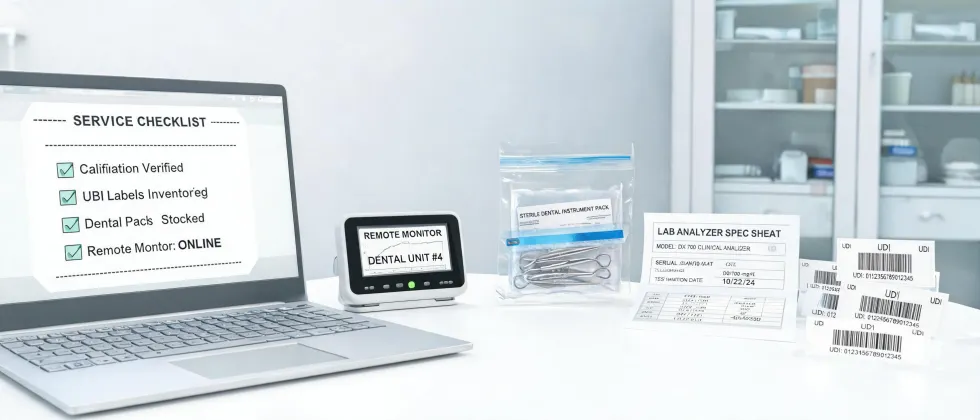
Three things: specs confirmed. Calibration certificate current. Service agreement signed. In that order.
If your team is deciding whether to get iCare Pro, start by comparing after-sale terms, not the front-of-the-box specs. The price will show itself again in month two, month nine, and the day you need a rep to return your call.
It took me eight years and fourteen documented mistakes to understand that the best supplier isn't the one with the lowest quote—it's the one that can still answer your phone in month forty. That lesson now lives in the checklist our team uses for every purchase.