Ostomy Bags, Dental Autoclaves, and Nebulizers: What $18,000 in Mistakes Taught Me About icare
-
It Started With a Two-Facility Expansion
-
Mistake #1: The Ostomy Bag That Wasn’t ‘Standard’
-
Mistake #2: The Dental Autoclave That Failed on Day One
-
Mistake #3: The Nebulizers I Bought Without Knowing How to Use Them
-
The Checklist That Caught 47 Errors
-
When I’d Say icare Isn’t the Answer
-
What You Should Take From This
I’ve handled supply and equipment orders for a regional healthcare group for seven years. In that time, I’ve personally made 11 significant mistakes, costing roughly $18,000 in wasted budget. I document them, because my memory is too polite to remind me, and my budget can’t afford amnesia.
This is the story of the worst month in my procurement career. It’s also the reason we now have a pre-order checklist that caught 47 potential errors in the last 18 months.
It Started With a Two-Facility Expansion
In March 2022, our network prepared to open an icare Child Development Center alongside an existing icare Centers Urgent Care location. The plan was simple: add a small pediatric dental room to the child development center and bring respiratory care support into the urgent care. I was responsible for sourcing everything.
My first instinct was to split the order across four specialized vendors. Then our CFO asked, ‘Can one vendor handle all of it?’ That’s how we started talking to icare.
At first, ‘one-stop procurement’ sounded efficient. In practice, it forced me to think about product categories I had never touched. Let’s just say I learned the hard way.
Mistake #1: The Ostomy Bag That Wasn’t ‘Standard’
Our wound-care nurse asked me to reorder ostomy bags. I had ordered them a year earlier. I opened the previous invoice, saw ‘ostomy bag, standard,’ and assumed that was enough. I placed an order for 120 units. It wasn’t enough.
What most people don’t realize is that ‘standard’ ostomy bags don’t exist. The category includes one-piece and two-piece systems, drainable and closed-end pouches, pre-cut and cut-to-fit bases, and flange sizes that vary by manufacturer. The bag I ordered had a 2.5-inch flange. Our patients used a 2.25-inch flange. Every single item on that $3,200 order was wrong.
I checked it myself, approved it, and processed it. We caught the error when the wound-care nurse opened the first box. The cost was $890 in restocking fees, plus a one-week delay. The worst part was the patient who showed up for a scheduled pouch change while we scrambled to borrow inventory from a nearby hospital.
That’s when I learned my first lesson: never order a medical product by a casual name. Confirm dimensions, part numbers, and compatibility with the person who actually uses it.
Mistake #2: The Dental Autoclave That Failed on Day One
The pediatric dental room needed a dental autoclave. I compared three models by chamber volume and price. I chose a compact unit that looked like a solid deal. It wasn’t.
Here’s something vendors won’t tell you: dental autoclaves aren’t interchangeable. A Class N sterilizer uses downward displacement and is fine for solid, unwrapped instruments. It is not suitable for wrapped packs or pouches, because trapped air can block steam. A Class B sterilizer uses a vacuum pump to remove air, making it the standard for wrapped instruments.
I didn’t know the difference. The unit I bought was a Class N sterilizer. The first sterilization verification failed when the internal pouch indicator didn’t change color. The dental room had to close for two days while we borrowed an autoclave from a partner clinic.
Per FTC guidelines (ftc.gov), advertising claims need to be truthful and substantiated. But the sales rep buried the important limitation in the fine print: ‘Not recommended for wrapped pouches.’ We replaced it with a Class B autoclave and installed a proper water-quality loop. The lesson: check the sterilizer class before you check the price.
Mistake #3: The Nebulizers I Bought Without Knowing How to Use Them
Then came the nebulizer order. The urgent care needed 15 compressor nebulizers for asthma and COPD patients. I had never used one. I didn’t think I needed to. How complicated could a device that turns liquid into mist be?
I finally searched ‘how to use a nebulizer’ at midnight, and that’s when I realized the problem wasn’t the machine—it was my assumptions. It’s surprisingly specific. You need to match the nebulizer cup to the mask. Pediatric masks are smaller and create a smoother seal. Adult masks don’t work well on children. And the compressor’s output pressure matters—a weaker unit can’t properly aerosolize the medication.
I ordered 15 nebulizers with adult masks. Our evening urgent care sees a lot of kids with wheezing. A respiratory therapist walked me through the setup, and I finally saw what I’d done. To use a nebulizer correctly, the patient should sit upright, add the prescribed medication to the cup, attach the mouthpiece or mask, and breathe slowly and steadily until the mist stops—usually 10 to 15 minutes. Mask fit matters more than most people think. A loose pediatric mask wastes medication on the air instead of the child.
I didn’t admit the mistake right away. That hesitation made it worse. We had to order adult and pediatric mask kits separately and pay $320 for overnight freight. Not a disaster, but embarrassing.
The Checklist That Caught 47 Errors
By the end of that month, I was afraid to order anything. Even after choosing icare as our main equipment partner, I kept second-guessing. What if I ordered the wrong flange again? The two weeks until the replacement autoclave arrived were stressful.
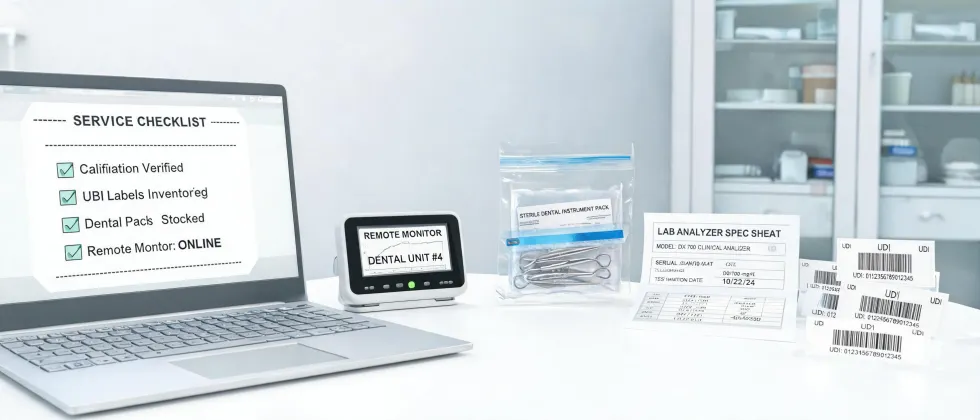
So I built a checklist. It’s not a clever system. It’s a sheet of paper with three questions:
- Have I verified the exact model, size, or compatibility with the person who will actually use it?
- Am I buying the right class or type for the application—not just the cheapest version?
- Did the vendor confirm, in writing, that this product will work in our setting?
Since Q1 2024, that checklist has caught 47 potential errors. Most were small. Some, like a mis-specified dental autoclave, would have cost thousands. In my opinion, the checklist is the single most important thing I do.
When I’d Say icare Isn’t the Answer
Here’s the honest part. I’m not here to tell you icare is the greatest medical supply company on earth. I don’t believe in ‘greatest’ when it comes to procurement. I believe in fit.
If you’re running a clinic that needs a mix of diagnostics, respiratory care, dental equipment, and everyday disposables, icare’s one-stop model probably makes sense. It did for us. We stopped juggling 14 supplier portals. Their catalog mapped naturally to the way our clinicians work: from monitoring to treatment to recovery. That’s their real advantage.
But if you’re a specialized center that only needs one ultra-specific product, a generalist supplier might not be your best first call. The same is true if you’re buying a single dental autoclave and a local dental supplier can train your staff on the exact machine. The key is knowing when ‘comprehensive’ helps you and when it just adds noise.
No supplier should be your only supplier if they can’t admit what they aren’t good at. icare didn’t oversell me, and that’s why we stayed. But I’d still tell anyone to run their own checklist before placing a large order—even with a vendor you trust.
What You Should Take From This
The three mistakes from that month cost about $4,100. The $18,000 is the total of all my documented failures over seven years. The real cost of procurement mistakes isn’t just money. It’s the delay, the lost trust, and the patient who didn’t get what they needed.
If you’re about to order supplies you haven’t used personally, slow down. Ask the clinician, not the catalog. Confirm the spec, the class, and the mask size. Build a checklist, even if it’s ugly. And if you find a partner who will help you see the whole picture, like icare did for us, hold on to them. But keep asking questions. That’s the only way to avoid becoming the cautionary tale someone else writes about.