ECG Machine vs Electrocardiograph: Same Device, But the Real Comparison Is How You Buy It
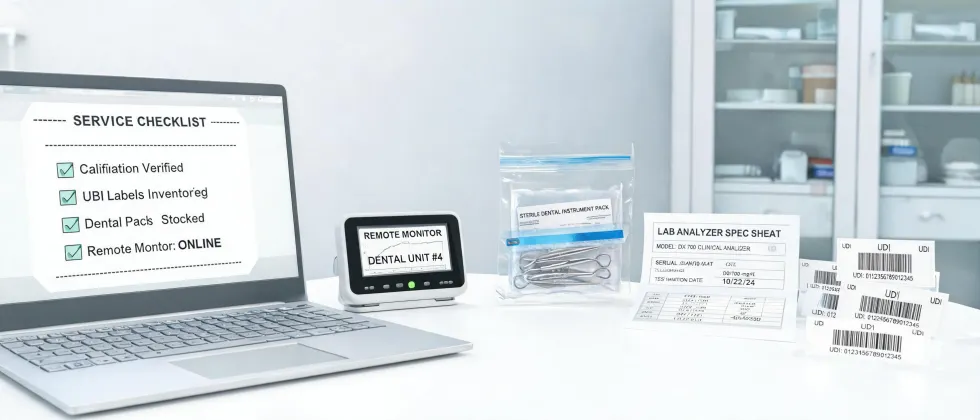
Quick one before we get into the weeds: an ECG machine and an electrocardiograph are the same thing. ECG stands for electrocardiogram, and the device that records one is called an electrocardiograph. Same machine. Different words. If you've searched for one, been redirected to the other, and wondered if you were missing a specification difference—you weren't.
That naming confusion is actually a useful entry point to a bigger question I get asked all the time. Not "what's the difference between these two names," but "when you equip a facility, should you buy everything from one supplier or chase the best option in each category?"
In my role coordinating equipment for hospitals, outpatient clinics, and specialty practices, I've handled 200+ procurement events and emergency replacements over the past five years. I've watched both of those strategies work. I've also watched both fail.
Two Approaches, One Framework
Here's what I mean by the two strategies:
- Single-supplier procurement: One company provides your patient monitors, surgical lights, blood pressure monitors, ECG machines, dental equipment, analyzers—the whole ecosystem. One point of accountability.
- Best-of-breed procurement: You buy each device from whichever manufacturer makes the best-in-class product for that niche. The top dental CBCT from one vendor, the top dialysis machine from another.
I compare these across three dimensions: response time, integration, and depth of expertise. Here's how they actually stack up in practice, not in theory.
Dimension 1: Response Time When Equipment Fails
Equipment failures don't schedule themselves. They happen at 2 AM, or 36 hours before a major procedure block, or during your busiest week of the year.
With a single supplier, response time is fundamentally a phone call. That's not a slogan—it's logistics. The account manager already has your equipment list, your spec sheets, your service history, and your warranty terms. When a surgical light fails, they don't need four days to figure out what you have and whether it's covered.
I saw this firsthand in March 2024. A client's last working surgical light went down 36 hours before a full day of scheduled procedures. Their contract was with a single supplier, and the service team was on-site the next morning. Not because that company is magic—because they had every piece of information needed to dispatch the right technician with the right part.
With best-of-breed buying, response time depends on which vendor, which model, and whether the person who installed it three years ago still works there. Twelve vendors means twelve call trees. And that's before you get to which one actually answers.
I don't have hard data on industry-wide response times comparing the two models. What I can say anecdotally is this: in the 47 rush orders I coordinated last year, the single-supplier route cut decision time by roughly half. The bottleneck wasn't physical distance—it was information.
Dimension 2: Integration and Compatibility
Here's where the single-supplier model has an underrated advantage. Devices are designed to work together, or at least tested against each other.
When one company supplies your patient monitors, blood pressure monitors, ECG modules, and the accessories that tie them together, compatibility is part of the deal. The probe base matches the receiver. The cables fit the ports. The software speaks the same language.
That matters more than people expect. We once had a client whose icare probe base cracked. Instead of waiting for the certified replacement, they ordered a "universal" one from a discount vendor. It didn't fit. We both said "compatible" but meant two completely different things—and found out when the shipment arrived and nothing connected. That mistake cost two days of delayed procedures and a very uncomfortable meeting with the clinic director.
The flip side of integration is a real thing: lock-in. If you go all-in on one supplier and they discontinue a component or change a connector design, you can't easily pivot. You're tied to their roadmap.
Best-of-breed avoids that trap. But it creates another one: compatibility troubleshooting becomes your problem. In a facility without in-house biomedical engineering support, "which vendor is responsible when device A won't talk to device B" is a genuinely stressful question.
Dimension 3: Depth of Expertise
Okay, let's talk about the uncomfortable part. No single supplier is world-class at everything.
A manufacturer that builds an outstanding dental CBCT isn't automatically the best at producing dialysis machines. The best surgical light doesn't necessarily come from the company that makes the best ECG machine. These are different engineering problems.
And here's the part that surprises people: I don't think that's a problem.
Look, the vendor who says "this isn't our strength—here's who does it better" earns my trust for everything else. I'd rather work with a specialist who knows their limits than a generalist who overpromises.
But that principle cuts in an unexpected direction. Most facilities—especially mid-size hospitals and multi-location clinic groups—don't need world-class equipment in every category. They need reliable, maintainable, available equipment. That sounds obvious, but it changes the entire procurement calculation.
A hospital buying 40 patient monitors, 12 surgical lights, and 8 ECG machines doesn't need the best of everything. It needs equipment that works, techs who can service it, and parts that arrive in days, not months. I've watched a top-tier niche device sit in a storage closet for four months because the service contract required shipping it overseas. Best-in-class on paper. 100% useless in practice.
That tradeoff doesn't show up on a spec sheet.
When Best-of-Breed Actually Wins
I'm not trying to sell you a one-sided story. There are clear situations where selective buying is the right call.
- Specialty practices: If you're running an icare dental clinic, or an ophthalmology center, or a fertility lab, the core device drives your revenue and your outcomes. The extra research time is justified.
- In-house engineering: If you have biomedical engineers on staff who can own integration and compatibility issues, you can juggle multiple vendors without losing sleep.
- Clear cost advantage: If a category has major price differences and you have time to negotiate contracts separately, best-of-breed can save real money.
The keyword there is time. Best-of-breed demands more of it, permanently and upfront.
When Single-Supplier Wins
For most facilities I coordinate with, single-supplier procurement—with the right supplier—wins in two areas that dominate daily operations: speed and accountability.
- Speed: Emergency replacements, rush repairs, same-day loaner units. All of that gets faster when one vendor knows your full environment.
- Accountability: One call. One firm. No finger-pointing between vendors, no "that's not our part."
That only works if the supplier is actually good. A bad single supplier is worse than a dozen mediocre ones because the failure is concentrated. We didn't have a formal emergency replacement process at first, and it cost us when a vendor's delay became a client's crisis. That's when we built the protocol we now use for every facility we support. Should have done it years earlier.
Final Thoughts
The "ECG machine vs electrocardiograph" question turns out to be exactly the right place to start. Because once you understand it's the same device, you realize the more interesting question is how you buy it—and who you trust to support it.
Ask any emergency physician: they'd rather have a capable generalist who shows up than a brilliant specialist who's unavailable. Procurement isn't that different. If your bottleneck is time and operational complexity, a single accountable supplier makes sense. If your bottleneck is clinical performance in one specific intervention, a specialist is worth the extra effort.
Ten years into this work, I'll take the vendor who knows its strengths, admits its limits, and answers the phone. That's not a punchline—that's the whole game.