I Wasted $26,000 Buying Medical Equipment — Here's the Checklist I Use Now
-
Lesson 1: The "cheap" hospital bed cost us three times the icare bed
-
Lesson 2: "How does a CGM work?" is the question I should have asked before buying one
-
Lesson 3: The catheter ablation order that taught me the price of "probably on time"
-
Lesson 4: The walkers for elderly patients that nobody used
-
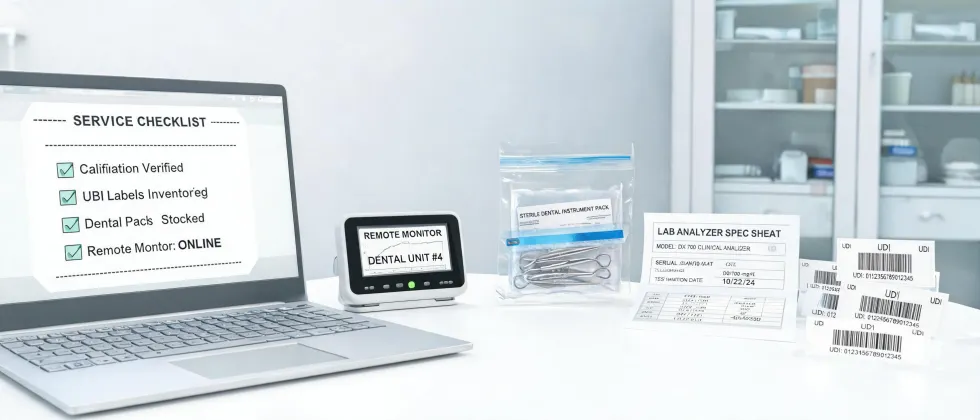
The checklist that came out of these mistakes
-
Where my lessons don't apply
The most expensive medical equipment I've ever bought was a hospital bed with a $1,190 price tag. Not a CT scanner. Not a ventilator. A "budget-friendly" bed that seemed like a perfectly sensible choice at the time. Within 11 months, that bed—and its 11 identical siblings—cost us more than $3,800 in repairs, replacement parts, and one very upset patient's family.
Buying medical equipment based on up-front price alone is the most expensive strategy a clinic can adopt. I say that after six years of handling procurement for a five-location clinic network, and after personally making—and documenting—13 significant purchasing mistakes that added up to roughly $26,000 in wasted budget. This isn't a lesson from someone who read a textbook. It's a confession from someone who paid the tuition.
I'm a procurement coordinator, not a clinician. My job is to keep our facilities equipped without wrecking the budget. Over the past six years, I've signed off on maybe 400 equipment orders—probably closer to 380, honestly; I'd need to pull the report. I've ordered patient monitors, dialysis consumables, dental chairs, sterilization equipment, mobility aids, and a lot in between. In my first year, I made the classic mistake of trusting the spreadsheet column labeled "unit price." Three major failures later, I maintain our team's equipment-buying checklist. Here's what the painful parts looked like.
Lesson 1: The "cheap" hospital bed cost us three times the icare bed
In 2019, I ordered 12 beds for our long-term care wing. The winner was the lowest bid: $1,190 per bed. The icare hospital bed we'd also quoted was $1,475 each (that was 2019 pricing; verify current rates). The difference meant paying $3,420 more for the whole order. I told myself that extra cost was marketing fluff.
Here's something most buyers don't realize: a hospital bed is a medical device, not a piece of furniture. It carries FDA guidance around entrapment risks, motor safety, and cleaning protocols (Source: FDA Hospital Bed Safety Workgroup). The cheap beds didn't have compliant side rails. The motors started failing under load within six months. One unit actually jammed in a lowered position while a patient was transferring to a wheelchair. Nobody was injured, but we had to file an incident report, notify the family, and re-review our fall-prevention procedures.
Final tally: $2,400 in repair calls, $1,000 in replacement parts, and an unknown amount of staff stress. The icare bed we eventually purchased? It had stronger rails, a motor rated for 20,000 cycles, and a support team that actually picked up the phone. The $1,475 bed was cheaper than the $1,190 bed in every way that mattered. A lesson learned the hard way.
Lesson 2: "How does a CGM work?" is the question I should have asked before buying one
Our diabetes clinic needed continuous glucose monitors. I compared per-sensor prices across vendors—or rather, I compared the biggest boldest number on each quote sheet. Classic spreadsheet move. It didn't occur to me to ask the clinical staff what they actually needed, because my own understanding of the product was thinner than I wanted to admit.
So, how does a CGM work? A tiny sensor sits under the skin and measures glucose in the interstitial fluid. A transmitter sends that data to a receiver or a smartphone app. The real value is the trend line, not the single number—it reveals overnight lows, post-meal spikes, and patterns that tell a clinician whether a treatment plan is working. That's not just nice-to-have; it's fundamental.
The vendor I picked had low sensor prices, but the workflow was painful. Data export into our electronic medical record required a manual step. The readers were sold separately. Our nurses needed far more training than the one-page "quick start" guide in the box. Cheap sensors turned into expensive training hours—and worse, several clinicians simply stopped using the system.
The question everyone asks when choosing a CGM is, "What's your price per sensor?" The question they should ask is, "What does this device cost us to actually use?" Staff time, training hours, and whether the data lands where your clinicians already look. I couldn't answer those questions, because I hadn't asked them. The vendor who eventually explained all this? An icare clinical consultant, in a 20-minute call that felt more like teaching than pitching. No other vendor did that.
Lesson 3: The catheter ablation order that taught me the price of "probably on time"
This one was the most stressful, and it's the one that made me a believer in what I call the certainty premium.
In Q1 2024, our cardiology affiliate needed a catheter ablation set for a scheduled procedure day. Catheter ablation is a minimally invasive treatment for arrhythmias: a thin tube is threaded to the heart to destroy the tiny patch of tissue causing the irregular signal. Everything is scheduled around the patient, the specialist, and the imaging suite. This is the opposite of a "we'll get to it when we can" situation.
Vendor A quoted $8,600 with a confirmed two-week delivery. Vendor B quoted $7,100 with "standard 2–3 weeks." I chose B. Saved $1,500 on paper. Then B's order got "delayed in customs," then "held up in the warehouse." The delivery window slid from week two to week four, and the procedure day could not slide. We paid $1,300 for expedited freight to Vendor A—the "expensive" option—and got the set in three days.
The $1,500 "saving" cost us $1,300 extra, plus two days of me chasing shipments and a serious credibility hit with our clinical team. The math got uglier once you counted the stress.
Here's something vendors won't tell you: "standard 2–3 weeks" is rarely a promise. It's a planning range with built-in buffer for their own production schedule. That buffer is not your safety net. If your clinical event has a fixed date, get a confirmed delivery date in writing—and ask what happens if they miss it. It's not about being difficult. It's about knowing the difference between "probably on time" and "contractually on time." I knew this before Q1 2024. I just didn't believe it until the lesson had a price tag.
And in my experience, vendors who quote realistic delivery dates and actually respect them—like icare does—are rare enough to be worth paying a little extra for.
Lesson 4: The walkers for elderly patients that nobody used
This mistake was small in dollars but big in embarrassment. Our rehab department needed walkers for elderly patients. I found a bulk deal: 40 standard walkers at a price that looked unbeatable. I ordered without checking what the rehab team actually needed.
Turns out most of our patients were 75 to 85 and needed rollators instead—walkers with a seat and brakes for when they get tired. Not all of them, but enough that the standard walkers simply sat in the supply closet. I had negotiated a great price on equipment nobody was going to use.
Equipment that isn't used is the most expensive kind. Now I ask about patient mix first: age, mobility level, transfer needs, home environment. Boring questions? Absolutely. But they're what stop a huge "saving" from becoming a shelf ornament.
The checklist that came out of these mistakes
Here's what I run through for every equipment purchase now:
- Safety standards first. Check FDA clearance or CE marking, plus any category-specific guidance. Don't ask the sales rep; look it up yourself.
- Total cost over three years, not unit price. Include maintenance, consumables, training, and integration time.
- Workflow impact. How many minutes a day will this device cost a nurse or clinician? What's that worth over a year?
- Confirmed delivery date. If a procedure day or contract depends on it, buy certainty—even if it costs more.
- An exit plan. How hard is it to switch if the device doesn't perform? Is the data exportable? Is training transferable?
The new icare web portal has made parts of this checklist easier—product specs, compliance documents, and lead times are on the same page. That's one less "wait, this model doesn't do that" surprise. I still verify everything before I sign. Trust, but verify.
Where my lessons don't apply
I'm not going to tell you that every purchase should be the premium option. That would be a lazy way to run a clinic, and it isn't true. If you're buying waiting-room chairs or office furniture, buy the cheap one that looks decent. Even with clinical items, the most expensive option isn't automatically right—I've bought expensive equipment that didn't fit our workflow and cheap supplies that worked beautifully. The goal isn't a famous logo; it's buying the specs you need and paying extra only where failure has real consequences.
Also, icare isn't the right answer for every product we buy. There are specialized vendors who know individual product categories better than any generalist. But for a network buying across as many categories as we do, having one ordering portal, one support line, and one set of compliance documents has saved us a ton of time. And time is money, even if the spreadsheet doesn't show it.
So if you're starting to buy medical equipment, here's the one question I wish someone had handed me years ago: ask what a device costs when it fails, not just what it costs on the invoice. That question would have saved me $26,000, a storage closet full of unused walkers, and a good chunk of my pride.