How Often Dental X-Rays? What icare Dental Reviews Won't Tell You About Portable Ultrasound and Mammography
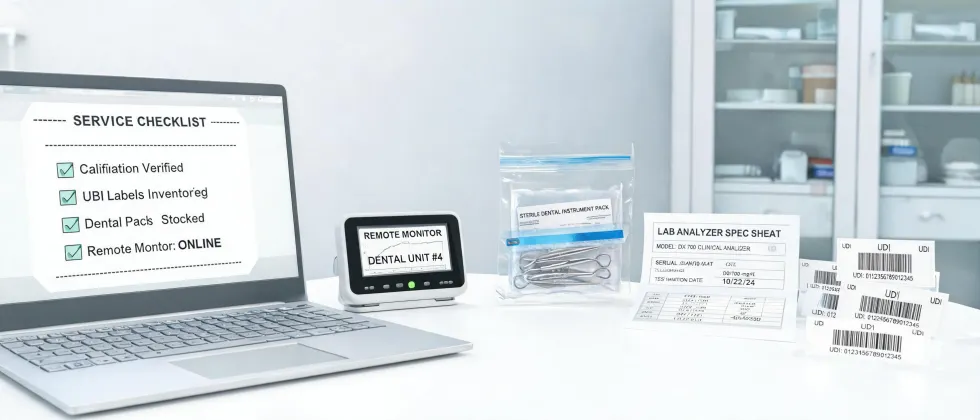
With icare equipment—or any medical device—what matters is not the name on the brochure. It's whether the seller can prove what's in the box. I'm a quality and compliance manager at icare. I review every device batch before it ships—roughly 200 unique items a year—and in 2024, I rejected 11% of first deliveries for things that don't show up in brochures: wrong software versions, calibration values off by a few percent, and one portable ultrasound transducer cable that failed during a bend test.
Quick side note: if you searched 'icare urgent care frisco,' that's not us. We're the equipment company, not the clinic. But if you're an urgent care in Frisco trying to buy working gear such as a portable ultrasound, you're the kind of customer I actually like working with. Small orders included.
How often dental x-rays? Less often than the old default
The 'every six months' rule is a legacy myth. It comes from an era when film was cheap, insurance paid without asking too many questions, and radiation risk wasn't part of the conversation. The American Dental Association's guidance (ADA.org, accessed January 2025) is built around caries risk. For a low-risk adult with no active decay, the usual interval for bitewing x-rays is 24 to 36 months. Six months is no longer the default.
That doesn't mean 'never.' New patients, high-risk patients, and patients who have developed new findings still need imaging sooner. But a low-risk patient sitting in a recall chair doesn't need bitewings every six months just because the front office software says it's time.
What icare dental reviews actually tell you
Every so often I read icare dental reviews online, and basically every four-star review is more useful than the five-star ones. A five-star 'great price, fast delivery' tells you the normal stuff went okay. A four-star 'the CBCT DICOM export glitched, support answered in 20 minutes, and fixed it remotely' tells you what happens when something isn't perfect. That's the real test.
Reviews don't tell you whether the equipment will survive your actual clinic. A dental compressor that works in a showroom can struggle in a back room without enough ventilation. Same with a CBCT unit in a small practice that doesn't have dedicated power conditioning. Icare dental reviews can tell you about service and delivery, but the only way to know if the unit fits your site is to ask for validation documents and, if possible, a service plan that covers installation.
Mammography and portable ultrasound: the same lesson
When I work with buyers on mammography systems, the first thing I check is not the detector size. It's the regulatory trail. In the U.S., mammography facilities need to meet the Mammography Quality Standards Act (MQSA) requirements, and the equipment needs to support the annual medical physicist survey and quality control program. If a supplier can't show its FDA clearance (you can check the FDA's 510(k) database, accessed January 2025) or can't explain how its service plan maps to MQSA documentation, the beautiful images don't matter. MQSA is the floor, not a gold-plated extra (which, honestly, is a good thing).
Portable ultrasound is the category where I've had the most surprises. The spec sheet says the probe is sealed and the unit is lightweight. But you don't know until you test it how the cable behaves when a nurse is in a hurry and loops it over a stretcher rail. We now run a 500-cycle cable bend test on every sample. In Q1—or maybe Q2, the months blur—one unit failed at 342 cycles. The vendor said it was 'within industry standard.' We rejected the batch and the vendor redid it at their cost. Now every contract includes the bend test requirement.
The numbers said the lower-priced portable ultrasound with three probes was the right choice. It had the imaging modes, the battery life, and the price. My gut said the training plan was too thin. I went with my gut and recommended the more expensive system. The customer later told me they had trialed the cheaper option elsewhere, and the staff stopped using it after two weeks because no one felt confident with the image settings. A device that sits unused costs more than the upgrade.
Even after I sent that recommendation, I kept second-guessing. What if I was just being influenced by a polished sales call? The two weeks before the customer confirmed were stressful. Then they confirmed, and later they sent a note saying the training days were the best they'd ever had. That was satisfying.
I also don't buy the idea that a small order deserves less attention. When I was starting out, the vendors who took my small orders seriously were the ones I stayed with for bigger orders later. Today's two-chair clinic might be tomorrow's regional health system. We apply the same rule at icare. A two-chair clinic ordering one dental x-ray unit gets the same batch record and quality documentation as a hospital order. That's not charity—it's the standard.
Where this reasoning hits its limits
None of this means ignore icare dental reviews or assume every five-star rating is fluff. It means treat reviews as a signal, not a contract. And the x-ray frequency answer doesn't apply to every patient. High-risk patients may need bitewings at 6–18 month intervals, and a clinician should make that call. Also, if you're truly trying to reach icare urgent care in Frisco, this article won't help you find a doctor. But if you're equipping that clinic, and you want a portable ultrasound that actually holds up in an urgent care hallway, that's a conversation I'm happy to have.