How to Choose Medical Imaging Equipment: Lessons from a Dental Clinic Audit
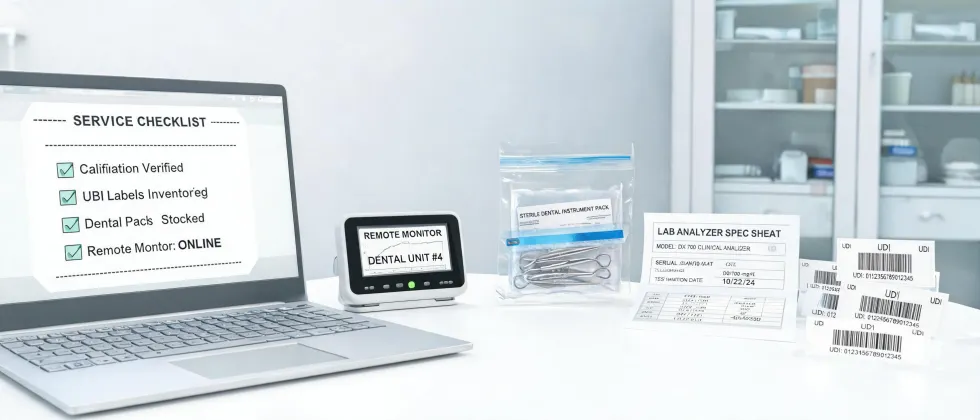
In early March 2024, I was standing in a dental clinic's equipment storage room, running a leak test on a flexible endoscope that had been sitting in its transport case, tightly coiled, for three months.
The leak test failed. Honestly, it wasn't a surprise.
I'm a quality inspector at icare. I've been reviewing medical equipment for over 4 years—roughly 200+ unique items each year—and I've learned to spot problems early. Today's visit was a pre-accreditation audit for a 14-location dental clinic chain applying to become an icare accredited dental clinic.
But this story isn't really about the accreditation. It's about what happened after the leak test.
The "One-Stop-Shop" Pitch
The clinic's operations director joined me in the storage room. She was planning a major equipment upgrade: new flexible endoscopes for their expanding ENT services, cardiac monitors for the sedation rooms, and a full imaging system replacement.
"We found a supplier who can handle everything," she said. "Imaging, monitors, scopes, chairs, compressors. One vendor. One invoice. One support line."
I've heard that pitch before. And I've seen it backfire.
It's tempting to think that consolidating procurement with one vendor simplifies things. But critical medical devices demand depth of expertise—and very few suppliers genuinely have that depth across flexible endoscopes, cardiac monitors, and diagnostic imaging simultaneously. (Note to self: I really should write a guide on this for clients.)
The $22,000 Lesson
Back in 2022, I rejected a delivery of 8,000 units because the device enclosure gaps exceeded our tolerance spec. Normal tolerance is 0.8mm maximum. Their units measured 1.2mm. The vendor claimed it was "within industry standard."
"Within industry standard" is the most dangerous phrase in medical equipment procurement. Industry standards are a floor, not a ceiling.
We rejected the entire batch. They redid it at their cost, but the launch was delayed by six weeks. With overtime, rushed shipping, and re-testing, that quality issue cost an estimated $22,000.
The Documentation Gap
So when the "one-stop-shop" vendor's rep told the clinic director their flexible endoscope was "good enough for ENT procedures," I asked for three things:
- Sterilization compatibility validation for the endoscope (autoclave and high-level disinfection cycles)
- IEC 60601-1-8 alarm system compliance documentation for the cardiac monitor
- DICOM conformance statement for the imaging system
All three were missing.
Not "we'll send them by Friday." Missing. The rep went silent, then said they could probably get them from the manufacturer. Might take a few weeks.
That was the turning point. (Ugh. I've had that silence too many times.)
Here's why the documentation matters. Sterilization validation determines whether a flexible endoscope can survive repeated reprocessing cycles in real clinical use. IEC 60601-1-8 certification means the cardiac monitor's alarms function reliably when a sedated patient's oxygen saturation drops. A DICOM conformance statement tells you whether the imaging system will integrate with the clinic's existing PACS—or become a $40,000 paperweight.
The icare Test
Before a clinic becomes an icare accredited dental clinic, equipment goes through what we call the icare test. It's not a single pass/fail exam. It's a verification process covering equipment functionality, calibration records, reprocessing workflows, and staff training.
During this audit, the icare test flagged 11 gaps. Nine were fixable within three months. Two required action—like properly storing that flexible endoscope. (Mental note: always inspect storage conditions during audits. It tells you more than any spec sheet.)
The bigger problem was upstream. The vendor they were betting on couldn't support the equipment after the sale. When I asked what their service network looked like for flexible endoscopes: "We have a partner who handles repairs." Replacement parts inventory? More silence.
I've never fully understood why some vendors over-promise on support. My best guess is they hope the buyer never asks the hard questions. Honestly, most probably don't.
The Awkward Recommendation
The clinic director sat down across from me in the break room. "So what do we do?" she asked.
Here's where my role gets interesting. I'm not in sales. I'm a quality inspector. My job is to make sure equipment in an icare accredited environment meets the standard—regardless of where it was purchased.
"For chairs, compressors, and basic imaging, the one-stop vendor is probably fine," I said. "But for flexible endoscopes, cardiac monitors, and advanced imaging systems, I'd want a specialist. I can write the specifications for each category and verify the equipment when it arrives. That's what I do."
"So you're telling us not to buy from the vendor we picked?"
"I'm telling you they can't produce documentation proving their equipment is safe and compatible. That's a risk. The vendor who says 'this isn't our strength' is way more trustworthy than the one who claims to be great at everything."
She looked at me like I'd just given her a math lecture. Then: "That's not what I expected to hear from a vendor."
That's the whole point.
How to Choose Medical Imaging Equipment: Five Questions
If you're buying imaging equipment for a dental clinic, hospital, or specialty practice, ask these five questions:
- Ask for validation documents first. Spec sheets are marketing. Sterilization validation, IEC certifications, DICOM conformance statements—those are evidence.
- Check integration before you check image quality. The best imaging system is useless if it can't feed images into your EMR or PACS properly.
- Verify service infrastructure locally. Who repairs it in your city? What's the turnaround time? A machine down for six weeks awaiting parts is a bad deal at any price.
- Price the full lifecycle. A $15,000 price difference between two systems often narrows to nothing when you factor in service contracts, consumables, and training.
- Ask them what they're not good at. If a vendor says "we're good at everything," that's a red flag. The right vendor tells you when to go elsewhere—and that honesty is worth more than any discount.
The Outcome
The clinic didn't buy everything from the one-stop shop. They split procurement across three specialized manufacturers, with icare handling equipment verification, the icare test, and ongoing quality audits.
They also fixed the storage issue. (The leak test failure was primarily a storage discipline problem. A proper drying cabinet routine sorted it out, and their next scope inspection was clean.)
The clinic received its icare accredited dental clinic status in June 2024. And in September, I got an unexpected email from the operations director: she'd referred two other dental groups to our quality services.
Not because we offered the lowest price. But because we told them where our boundaries were.
Bottom line: working with a specialist who knows their limits beats a generalist who overpromises every time. In medical equipment procurement, that's not a nice sentiment—it's the difference between a $22,000 quality failure and a facility that runs safely for years.