The Cheapest Medical Quote Is Rarely the Cheapest Decision
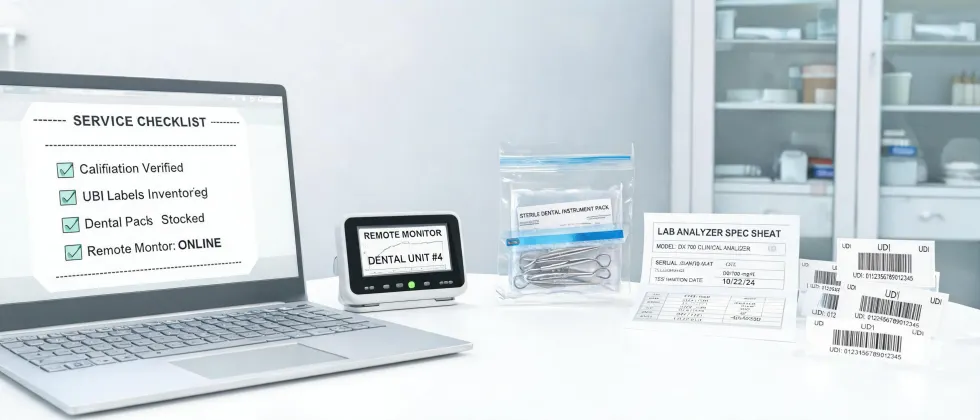
The cheapest quote is rarely the cheapest decision—especially in medical purchasing
In 2023, I pulled 47 purchase orders from our clinic's equipment and supply categories and sorted them by whether the winning bid was the lowest quote. Nineteen were. By the time the year closed, 11 of those 19 had generated follow-on costs—replacement parts, reshipping, or staff hours spent fixing what should've worked on arrival. The initial savings totaled about $11,800. The follow-on costs hit roughly $19,400.
That's a net loss of roughly $7,600, plus about two weeks of team time I can't put back on the calendar.
I'm the office administrator for a 70-person rehabilitation and outpatient care group. I manage ordering across about a dozen vendors—durable medical equipment, consumables, monitoring subscriptions, and some staffing-related procurement—roughly $1.1M annually. I report to operations and finance, which means when something goes sideways, I hear about it from two directions.
Why my numbers are worth something
When I took over purchasing in 2021, we had 23 vendors and no consolidated view of spend. In our 2024 vendor consolidation project, I cut that to 11 and finally got a clean picture of where the money actually goes. Processing 60–80 orders annually sounds tidy until you realize half of them are urgent, and urgency is where cheap quotes quietly become expensive.
One example I still use in vendor conversations: in 2022, I found a great price from a new supplier—$380 cheaper per unit on electric wheelchairs. Ordered six. They couldn't provide a proper invoice, just a handwritten receipt. Finance rejected the expense report. I ate $2,280 out of the department budget. Now I verify invoicing capability before placing any order, even a small one.
That experience changed how I read a quote. A bid isn't a price. It's a starting point for a bill you haven't seen yet.
What most buyers miss
The question everyone asks is "what's your best price?" The question they should ask is "what's included in that price, and what happens after month 12?"
What most people don't realize is that "standard turnaround" often includes buffer time vendors use to manage their own production queue. It's not necessarily how long your order takes. I've had a 3-day standard ship date arrive in 9, and I've had a 7-day date arrive in 4. The label on the quote tells you less than the vendor's track record does.
Where the hidden costs actually show up
Electric wheelchairs. According to Medicare.gov (accessed January 2025), durable medical equipment coverage generally requires a face-to-face exam and a written order from a physician before coverage applies. Cheap online sellers often don't walk you through the documentation, and a denied claim becomes your problem, not theirs. That $380 lower sticker price disappears fast when you're re-filing paperwork and the patient is waiting.
Remote patient monitoring. The subscription fee is only part of the number. Data plans, EHR integration, and patient compliance all move the total. We trialed a low-cost RPM platform in 2023—$18 per patient per month cheaper than our incumbent. Onboarding support was a PDF and a phone number. Our nurses spent roughly four extra hours a week troubleshooting for the first two months. Do the math: 4 hours × 8 weeks × a nurse's loaded hourly rate, and the discount was gone before Q2.
How to choose ostomy supplies. This one isn't about picking the cheapest pouch. It's about fit, wear time, and return policy. A pouch that leaks after 8 hours costs you in skin care, nursing time, and patient trust. Ask any vendor two questions before ordering: what's your exchange policy on opened boxes, and what's your average wear-time guidance for this product? Most cut-rate sellers say "no returns on opened products" and can't answer the second question at all.
Home care in Chattanooga. Home care Chattanooga agencies vary widely in caregiver retention. Low bill rates often signal high turnover, which means a new face every few weeks. For a post-surgical patient, that's a safety issue, not just an inconvenience. I now ask agencies for their 12-month caregiver retention rate before we sign anything. The ones who can answer quickly tend to be the ones worth hiring.
Medical assisting diploma in Chattanooga, TN. We've reimbursed staff for a medical assisting diploma in Chattanooga TN through two different programs. The cheaper program had a roughly 40% completion rate; the more expensive one was closer to 85%. We effectively paid for the cheaper program twice—once in tuition, once in re-training. Tuition is visible. Dropout cost isn't.
The Chattanooga brand itself. As a rehab equipment brand, what you're paying for is clinical application support—someone who can tell your therapist how to program a protocol, not just ship a box. When we've bought on price alone, we've also bought the absence of that support. It's a bad trade for anything a clinician touches daily.
The risk calculation I actually run
The upside was $2,000 in savings on a monitoring contract. The risk was a compliance gap during a survey window. I kept asking myself: is $2,000 worth potentially failing an audit and explaining it to our medical director? The expected value said take the deal. My gut said the downside was asymmetric. I passed, and I still think that was right.
Looking back, I should have paid for the extended service agreement on our first wheelchair batch. At the time, the standard warranty looked sufficient. It wasn't. But given what I knew then—nothing about that vendor's repair turnaround—the choice was reasonable. That's the frustrating part about value decisions: you often only learn the real cost after the fact.
When the cheap option is genuinely fine
I'm not saying budget options are always bad. They're riskier, and risk needs a reason. Cheap works when the item is standardized, low-risk, and has a clear return path—basic exam gloves, printer paper, non-clinical furniture. It's also fine for short-term or trial use where you've already accepted the downside.
Cheap is a bad bet when the product touches patient care, when there's a compliance requirement attached, or when the vendor can't produce a clean invoice. Those three conditions cover more of medical purchasing than most people expect.
What I ask before signing now
- Can you send a sample invoice before I place the order?
- What's your exchange policy on opened products?
- Who do I call when something fails, and what's your response time?
- What's the total year-one cost including shipping, setup, training, and any subscription?
Four questions. Most vendors answer three well and stumble on the fourth. The stumble is the information.
Pricing and coverage references are for general guidance only. Medicare rules and vendor pricing change; verify current requirements at Medicare.gov and confirm quotes directly with suppliers before purchasing.