The Quality Gap No Medical Equipment Spec Sheet Shows | icare
Your New Device Looks Great on Paper. That’s the Problem.
The ICU monitor on the demo cart was flawless. The hematology analyzer’s numbers looked textbook. Even the CPAP vs BiPAP comparison made sense—until it didn’t.
Six weeks after installation, a nurse says the monitor’s alarms are “too sensitive.” The lab supervisor calls about a 0.3% drift in hemoglobin results. The respiratory therapist discovers the CPAP unit defaults to a pressure no one on the night shift was trained to adjust. Sound familiar?
I’m the person who reviews equipment before it ships. I work at icare, a medical device supplier, and roughly 200 unique products pass through my hands every year. I’ve rejected about 12% of first deliveries in 2024 for issues no brochure would mention. This isn’t a story about one bad vendor. It’s about how we define quality in medical equipment—and why that definition is missing the most important part.
If you found this article after searching “icare medical johnstown pa” or reading “icare centers urgent care oklahoma city reviews,” you’re probably trying to answer one question: Can I trust this equipment when it matters? I’ll give you the same answer I give every purchasing manager. Don’t trust the spec sheet. Trust the process behind it.
Why Specs Lie (Not on Purpose, but They Do)
To be fair, no manufacturer starts with a plan to ship misleading specs. The problem is that specs are measured in ideal conditions, and hospitals are not ideal.
1. A hematology analyzer’s numbers are ideal-condition numbers
Calibration data for a hematology analyzer is generated with fresh reagents, stable power, and a technician who has run the same test fifty times. In a real lab, reagents sit out on the counter (surprise, surprise), the purified water system has an off day, and the lab hits peak load at 2 PM. That’s where the gap appears. According to ISO 13485:2016, manufacturers have to validate production processes—but that validation happens in our building, not yours. And no spec sheet tells you how a device behaves with your water, your voltage swing, or your 2 PM workload.
2. An ICU monitor is a team member, not a box
The hardware can be electrically perfect, but if the alarm limits are hard to adjust or the waveform display is cluttered, clinicians will either miss alarms or ignore them. That’s not a hardware defect; it’s a human factor problem. In our Q1 2024 quality audit, 40% of returned ICU monitors had no component failure at all. The complaint was usability. That counts as a quality failure in my book—and it costs more than a capacitor failure because it erodes trust slowly.
3. CPAP vs BiPAP is not a “pick whichever” decision
I keep seeing CPAP vs BiPAP treated as a settings comparison. It’s not. A patient with obstructive sleep apnea often does well on CPAP. A patient with central sleep apnea or respiratory muscle weakness may need BiPAP, especially with a backup rate. The machines can look almost identical in a brochure. But choosing the wrong one can cause patient discomfort, poor compliance, and—worst case—clinical deterioration. That makes the CPAP vs BiPAP discussion kind of meaningless without a patient context, and it becomes a quality issue when the supplier doesn’t train the team or explain the difference.
4. Support and consumables are part of quality
An ICU monitor is only as good as the service plan behind it. A hematology analyzer is a paperweight without a reliable reagent supply. I have watched facilities buy a great device and then source cheaper consumables from a third party, which voids the warranty and causes erratic readings. (Talk about a silent budget killer.) The device wasn’t the problem. The ecosystem around it was.
The Real Cost: More Than a Repair Bill
Let’s talk about consequences, because too many procurement conversations stop at price per unit.
- Clinical risk. A falsely elevated potassium result from a hematology analyzer can trigger a treatment decision. A delayed alarm on an ICU monitor can mean a slower response. A CPAP device set at the wrong pressure can cause patient-ventilator asynchrony. These are not theoretical risks.
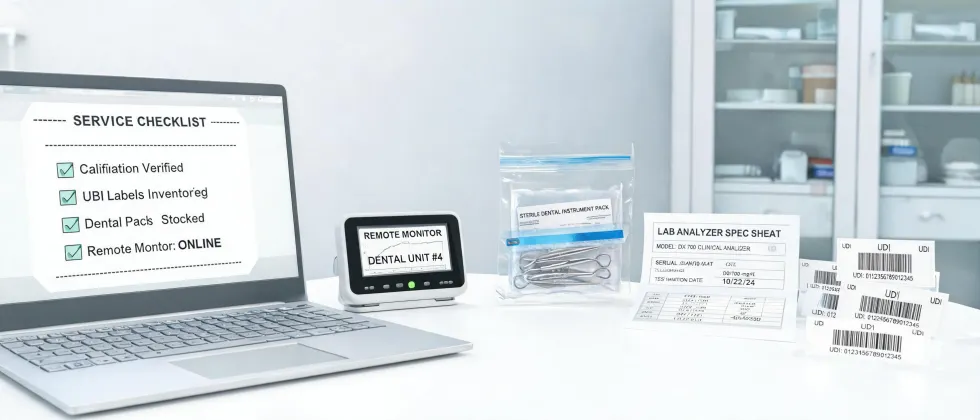
- Operational cost. The third time we ordered the wrong firmware version for a batch of ICU monitors, I finally created a pre-shipment checklist. Now that checklist catches problems before they become a customer’s week-long downtime. But before that, it took a $22,000 redo and a very uncomfortable call to a hospital administrator.
- Trust. In my first year, I made the classic rookie mistake: I assumed “FDA cleared” meant “will work in any environment.” I learned that lesson when a brand-new analyzer failed in a high-humidity clinic. The analyzer was fine for its intended use; the clinic’s old building didn’t match the assumed environment. The customer’s confidence in us wasn’t fine.
I also went through the procurement version of a 2 AM debate: choose the vendor with the best calibration data, or the one with better on-site training? On paper, calibration data wins. But my gut said a device no one trusts is worthless. I chose training support. I hit “approve” and immediately wondered if I had overpaid. I didn’t relax until the night shift reported back positively. That experience taught me more than any audit report.
Here’s the part that doesn’t show up in ROI calculations: your brand becomes the equipment you choose. When a nurse sees a poor reading from a device, she doesn’t blame the manufacturer. She blames the hospital. And when a facility buys from us, our name is on the same line. That’s why I reject units with cosmetic scratches even if they pass electrical safety tests. A scratch doesn’t affect function, but it tells a clinician the device isn’t cared for. Perception is part of performance.
According to FDA’s MAUDE database, thousands of adverse event reports each year are linked to usability and environmental factors, not just component failures (Source: FDA MAUDE, accessed July 2025). The pattern is consistent: quality isn’t a spec sheet.
What Actually Works: Quality as a System
After all this, the fix is unglamorous. It’s verifying each unit under realistic conditions, documenting firmware versions, agreeing on consumables, training the people who touch the device, and testing the support line before you need it. That’s what we mean at icare when we talk about an integrated care ecosystem. It’s not a buzzword. It’s how we avoid the $22,000 phone call.
If you’re deciding between CPAP vs BiPAP options, an ICU monitor, or a hematology analyzer, ask the supplier three questions: How do you test in real-world conditions? What happens when a product doesn’t perform? And can I talk to a facility like mine—maybe in Johnstown, PA, or an urgent care center in Oklahoma City—that has used it long enough to know?
They might not have all the answers. But how they respond tells you more than any spec sheet. (And if they say “we don’t do user training,” run.)
Quality isn’t a box to check. It’s the entire path from the factory to the patient’s bedside.
I’ve seen what happens when that path breaks. I’ve also seen what happens when it’s done right—a nurse trusts the monitor, a lab trusts the analyzer, a patient sleeps through the night. That’s the whole point.