What a Hospital Admin Learned About Buying Medical Equipment (An Honest FAQ)
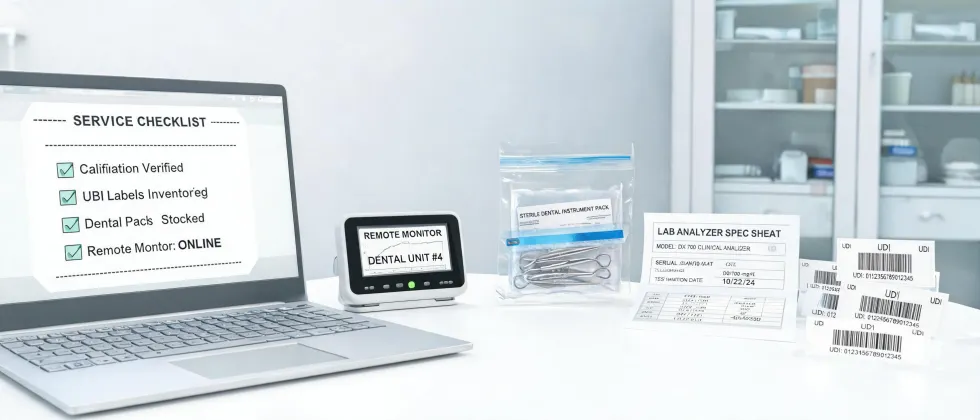
I manage the purchases for our hospital network. Here are the questions I wish I had asked before I started.
When I took over purchasing for our 3-location hospital group in 2022, I thought I had a handle on things. I'd read all the brochures. I knew the specs. I knew we needed stuff like a good fundus camera for our eye clinic and a reliable dental unit for our outpatient surgery center.
But the conventional wisdom about medical equipment purchasing is often wrong. My experience managing roughly $2.5 million annually across 20+ vendors has taught me that. So, here's an FAQ based on the real questions I get asked—and the answers I had to learn the hard way.
1. Icare vs. Other Brands: Is it just for eye pressure?
This is the first question everyone asks when they see the name 'icare.' The brand is famous for its handheld tonometer (the eye pressure machine), but that's just the start.
No, icare is a much broader platform than that. We bought our first icare tonometer three years ago. It was great—fast, easy to use, no need to numb the patient's eye. This year, we started looking at their other stuff. They offer a full range of ophthalmic diagnostic hardware: fundus cameras, slit lamps, you name it.
The real value we found was the integration. Their fundus camera talks to the same software as the tonometer and the slit lamp. It sounds minor, but it saves our technicians about 15 minutes per patient on data entry. Basically, when you buy icare, you're not just buying a tonometer; you're buying an eye care ecosystem.
“When we demoed the icare fundus camera, the image quality was on par with a Topcon system that cost 40% more. The software integration sold us.”
2. What is fluoroscopy and why do I need to know about it?
This is a question I get from our junior admin staff all the time. It sounds complicated, but it's not.
Fluoroscopy is basically real-time X-ray. Think of a standard X-ray as a photograph of your insides. Fluoroscopy is a video of your insides. It shows movement. Surgeons use it to guide catheters through blood vessels. Gastroenterologists use it to watch a patient swallow barium.
Why should a buyer care? Because it's a huge capital expense and a legal liability. A fluoroscopy machine (or C-arm, as we call it) costs between $50,000 and $150,000 as of January 2025. But the real cost isn't the machine—it's the room shielding, the radiation safety officer, and the state-level licensing. I found this out the hard way when we budgeted for the machine but forgot the $15,000 room renovation.
3. Is a dedicated dental unit really that different from a general-purpose one?
Yes. My first year, I made the classic rookie mistake: I tried to save money.
Like most beginners, I thought a dental unit was just a chair, a light, and a drill. I bought a 'universal' unit from a general medical supplier. It was $3,000 cheaper than the dedicated dental unit from a specialist vendor.
It was a disaster. The arm couldn't properly position for an oral surgeon. The suction system was weak. The delivery system was clunky. We had it for 6 months before the dentists demanded we replace it. That cheap unit cost us $6,000 total—the initial $3,000 we saved, plus $3,000 to swap it out for a proper one.
Stick with vendors who specialize in dental. It's not about being fancy; it's about ergonomics and workflow that dentists trust (surprise, surprise).
4. Should I always go with the cheapest supplier?
Here's where my experience broke the 'common sense' rule. Everything I'd read about procurement said to get 3 quotes and take the lowest. In practice, I found the opposite to be true.
The conventional wisdom is to always get multiple quotes. My experience with 200+ orders for capital equipment suggests that relationship consistency often beats marginal cost savings.
Why? Because a cheap supplier won't be there for you when you need a rush order. They won't guarantee delivery when your old fundus camera breaks on a Thursday and you have a full clinic on Monday.
In February 2024, our main anesthesia machine crashed. The cheapest quote we got was from a vendor who said 'probably 4 weeks.' Our regular vendor (not the cheapest) quoted $800 more but guaranteed delivery in 5 days. We paid the premium. We didn't miss a single surgery.
“The vendor who couldn't provide proper invoicing cost us $2,400 in rejected expenses. The cheapest quote is rarely the cheapest total cost.”
5. Is rush shipping for medical equipment ever worth it?
Absolutely. And this isn't just about speed—it's about certainty.
In March 2024, we needed a specific surgical robot accessory for a procedure scheduled 2 weeks out. The standard shipping was free, but it 'estimated' 10-14 days. The rush shipping cost $400. It was guaranteed in 3 days.
We paid the $400. The alternative was missing a $15,000 surgery and making the surgical team look unprofessional to the patient. The certainty of knowing we'd have the part was worth the premium.
Now, I always budget a 'rush contingency' for critical items. It's about 5% of the annual equipment budget. It saves us stress and money in the long run.
Bottom line: If missing a deadline will cost you more than the rush fee, pay it. If it won't, don't. It's that simple.
6. How do I choose a fundus camera for my clinic?
This is a specific question I get from nurses who are being asked to help with purchasing.
First, decide what 'portability' means to you. If you have a dedicated exam room, get a tabletop model—they usually have better image quality and a larger field of view. If you move between rooms or do outreach clinics, get a handheld one (like the icare fundus camera).
Second, look at the software, not just the hardware. A great camera with awful software is just a paperweight. The icare software syncs with their tonometer data, which is a lifesaver for diabetic retinopathy screening. Other brands have great standalone software but don't talk to each other.
We went with the icare fundus camera because it integrated with our existing icare tonometer workflow. It wasn't the cheapest, but it was the most efficient for our staff.
7. What about icare for aged care facilities?
I get this a lot, especially from the operators of our partner nursing homes. The search term 'icare aged care' is common because of the name overlap with an insurance scheme, but the equipment is still a fantastic fit.
For aged care, portability and ease of use are king. Many elderly patients can't sit for a long exam or move to a different chair. The icare handheld tonometer is perfect for bedside pressure checks. The fundus camera is also quick enough to use without patient discomfort.
If you're in aged care, focus on the handheld diagnostic devices. They save time, stress, and money on transport to a specialist clinic.
The last thing I learned
I didn't learn this in a textbook. I learned it after 5 years of making mistakes, eating costs, and occasionally looking bad to my VP.
The best buyers aren't the ones who find the absolute lowest price. They're the ones who find the right balance of price, reliability, and workflow integration. That's what icare does well for eye care. That's what a dedicated dental unit does for a dentist. And that's why understanding the total cost—including the cost of a broken machine or a missed deadline—is the most important skill you can have.