Five Minutes of Checking Beats Five Days of Correcting: A Medical Buyer’s Opinion
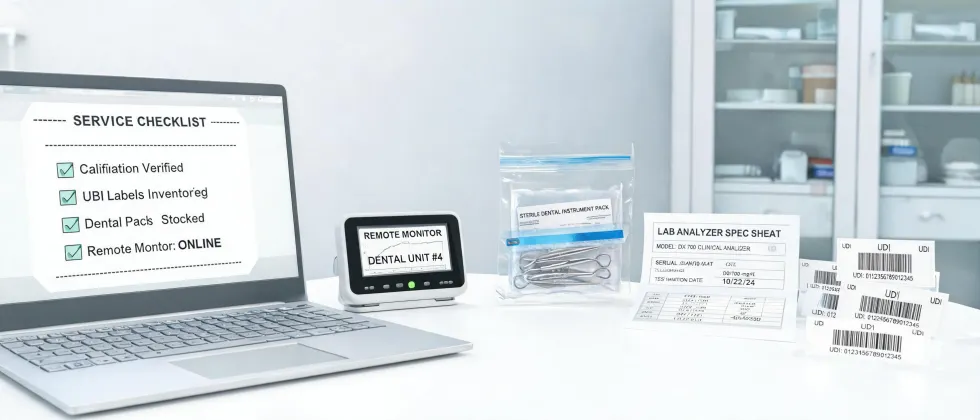
Five minutes of checking is cheaper than five days of correcting. I didn’t believe that when I started. More accurately, I acted like I didn’t believe it.
Since 2020, I’ve been the administrator who manages purchasing for a 120-person, multi-specialty outpatient medical group. That means roughly 150–200 purchase orders a year—everything from exam table rolls to patient monitors, hospital crash carts, dental CBCT systems, and rehabilitation equipment. I report to operations and finance, which is a polite way of saying I get blamed from both sides when an order goes wrong.
Here’s the opinion I’ve landed on after enough of those mistakes: prevention almost always beats correction in procurement, just as it does in medicine. The hard part is that checking feels like slowing down. In a busy clinic, slowing down feels like failure—even when the alternative is a return, a delay, or a clinical team waiting for something that should have been right the first time.
The “icare toilet paper” problem is real
If you’re searching for “icare toilet paper,” I’m sorry to disappoint: icare is a medical equipment supplier, not a paper-goods brand. I’ve learned the hard way why that distinction matters.
A nurse manager once told me to “order more icare” before the afternoon huddle. I heard “replace the patient monitor.” The dentist down the hallway heard “CBCT scanner upgrade.” Both were plausible because the same supplier makes both. One name, two departments, two completely different products.
That’s why our ordering rule now sounds annoyingly simple: no nicknames. Nobody orders “the icare” or “the icare plus” until we can write down the exact model, options, and accessories. On a busy floor, “plus” means “the better one.” Better at what? Which configuration? Which mounting hardware? Which power supply? The name is a starting point, not a specification.
A crash cart is a checklist with wheels
Here’s the thing: a hospital crash cart is not furniture. It is a checklist with wheels. If the drawer layout does not match the clinical workflow, the cart fails exactly when it matters most.
When we replaced our crash carts in 2023, I went back and forth between two options for two weeks. One was clearly cheaper and had the shorter lead time. The other had adjustable drawer dividers and cost about 9% more. On paper, the cheaper option made sense. My gut said flexibility was worth something, but I couldn’t justify the extra cost to finance.
The tiebreaker was boring: I called our clinical educator and asked her to walk through the emergency cart checklist with each manufacturer’s demo. That’s when the cheaper option fell apart. Its third drawer was too shallow for the adult airway kit our code team actually uses. The brochure didn’t mention that. The catalog photo didn’t show it. Only the measurement did.
We bought the cart with adjustable drawers. Even after I signed the order, I kept second-guessing myself—the two weeks before delivery were not fun. But when the cart arrived, the clinical team ran a full code cart check from memory. Every item had a place. That’s the moment I exhaled.
I don’t think that was me being obsessive. Resuscitation guidelines from the American Heart Association—the 2020 CPR and ECC guidelines and focused updates since—emphasize minimizing interruptions in chest compressions. A person shouldn’t have to fight a drawer during a code. That is exactly the kind of interruption a well-designed cart prevents.
“What is catheter ablation?” was the best procurement question I asked
In 2024, our cardiology group started planning a catheter ablation program. My first question was not about vendors. It was embarrassingly basic: what is catheter ablation exactly?
Here’s the one-paragraph version I took to finance. Catheter ablation is a minimally invasive procedure used for certain heart rhythm problems. A thin, flexible tube called a catheter is guided through a blood vessel to the heart, and energy—usually radiofrequency heat or cryo cold—creates a tiny scar that interrupts the abnormal electrical signals causing the arrhythmia. The 2023 ACC/AHA/ACCP/HRS guideline for the diagnosis and management of atrial fibrillation discusses it as a rhythm-control option for selected patients, which was enough clinical cover for a purchasing conversation.
But the definition was not what changed my buying decision. What changed it was the question after the definition: what happens after the procedure?
The answer is where procurement lives. Some patients need a period of cardiac monitoring before discharge. Staff need to be ready to manage the access site and recognize complications. The crash cart needs to be nearby. That meant our program needed more than ablation catheters and a mapping system. It needed a monitored recovery space, an accessible emergency cart, and training scheduled before the first case, not after.
Rehabilitation equipment is not the exception
Rehabilitation equipment looks like an easier purchase. A treatment table is not a mapping system. But it still needs to get through the door, fit in the room, and leave enough space for a clinician to work safely around it.
When we expanded our rehab space last year, the table our director liked looked ideal in the spec sheet. Then someone—me, with a tape measure—checked the corridor. At the fire door, the opening was four inches narrower than we assumed. The table would have made it into the room, but only after removing the door and shifting a cabinet. We would not have discovered that until delivery day if I hadn’t measured first.
No checklist can predict every installation problem. But the question “can this equipment physically get to where it will be used?” has prevented more rework than any other single question I ask.
The objection: “I don’t have time to check everything”
Granted, this approach has a cost. It makes me the person who asks questions when everyone else is ready to submit the PO. Over the years, I’ve learned to ask anyway.
I’m not arguing that an administrator can be a clinical expert in every product category. I’m arguing for a consistent verification step before the order is submitted. For me, that is five questions, whether I’m buying a patient monitor or a box of tape:
- What exact configuration are we ordering? Full model name, options, and accessories—not a nickname.
- What safety standard applies, such as IEC 60601-1 for most medical electrical equipment, and can the supplier provide the declaration of conformity?
- Who installs it, trains the staff, and supports it after go-live?
- What consumables or accessories are needed on day one, not in a future quarter?
- How will this equipment get from the delivery dock to the room where it will be used?
Asked once, those questions take a few minutes. Asked after the fact, they take weeks.
To be fair, checking does not prevent every problem. Vendors miss ship dates, budgets change, and clinicians change their minds. But most of the expensive corrections I’ve lived through were caused by ambiguity that a few minutes of verification would have caught.
Prevention over cure is not just a medical principle. It’s a purchasing one. If you’re putting together an order for a patient monitor, a hospital crash cart, or rehabilitation equipment, the right product starts with the right questions—asked before you click submit, not after the invoice lands on finance’s desk.
These examples are from my procurement experience through mid-2025. Product names and standards change; check the manufacturer’s current documentation, the supplier’s declaration of conformity, and the latest clinical guidelines before making your own decisions.