How to Choose Medical Imaging Equipment (From Someone Who's Processed the Orders)
If you're trying to figure out how to choose medical imaging equipment, here's the short answer: choose the system your team can install, integrate, maintain, and actually afford over its full lifetime—not just the one with the most impressive demo image. I work at icare handling capital equipment orders, and I'd rather spend 10 minutes helping you understand this than watch another project stall because the brochure said yes and the building said no.
I've personally made and documented nine significant ordering mistakes in my 11 years on this side of the purchase process, totaling roughly $176,000 in restocking fees, expedited shipping, and last-minute site changes. None of those mistakes started with a bad sales pitch. They started with missing checks: no room audit, no service agreement review, no interoperability test, no single place for the equipment's service history.
The real reason imaging equipment purchases fail
In my experience, failed orders rarely happen because the scanner's images look bad. They happen because the equipment doesn't fit into the real environment. The order I still cringe about was an imaging system in 2023. The capital price looked within budget and the demo looked great. No one asked about the room's heating and air system until installation day, when the room couldn't stay in the temperature range the system required. We needed an emergency HVAC change order and lost three weeks. That mistake cost about $21,000. The image quality was excellent; the machine just couldn't run long enough for anyone to care.
Trust me, the same pattern applies to much smaller purchases. A discounted IV catheter that doesn't match your clinical protocol is not a bargain. An operating table that doesn't support your procedure mix isn't an upgrade. I've seen all three mistakes at very different price points, and the root cause is the same: buying the product instead of the system around it.
How I now help people choose imaging equipment
Start with this five-part checklist before you ask vendors for marketing material. It isn't fancy, but it has caught more problems than any spec comparison I've run.
1. Define the clinical problem before you define the modality
Do not start with, 'Which scanner should we buy?' Start with: Which patients need this? What clinical question are we trying to answer? Which clinicians will use it? How many exams do you realistically expect each week? A machine sized for a high-volume hospital can be a costly burden for a small clinic. The equipment should match the clinical workload and skill available, not the sales target of the month.
2. Build a total cost of ownership sheet
The sticker price is the entry point, not the real price. I don't have hard data on industry-wide hidden costs, but anecdotally, site and infrastructure issues are the most common surprise I've seen. Put these on one page before comparing quotes: room size and shielding, electrical and network upgrades, heating and air capacity, training, service contract, software upgrades, expected downtime, and disposal at end of life.
3. Put the service plan in writing
Imaging equipment will fail eventually. The question is what happens on that day. Ask the vendor to state their response time in the contract, where the nearest service engineer is located, whether parts are stocked locally, and what a loaner system looks like. Last year, I almost signed an order before a customer asked for a reference call. The call revealed that the vendor's nearest parts depot was hundreds of miles away. Dodged a bullet.
4. Verify regulatory status and integration path
For most imaging devices sold in the U.S., check the exact model in the FDA 510(k) or premarket approval database at accessdata.fda.gov as of July 2025. Do not check only the manufacturer name. Check electrical safety labels such as IEC 60601 if you are outside the U.S. Then ask the vendor to show you how images move to PACS and how orders and results flow through your EHR or radiology system. A vague answer is a yellow flag.
5. Plan for life after go-live
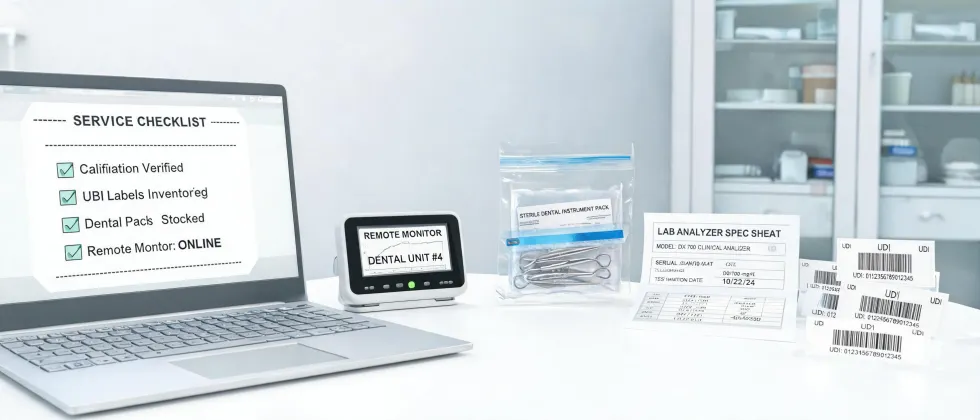
This is the check I ignored for years. After installation, you will need software updates, service records, warranty status, and training documents. A secure customer portal makes that far easier. At icare, the icare web portal is where our customers access those records. If you are evaluating another vendor, ask for the same thing—an online system that tracks the device from install through service.
Searching for a brand is not due diligence
Brand names are useful, but they are not unique. If you type icare into a search engine, you might see the icare web portal, an unrelated business called icare heating and air, and one of our medical device pages all on the same result page. That is why I verify exact model numbers and regulatory listings instead of trusting a familiar-looking logo. The same applies to how to choose medical imaging equipment: dig down to the specific model, not the brand level.
So where does image quality fit?
Image quality still matters, but for most teams it should be a tie-breaker, not the opening question. After two systems pass the workflow, cost, service, regulatory, and integration checks, then compare images side by side using similar clinical conditions. Include your radiologists and technologists in that review. Let them choose the one they can interpret with confidence. Just don't let a beautiful sample image do the work that a service agreement should do.
A warning about my blind spots
My experience is based on roughly 40 imaging projects and many related equipment orders in community hospitals and outpatient settings. I cannot speak to every academic medical center, trauma center, or specialized neuroimaging research program. Those environments might reasonably put image quality higher on the list, especially if they have their own biomedical engineers and a stronger support network. If that sounds like your situation, treat this as a starting point, not a substitute for advice from a medical physicist or compliance team.
If you take only one thing from this article, make it this: before any capital imaging purchase, ask the vendor for a reference site with a patient volume similar to yours. Then call them. A quiet 15-minute phone call has caught more problems than any spec sheet comparison I have ever run.