How to Choose Medical Imaging Equipment: FAQ from an icare Quality Inspector
-
Why is there such a big price gap between 'premium' and 'value' medical equipment?
-
How do I choose medical imaging equipment without being an imaging specialist?
-
What should I look for in an ECG machine besides how many leads it has?
-
What's the biosafety cabinet question nobody asks?
-
What does 'FDA registered' actually mean?
-
Is there a real difference between equipment for an urgent care center and equipment for an eye hospital?
-
What's the one thing you'd change in every medical equipment procurement process?
-
Should I buy everything from one medical equipment supplier?
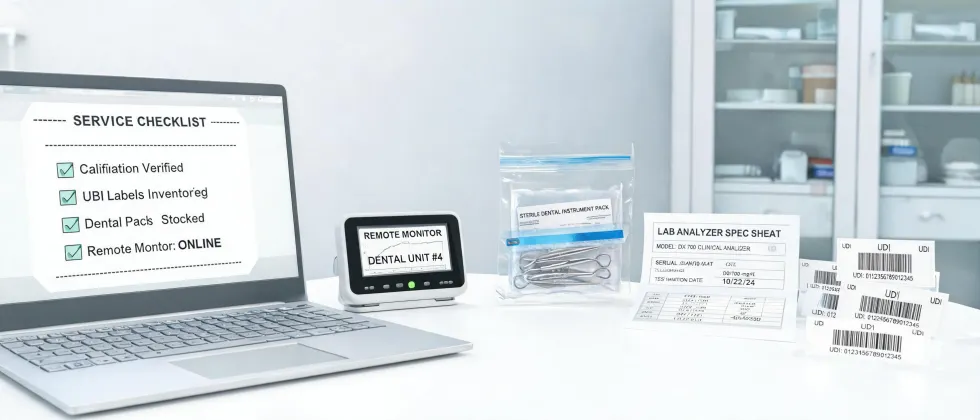
I'm the quality and compliance lead at icare. I review every equipment spec before it goes out the door—roughly 200+ unique product lines a year. So far in 2025, I've rejected or sent back about 8% of first delivery documents because they didn't match the agreed spec. That doesn't mean the machines were broken. It usually means the paperwork, safety labels, or certifications were wrong.
I'm not a clinician or an imaging specialist. I'm the person who asks what happens when the device arrives, gets installed, and fails in week three. This FAQ is for buyers who want the practical details instead of the sales deck.
If you're looking at an icare center urgent care or an icare eye hospital & post graduate institute, the same principles apply. Here are the questions I keep answering:
- Why 'premium' and 'value' are not the same as 'right for your site'
- What an ECG machine price actually includes
- How to choose medical imaging equipment when you're not a radiologist
- The biosafety cabinet detail almost nobody checks
- Why 'FDA registered' doesn't mean what you think
- Whether one supplier for everything makes sense
Why is there such a big price gap between 'premium' and 'value' medical equipment?
When I first started in quality, I assumed the expensive option was automatically the safer option. Three urgent care projects later, I changed my mind. Price usually reflects three things: component quality, clinical decision support, and service support. A lower-priced ECG machine may still produce a valid tracing, but it might use a shorter lead cable, an older interpretation algorithm, or limited data export. (Which, honestly, matters more for a hospital than a small clinic.)
So I don't ask 'is it premium or value?' I ask 'what exactly changes between the listed specifications?' If the answer is only the logo, that's a red flag. If the answer is better signal processing or higher-resolution imaging, then the premium might be worth it.
How do I choose medical imaging equipment without being an imaging specialist?
I'm not a radiologist, so I can't tell you which detector technology produces the best image for your specific caseload. What I can tell you from a quality/compliance perspective is to focus on three things: intended use, patient volume, and upgrade path.
- Intended use: Are you doing general X-ray, dental CBCT, or both? A machine that's great for extremities can be poor for chest exams.
- Patient volume: A busy urgent care center needs faster tube cooling and a higher duty cycle. A specialty eye hospital might only need low-dose orbital views.
- Upgrade path: Ask which software and hardware options can be added later. (Think of it as buying a laptop with a user-replaceable battery vs. a sealed one.)
Don't let the vendor jump straight to detector size and kVp. Those specs matter, but they only matter after you've defined the clinical workload.
What should I look for in an ECG machine besides how many leads it has?
Lead count is the easy spec. A 12-lead ECG machine is usually the right choice for a hospital or clinic that wants to compare tracings over time. But I wish buyers asked these four things:
- Algorithm version: Interpretation algorithms differ. Ask for the vendor's current software version, not just '12-lead interpretive.'
- Sampling rate: A higher sampling rate captures more detail. Look in the manual; it's often buried there (e.g., 1,000 Hz vs. 500 Hz).
- Acquisition noise: Check whether the filters handle baseline wander without distorting the signal.
- Data output: Can you export PDF, XML, or HL7? Or are you locked into the vendor's format?
I've rejected more ECG machines for missing export functionality than for lead count. (Surprise, surprise, it's usually the budget model.)
What's the biosafety cabinet question nobody asks?
Most buyers ask about HEPA filtration and airflow velocity. That's useful, but here's the one that gets missed: where will the cabinet be installed? A biosafety cabinet isn't just a device; it's a containment system. Ducted vs. recirculating changes the installation completely, and the room airflow can affect containment.
Also ask about field certification. The cabinet should be tested in place after installation, not just with a factory sheet. In a Q1 2024 quality audit, I saw two supposedly certified cabinets that had never been re-tested after moving to a new lab. I don't have hard data on how many sites skip this, but my sense is it's more than half. Maybe I'm too cynical, but I've seen biosafety cabinets used for years without a containment test.
And know the difference between a biosafety cabinet and a chemical fume hood. They are not interchangeable.
What does 'FDA registered' actually mean?
Let me be careful: I'm not a regulatory attorney, so this is a 'read the label yourself' nudge, not legal advice.
'FDA registered' usually means the facility is registered with the FDA. It doesn't necessarily mean the specific device went through rigorous clearance or approval. If a vendor uses that phrase to imply the device is 'approved,' that's a problem. FTC advertising guidelines say claims have to be truthful and substantiated (ftc.gov/business-guidance/advertising-marketing). I apply the same standard to spec sheets: if a vendor says 'high resolution' or 'diagnostic quality,' I ask them to show me the standard or test they're referencing.
Take this with a grain of salt: most reputable manufacturers are cleared through 510(k) or similar pathways. But not every 'FDA registered' device is the same. Ask for the clearance number and check it yourself.
Is there a real difference between equipment for an urgent care center and equipment for an eye hospital?
Yes, and this is where procurement decisions go sideways. I've seen an icare center urgent care buy a high-end imaging system meant for a specialty hospital because it had the biggest sensor and the flashiest marketing brochure. (Not that the brochure ever helped anyone read an image.) The machine did beautiful work, but it also needed more space, more power, and more operator training than the clinic had.
An icare eye hospital & post graduate institute, on the other hand, probably needs low-dose imaging protocols, a compact footprint, and workflow features for high patient turnover. The same machine could be completely wrong in both settings.
Write down your patient mix before you talk to vendors. If you're mostly doing routine follow-up visits, don't buy a system built for research-grade imaging.
What's the one thing you'd change in every medical equipment procurement process?
I'd add a service and consumables line item to every purchase. The device price is just the entrance fee. Shipping, installation, calibration, training, replacement parts, filters, electrodes, annual maintenance—those are the real monthly costs. 'Total cost of ownership' sounds like a consultant's buzzword, but I've watched it catch people off guard.
One example: a compact dental CBCT machine might look affordable, but if the vendor requires a dedicated service contract and proprietary parts, the 5-year total can exceed the sticker price by a lot. I wish I had tracked this more carefully. What I can say anecdotally is that a lot of buyers underestimate service costs by 20-30%.
Don't hold me to that percentage, but do hold vendors to a written price list for service and consumables.
Should I buy everything from one medical equipment supplier?
Part of me wants to say yes, because a single integrated order is easier to track and service support is simpler. Another part knows that one vendor may not be the best in every category. I've had good and bad experiences with both approaches.
Since this is icare, we obviously sell a broad portfolio—from patient monitors to dental equipment to imaging systems. But I'd rather see an informed buyer pick the right tool than pick us out of convenience. If you do consolidate, at least demand line-item specifications, certs, and service commitments for every device. That way you get the simplicity of one order without the risk of one hidden weak link.