One Supplier vs. Many: What $12,000 in Medical Equipment Mistakes Taught Me
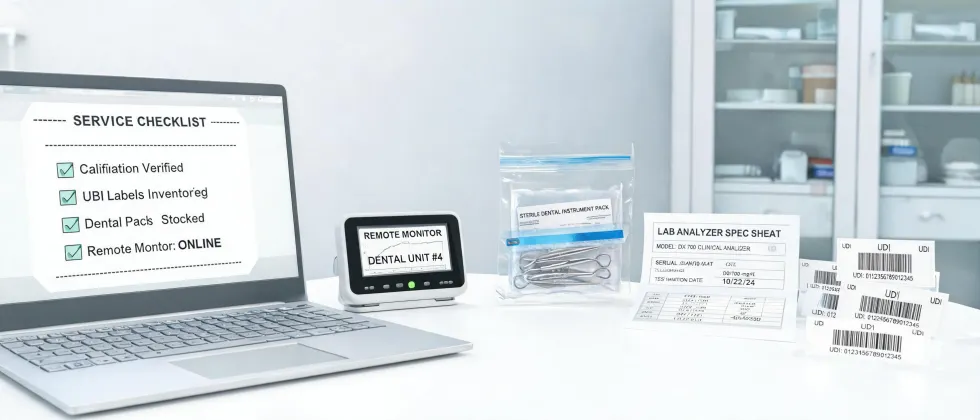
Here's the thing: if you're reading this, you're probably trying to figure out how to buy medical equipment without getting burned. Maybe you're outfitting a new clinic, an urgent care center, or replacing aging devices. And the first decision you'll face is whether to buy everything from one comprehensive medical supplier—like icare—or shop each piece from a different vendor to chase the lowest quote.
I've spent six years handling procurement orders for medical facilities. I've personally made—and documented—eight significant mistakes, totaling roughly $12,000 in wasted budget. Now I maintain our team's pre-purchase checklist so nobody repeats my errors. This article compares the one-stop approach against the multi-vendor approach across four dimensions, based on what those mistakes actually cost me.
The Comparison Framework
Here's the choice:
Path A — Single-source supplier: One company (like icare) provides patient monitors, slit lamps, dialysis machines, dental CBCT, sterilization equipment, and rehab devices. One quote. One delivery schedule. One support line.
Path B — Multi-vendor purchasing: You buy each category from the specialist with the best price. A monitor from one dealer, a slit lamp from another, imaging from a third.
I've done both, and I have the scars to prove it.
Dimension 1: The Real Cost of Multiple Vendors
In my first year (2019), I made the classic mistake: I chose vendors based on the lowest quote for each item on our list. Patient monitor from one supplier. Slit lamp from a different optics company. Infusion pumps from yet another dealer. Each quote looked 10–15% cheaper than the bundled options we received.
What I didn't account for was everything around the purchase. Freight from five different warehouses. Five separate installation visits. My own time chasing five different delivery windows. On a 15-piece order, the invisible costs added up to approximately $2,150. I'd like to say I learned my lesson then, but that would be giving my younger self too much credit.
The upside was $2,000 in sticker savings. The risk was missing our opening deadline while coordinating five vendors. I kept asking myself: is $2,000 worth potentially losing the clinic's trust? I went ahead anyway. We made the deadline—barely—but only because I personally spent 20 hours on logistics. That's not a scalable strategy.
The conclusion here: sticker price is not the real price. When the full cost of order management, installation, and expedited shipping hits the spreadsheet, the 10–15% savings shrinks to basically nothing.
Dimension 2: Compatibility and Integration
This is where multi-vendor buying really stings. Medical equipment doesn't exist in isolation. Patient monitors need to talk to the EMR. Imaging systems need to feed PACS. Infusion pumps need to integrate with medication administration records.
We bought a patient monitor from a vendor that claimed "HL7 compliant." Turned out the implementation required a custom interface we had to pay a third party to build. Our slit lamp from an optics specialist was technically excellent—excellent like a paperweight, since its documentation software ran on a standalone desktop app that didn't connect to anything. The ophthalmologist used it for about three months before asking me to "fix the integration." I couldn't. The vendor offered to sell a converter for $1,400.
The compatibility problem peaked in September 2022. A 12-piece order spread across four vendors resulted in an EMR integration failure that cost $3,200 in consulting fees to untangle. Not because the devices were defective—they weren't. The problem is that nobody in the chain was responsible for the system working as a whole. I had become the integrator, and I wasn't qualified for that role.
What I mean is, the "cheapest" option isn't just about the sticker price—it's about your time spent managing interfaces, the risk of patient data getting siloed, and the possibility that your new $18,000 device becomes a very expensive standalone widget.
Dimension 3: Support and Accountability
Equipment fails. That's not a question of "if" but "when." And when it does, you'll quickly discover that multi-vendor purchasing means multi-vendor finger-pointing.
The most frustrating part of vendor management is the same issue recurring despite clear communication. Example: our autoclave, the infection control workhorse, went down on a Tuesday. The unit came from a sterilization specialist who offered the best price. When I called, they told me the warranty had "expired"—which was news to me, because the manufacturer's warranty was supposed to be 24 months, not 12. Their paperwork was wrong. But it was my paperwork too, because I'd never verified it.
I asked about service records. The vendor said they had no service contract on file because purchasing had selected another company for preventive maintenance. That other company said the autoclave wasn't covered because it was "outside the scope" of the agreement. Two vendors, zero accountability. The result: $890 in priority repair costs plus a full week without a working sterilizer. In a medical setting, that is not just a cost line. That is patient risk.
After the third incident like this, I was ready to lose it. What finally helped was switching to a single-source approach for new purchases. When we equipped an urgent care center in Ebensburg, PA, using icare products, the difference was immediate: one phone call, one team, one answer. It's kind of ironic, because I used to think specialists give better support. Turns out, they just give better excuses.
Conclusion: with a single supplier, you lose some choice, but you gain accountability. When everything comes from one source, there's nowhere to pass the buck.
Dimension 4: Infection Control and Compliance
Infection control products are a different beast. Autoclaves, washer-disinfectors, sterilizers, biological indicators—these carry serious regulatory baggage. Every device needs FDA clearance or 510(k) documentation. Every facility needs to show compliance during inspections. And if you can't produce the paperwork quickly, you get delays.
In Q1 2024, we submitted a large order that included several infection control products. One vendor couldn't produce their updated FDA establishment registration on time. Our compliance review held the entire order for three days while we chased documentation. That was the last straw. I created our pre-purchase documentation checklist that afternoon.
That checklist has caught 47 potential errors in the past 18 months. Nothing fancy—just a list of questions before any purchase: Are the FDA/ISO documents current? Is the manufacturer authorized to sell in the United States? Does the sterilization equipment meet ANSI/AAMI ST79 standards for steam sterilization? In a multi-vendor setup, you end up managing documentation from multiple sources, and you'll find at least one gap every time. Suppliers who handle infection control across multiple specialties tend to have their documentation processes streamlined. Not because they're smarter—they've just done it a hundred times.
When Multi-Vendor Actually Makes Sense
Look, I'm not saying you should buy everything from one supplier forever. Here's the truth: if you're a large hospital with a biomedical engineering team and a legal department, you can manage multiple vendors and use your scale to negotiate excellent prices. In that context, multi-vendor purchasing works fine. It's a different game when you have dedicated specialists on staff.
But for smaller operations—clinics, urgent care centers, dental practices, correctional facilities, physiotherapy departments—the math leans toward single-source for a few reasons:
- Correctional facilities. We supplied a county jail with what essentially amounted to inmate care packages: exam tables, vital sign monitors, dental chairs, and basic imaging equipment. For a population that can't walk down the street to a clinic, having one accountable supplier isn't a luxury—it's a safety requirement.
- Physiotherapy departments. If you're unfamiliar, physiotherapy (often called physical therapy in the US) is the clinical discipline that helps patients restore movement and function after injury, surgery, or illness. Equipping a PT department means treatment tables, mobility aids, therapeutic ultrasound, and rehab devices. A general medical supplier can bundle these more coherently than five niche vendors each charging separate delivery fees.
- Urgent care. Speed is everything. The Ebensburg project came together in roughly half the time a multi-vendor sourcing process would've taken.
One more note: a few of our newer buyers have searched for things like an "icare inmate care package coupon code," expecting consumer-style deals. That's not how institutional medical equipment buying works. B2B purchasing is done through volume quotes and negotiated contracts, not promo codes. If someone offers you a huge discount code on capital medical equipment, be skeptical.
My Final Takeaway
Even after switching to a single-source approach for most purchases, I kept second-guessing. What if I'd lost the flexibility of niche vendors? What if the consolidated supplier became complacent? The first year was stressful, but the proof was in the numbers: fewer delayed orders, fewer compliance gaps, fewer 12-hour days spent coordinating deliveries.
Don't hold me to this, but I'd estimate the true hidden cost of multi-vendor buying was between 8% and 12% on top of the nominal quote—in my specific case, anyway. Your situation might differ. But if you're a procurement lead who's new to medical equipment, run the full-cost calculation before you chase the lowest quotes.
What was best practice in 2020 may not apply in 2025. The fundamentals of honest supplier relationships haven't changed, though: you need someone to stand behind the equipment when things go sideways. If you're gonna spend your budget on anything, spend it on accountability.
And keep a checklist. Future you—and your patients—will be glad you did.